They are fun for me as a voiceover talent because the vibe is different for every dealership’s tv car spot and every car brand.
Some are super hard sell and some are very warm and fuzzy…others are in between. It’s great because it’s a unique persona (ugh, more arty-farty acting words!) for each spot. It allows me to show off my acting range (oy, ok, enough with the acting lingo).
So this one was nice because its a regional television spot for the 18 dealerships of the Deacon Jones Auto Group in North Carolina. Their dealerships are in Smithfield, Goldsboro, Princeton, LaGrange, Greenville, Selma, Raleigh & Clinton. Their car brands include Chrysler, Dodge, Ram, Jeep, Ford, Chevrolet, Buick, GMC, Cadillac, Kia, Lincoln, Nissan, Honda and Toyota.
Client was looking for a friendly, trustworthy voice and lo and behold, here I am: your friendly, neighborhood voiceover talent at your service.
Very nice folks to work with and pleased to have been of service to them.
Tags: commentary, commercials, video by peter k. o'connell, your friendly, neighborhood voice-over talent Comments Off on not peter on ANOTHER car commercial (yes sir!)
Portland Voiceover Friends (around the U from left to right) Marc Rose, Bruce Miles, Emma Miles, Jen Gosnell, Peter K. O’Connell, Karyn O’Bryant, July 2019
If you’re going to travel from one ocean to the other, it’s sure is nice to have friends waiting for you on the other side.
So I did the Portland, OR trip this week…lovely weather too, so much nicer than the oppressive heat and humidity of Raleigh in the past few weeks.
I was very fortunate to have my friend Bruce Miles coordinate a lovely dinner with old and new voiceover friends….I’m told Portlandia is a foodies paradise and the two dinners we’ve had out there have been great.
So in addition to Bruce, his lovely and so fun wife Emma joined us – she’s not a voice talent, she’s better than that!
Jen Gosnell was there, taking a break from her family and voicework, great to see her. New Portlandian Karyn O’Bryant (who was on a VO-BBvideo chat earlier with Bruce and host of much more famous voices) came out to the party too. And I got to meet Marc Rose, a voice talent who runs Fuse Audio Design, where he also produces music and sound effects and teaches VO too.
There was an abundance of talking and noshing and just a great evening. I’m both pleased and honored that they would come out for some dinner.
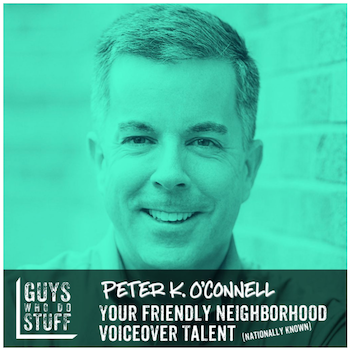
All right. We are very excited to be in our new space, which you guys can’t see, but we’ll describe it to you a little bit. It’s in the mall. Yes, it is. Which is the great way to start describing it. Which mall? The mall that has no stores. That’s right. So if you’re familiar with the mall that was supposed to be Ikea and is not yet and has gone through a lot of changes, that’s where we’re at. We’re in this great coworking space called Vibe Coworking. So we have a studio set up in here and we’re just very excited to be in this space. I’m a little bit sad that the dog won’t bark in this episode. I can bark for you. You can do that. Do I need to leave? You guys have a thing going. This is going a weird way real fast. But thanks for listening. I’m Joe. This is my co-host. Josh. And this is Guys Who Do Stuff. We’re very excited today to have with us American male voiceover talent Peter K. O’Connell. Hi there. Hi there. How you doing? My life is perfect. That’s great. It is. So, Peter, you are a voiceover talent. I am. I talk for a living, which is kind of a nice thing to do for an Irishman. So you get paid for that. You might as well do that. I’ve been doing it since about 1982. Wow. Ooh. Yeah, you can’t see my cane or anything. I don’t look that old. No, you don’t at all. You rolled right in here. That’s right. I feel like I need to apologize to the audience for the quality and timbre of my voice as we move through the rest of this episode. We’re very understanding. It’s perfectly fine. There’s nothing wrong with my microphone. It’s just I don’t have a cool voice. You’re fine. It’s all good. We all have good voices. And producers like to hire different types of voices. So sometimes they want mine. Sometimes they want a voice like yours. It’s rare. Like a high-pitchy, hard-to-listen-to. It’s like a really bad children’s cartoon thing. No, the thing is people can’t stand how they sound. I think that’s true. And so we all of a certain age remember something called a tape recorder. And it was long before I, you know, pods and all the rest of it. But, you know, if you listen back to yourself, everyone would say, that’s not how I sound. And everyone would go, what? Yes, that is how you sound. But we all sound different to each other. So for me, it doesn’t make any difference because I hear myself all the time. So I’m numb to it. Yeah. And then I create different voices for characters sometimes. And so that just sounds wacky. So listening to myself is not abnormal. For you guys, you do it maybe once a week or a couple of times a week. It’s like nails on a chalkboard. But you sound perfectly fine. I’m kind of just narcissistic enough to kind of like it anyways, I feel. That’s right. Yeah. Good way to go. You’re going to make a fine podcast host with that attitude. I love to ask this question when we have guests on the show. How did you get into voiceover talent? Like what was the catalyst in your life? I did not get into voiceover talent. I got into radio. Okay. Yeah. So I started in 1982. I went to the University of Dayton in Dayton, Ohio. I’m a Dayton Flyer. And so the reason I went to that school, I chose that school, is because at the time, they’ve since sold it, they had a 50,000-watt FM commercial radio station. And you say, oh, that’s cute. They had a little college radio station. No, no, no, no, no. This station came up in the 70s and became – one of the premier album-oriented rock stations in the nation. It was college-based, certainly, but it became a real factor and got national attention for its format. And it was not run by college students. There were college students on the air. Here’s how it worked. You had a professional general manager, like you would at any other radio station, professional program director, professional sales staff, So everything about the radio station was the same as any other radio station in the market, except on air, they put students on air. So what does that mean? Does that mean you go on once a week and play whatever you want? No, we were a tightly formatted CHR, contemporary hit radio station, And we would play, we’d play a set music and do the ins and outs, the bumpers and all the rest of it, read live commercials, just like every radio station. But you had to audition and be brought on the station. And it was 95% students on that air. So I, I had a shift Monday through Friday, 6 to 9 PM. And I was on the air rated in the marketplace. We had, I played commercials. I did commercials. It was. And when I saw that, when I was a, when I was a senior in high school and saw that my geeky radio eyes bugged out of my head and I’m like, That’s the place I want to go to school. And I knew I was going to get on the air and I got on the air in my freshman year. So it was it worked out very well. So that’s that’s how I segued into into voiceover, because from there was. While I was on the air, I found this thing called a production studio. Right. And the production studio is where all the commercials get recorded. It’s where you go in and the client comes in. They may record their own commercials. You record it for them. Or you go in and you record from a script that they give you. And I had just boatloads of fun in there. And I found that I had a real… uh aptitude for it and i don’t mean that in a egotistical way i just mean i you know and i found i had an aptitude for it i like doing it the clients liked what i was doing they would come back and it was good when the clients came back because they’d give you some money to voice their spots and that would play on other radio stations so you go oh okay so maybe does that mean residuals that would it’s not quite residuals it sounds like residuals but it’s more like a in 1982 dollars for a college student here’s 50 or 100 dollars and you go wow wow Oh, you’re pretty excited about all that. And, you know, because that’s going out money. But it led me to understand that there’s a bit of a, you know, an opportunity as a as an announcer. Not understanding in its entirety, in my young ignorance, that there was a kind of industry, but it was not as prevalent as it is today. Because to be in the industry, you had to be in New York, Chicago or L.A. Right. Dayton, Ohio or Buffalo, New York, where I’m originally from. You’re not going to you’re not going to do that. So that’s how I we we need my way into voiceover. Yeah. So at that time, the only way to really get voiceover work was to audition in New York or L.A. is what you’re saying. Well, there’s a couple of ways to do it at that time. And actually, you know, everything old is new again. It’s the same way you do it now is you you get agents that represent you in different marketplaces, whether it be New York, L.A., Chicago, Cincinnati, you know, somewhere in the Midwest. I have folks on the West Coast all across. So you have to get an agent per person. Demographic area or geographic area? Geographic area, not necessarily, but it helps in certain cities, yes. For the local stuff, like local TV stations, spots, and stuff like that. And then also, you just get on the horn, you call the studios. you know, the recording studios and the advertising agencies, and you do sales and marketing with them. You say, hey, I’m a voiceover talent. Let me send you my demo and see what they think and see if there’s opportunities. And then sometimes they say, yeah, you can go on a roster and you don’t hear from them for a couple of years. And then suddenly, out of nowhere, I got one this week, a car commercial. And I’m like, oh, okay, fine. Thanks. I thought you forgot about me. But they didn’t. They just, when the time was right. They’re very specific. They just knew there was a spot for you. Yeah, there’s a spot. Yes, exactly. It took two years to find it. What’s the perfect product for a short Irish voiceover guy? So I was telling Josh, I think you’ve got a really enviable setup because I went to your homepage and you got a studio you got to build out in your basement. It sounds like you’re a gearhead. No, it’s on the first floor. I don’t have a basement. Oh, nice. I just assume everybody’s in a basement because that’s where my last studio was. That’s right. That’s where you put the outcast like dungeon. You’re special. Yeah. Special basement. Uh, but, and you get to record your, you get to do the majority of your work from there. Yup. And you essentially have kind of crafted this niche for yourself or, or, uh, I think just represents a lot of what I think is freedom. Like it has to seem to me like, and that’s pretty cool. You get to be a voiceover talent and you get to record for nationally known brands, but you don’t often have to, I don’t know if you have to, I just imagine in my mind, you don’t often have to fly to New York or LA, but you can just go. No, I’d be glad to, by the way. It would be no problem as long as it’s on their nickel. I’ll be there. Here’s my rider. Here’s what you have to have and no brown M&Ms. But, you know, it sounds great and it is great. There is a great amount of freedom having your own business and doing this by yourself. But it’s still a lot of the work and it’s a lot of self-discipline. um it is and when you work out of your home especially this time of year um it’s you know it’s a little more challenging than others because there’s these little people running around yeah let’s talk about that for a second because i was telling my wife about this and i got no sympathy but i am a pretty disciplined person i’m one of the people that can make it and work from home because i don’t have a problem. I’m not going to take a nap and watch six hours of Netflix. I’m going to work. Um, but it takes discipline and it takes, uh, you got to put processes in place for yourself, et cetera. But then when my kids get off for the summer and I don’t know how many other people are listening and their kids get off for the summer, like my desire to be disciplined and get work done is overrode by my desire to hang out with my kids. And it’s like, well, today we’re going to make a little bit of an exception and we’re going to go to the pool. And suddenly the exception becomes the rule. And that’s a problem. So I do find that I’m, I would say probably 30 to 40% less productive when my kids are off of school. Um, I understand that. And it’s, it’s a challenge because, uh, even for the spouse in any relationship like that, because they see you physically in the home and you can close the door, but they know you’re there. So they feel like they have this bit of a parachute in, well, Daz over there, he can, you know, he can watch you guys. And then she comes back, where are the kids? And I’m like, I don’t know. I’ve been there. I’ve been in my office for like three hours. I’ve been doing that thing that pays the mortgage. So, you know, there’s, there’s that going back and forth, but it’s, you know, but there’s a benefit of, of the freedom, but with the freedoms comes more responsibility when you, when you, when you’re your own business owner. That’s what we learned from Spider-Man. Oh yeah. Great. Yeah. That’s great. What’s it? No, it’s great power comes great responsibility. Yeah. I just, yeah. I just miss Tony Stark. I just miss Tony Stark. spoilers yes exactly oh sorry i think he’s coming back all right let’s talk marvel theories for a second because this show has no theme apparently i believe that or what i would like to see the most do you remember iron lad growing up so there was a comic book thread that came out after tony stark had died in the comic books whatever universe that was where a young man became the new tony stark and tony stark had downloaded his brain into the suit. So instead of Jarvis, it’s Tony Stark. So I would really like to see Marvel do that. Find some cool young actor so that way Robert Downey Jr. can keep making money with him. And he’s just voiceover. You’re so kind to look out for poor Robert Downey Jr. I’m concerned about him right now. RDJ, I happened to notice on the Forbes list today of the top entertainment celebrity, you know, Taylor Swift was at the top with like 181 million or something. That’s awful. What a terrible year for her. Yes. I felt so bad. um let’s not you know let’s not make her feel bad but then you know down at like 50 was was rdj and i think it was only in the 70 or 80 millions that he made this year just this year that’s rough stuff you know it’s gonna break it doesn’t tear to the eye just a small trickle of a tear comes down the face let’s all worry about rdj yeah man so uh we were talking about having a little bit of a freedom that it that it creates do you also offer coaching services right Oh, I have in the past. Yeah, I don’t. I don’t. A lot of folks are out there doing voiceover coaching and that’s kind of their thing if they’re not getting gigs or and there are some people who are just excellent at it. I’m somewhere in the middle. Yeah, I refer to myself more as a voiceover consigliere. And I don’t want to pretend that I am as talented as some of the real coaches out there that really focus on it. When I talk to people, I sit with them and I give them two hours of my time about anything with voiceover having to do with performance. Yeah. having to do with marketing which is a very it’s very tough for most small businesses and it seems to be uh the kryptonite for to keep the sort of superhero theme going the kryptonite uh for voiceover people they just like many people just like oh wow i don’t want to do any marketing people aren’t going to just call you yeah exactly I’m sitting here waiting for the truck money, sacks of money to roll up and drop them on my front porch. It hasn’t happened yet. So I go over that with them and just basically giving them my 30 plus 35, I don’t know how many years, I can’t do the math. There’s no math in voiceover, but I can’t, you know, whatever I’ve learned, I will share with them. And they get very excited about that and it always goes very well, but I don’t market it terribly aggressively and I don’t work with people who are not serious. Like if people are thinking about getting in the business, though I’m not that person for them. It’s like, you’re going to make this commitment because I’m going to charge you a fee and you’re going to go, oh, that’s not chump change. I’m like, yeah, you’re right. It’s not chump change because if you’re serious about it, you’re going to invest. It’s like what you invested in this podcast, what you invested in your business, what you invest in your film business. All those people who are serious put the time, their talent, and their treasure into what they’re going to do because in for a penny, in for a pound, you got to go and you got to get it. And you need certain things to do that. You don’t need to have a lamborghini you know but you do have to have a nice computer because your computer is going to be your business right usually it’s going to be your you know it’s going to be your uh your website and you’re going to manage most of it you’re going to manage content you’re going to do all that stuff for it um and and then you’re going to have to get a good mic stand there you go joe we almost had a live a live breakdown so you shouldn’t touch the equipment let the engineers do that oh you are the engineer That’s all right. There we go. Welcome back, Joe. All right. So you and I will just talk for a while. What color is your Lamborghini? Too much weight. So we’re very excited to get in the studio. We didn’t quite finish it up yet, and we just had a little flubs. That’s all right. But it looks terrific. You really did a nice job with it. Well, thank you. Yeah, Vibe is a great place, and we’re so stoked to be partnering with them here in the Carytown Mall. Is that what it’s called? Carytown Center? Carytown Center Mall. Carytown Center Mall. Actually, they’re taking bids for naming rights. So if you have $150, $200, your name can be put on this mall at this very moment. They really… Just any money they can get in here. But it’s, but this spot is absolutely lovely. It’s just, it’s like, it’s like you’re walking through sort of a spa. And the people are lovely and the workspaces are very nice and it’s very comfortable and they’re very accommodating. Yeah, it used to be a spa. In fact, that’s kind of why it has the look and feel that it does. They updated it a lot, but yeah. Yeah, it’s a pretty cool location. I was talking to Josh before, like there’s going to be a lot of malls in the United States that are really struggling with Amazon and trying to compete. And the idea of co-working spaces or like putting like your gyms in a co-working space next to your Walgreens and have that be like the flow of a mall could kind of create this really unique experience. Well, I think it’s I think it’s an interesting idea for a number of reasons. I worked at a co-working space downtown two summers ago. Was it WeWork? Yeah. No, no, no, no, no. It was downtown Raleigh. Yeah. Downtown Raleigh. Oh, it’s escaping me right now. And they’re going to be mad at me. It’s kind of well known. Yeah. all right give me give me we’ll come back and we’ll edit in my answer and make me not sound like i’m blah blah blah but it was a it was a lovely spot um uh in in downtown raleigh and it was raleigh now or work now or something i don’t know what it was but it wasn’t it was it was a very nice spot but i did it specifically because in june and july kids are out of school right and at that time before we found a home i was living in an apartment oh i can’t tell you what kind of special hell that is To be in an apartment with three kids, and they’re lovely kids, but they’re kids, and it’s an apartment. They don’t care that you have to work. They don’t understand work. Oh, my gosh. listen, no, I got to work. No, it just doesn’t work. They get upset about that. So, you know, what I, what I did was I went to that coworking space and worked out terrifically. And I think because so many people are, are getting away from working corporately and more working individually, whether they’re, whether it’s their side gig that they, you know, or they have the opportunity not to have to go into a, you know, a tall, a tall building and That’s one of the things that I also want to talk to you about, because you’ve been doing this for a long time, but now it’s like this cool trendy thing is this gig economy, like working for yourself. Yeah. And it takes a lot. Like, it’s not easier, but I was just recently. Sometimes I had a job and have had jobs. On top of, yeah. You have to, because guess what? In Buffalo, New York, it’s not a thriving voiceover Metroplex. No. You know, and as much work as you do, it’s like there’s only so many grocery store commercials you can do before they go. We’ve heard your voice before. Yeah, three grocery stores in your town. You’ve done them all. One of them is a Wegmans, and you guys are going to find out all about Wegmans when they come in. Yeah, it’s supposedly coming right across the street. You’re going to go gaga when Wegmans comes to town. Yeah, northern people are swearing up and down about how great. When I mean northern, I mean like New York friends that I have. Like Wegmans is the stuff. Oh, yeah, and Mid-Atlantic. Wait, if, yes, I’m just telling you. And Shake Shack’s coming to Waverly Place. That’s true. I had not heard that. Oh, there’s signs. The signs are on the doors. The big glass place in the middle is going to be a Shake Shack. Well, I think maybe the thing to do is to do a remote for the next podcast from the Shake Shack. Just pack it up. Just plump some microphones right on a table and watch their eyes pop out and say, what are you doing in my restaurant? We’re going to do an ASMR of eating the food. Yes, exactly. This shake is so good. Boy, that makes an exciting podcast. What’s that? It’s a lot of sucking sounds. It’s a sucking podcast. No, it isn’t. It’s a good podcast. So when I was recently, my wife and I just celebrated our 20th anniversary. We went on a big trip. We were in a different country. Golf clap. It was fun. It’s really for my wife. Thanks for putting up with me for 20 years. 21 in September. Yeah. That’s awesome. The, um, we heard on, uh, on a double-decker bus tour, they were just talking about, cause I saw WeWork in London. Right. And I thought, Oh, that’s cool. I wonder, cause I remember telling Lori before we got there, I wonder how many coworking places are around. Cause it’s on my mind. Cause I’m partnering up with vibe and everything. Um, And he was saying that they have a lot of them in, in London. They just learned that 10% of the workforce has become part of the gig economy. Yeah. So like Uber and different jobs that you can use. And I think people think of, they maybe have a limited view of coworking places and that it’s like great if you need an office, but I met a guy here the other day who’s trying to get his doctorate and he’s got kids and he just does the day pass when he needs eight hours to study. And he needs a quiet place. You need a quiet place. And this, and, and, So it works out so very nicely with that because, you know, they have quiet spaces. They have spaces where you can use a phone and have a conversation because it’s a business. You know, let’s let’s be honest. And everybody needs different things. But everybody’s also understanding of where you are and what’s going on. And they have meeting spaces so you can bring people in. Yeah. So when, you know, you and I have had, had meetings at our friends over at Starbucks and that’s very nice and well and good. But if we ever wanted to, you know, have a, have a meeting, you know, with other people and have a, have a discussion about it in a quiet place, Starbucks maybe isn’t the best place to do that. Yeah. Yeah. I think so. And I think people’s main problem would be like, I don’t want to pay money for that. But if you go to Starbucks, you’re paying a subscription fee. And every time you go. And I think there’s also what I’ve noticed in this gig economy is, especially in the creative arts, and I work with a lot of creative people, obviously. I work with people in advertising. I work with people in recording and all the rest of that stuff. But especially in the advertising world, a lot of the stuff, especially the graphic stuff, et cetera, is being farmed out because advertising agencies are getting beat up on their fees a little bit, fairly or unfairly, they are. and so they have some of them have fewer staff so they outsource more graphic design and some and some of those services um and so they those are people who who either have their own home studio or would want a small workspace if if their workload would you know would allow it so these people don’t have to make uh their home which in some cases may be too small to accommodate an actual studio whether it’s a graphic studio and some sort of design studio painting studio yeah whatever that There’s a painter with a studio in the back end of Vibe here. Boom. See, I didn’t even know that. That’s pretty cool. And I think people don’t really understand. I think it’s not, it’s not as much money as you think. Like it’s like a, it’s like an expensive gym membership essentially to join a good co-working place. A lot more practical though. And you’ll probably use it more. You’ll probably use it more. You won’t get skinnier though. Well, maybe you will. I don’t know. The food looks good here. I don’t know. They have water and coffee, both food groups. Yeah. So Josh was in acting for a while. Yeah, I was. And how did that go? I liked it. I think I get a lot of mileage out of my one-liner in Talladega Nights with Will Ferrell. Okay, what was your line? Monsignor Gerard, Ricky Bubba is here to see you. Wow, that was good. Thank you, bucko. I strut away in my butler outfit. I’ll tell you what, that’s pretty good. So he sounds like it was a past tense, the way he said it, like you don’t do it anymore. Or don’t go after it? I use the GIFs in other ways. They’ve kind of morphed into it. I do a little bit of voiceover work when it’s necessary, and I do it for motors. When it’s necessary. When it’s necessary. It’s like going to the dentist. I really like the voiceover stuff for some reason. I feel more creative and free. I think my, like my, I had, I started modeling when I was a teenager and I got into acting that way, but I did go to a classical, classical trained, uh, training program, the North Carolina school of the arts. I studied classic theater and then I ended up in New York and graduated from another program, the William Esper studio. Okay. So I studied a bit of it and, uh, just fascinated. just i’ve learned a lot about myself but it was just not the track for me i’m married with a kid now we moved back to north carolina so but uh i’ve done it in a few like a film at church and different things but um yeah sort of morphed into more the business side i like the relationships i like connecting folks yep so in this process with joe where we do the podcast um but but straight up pursuing acting is a main thing it’s just not my not my desire i Well, and I think that’s smart on your part because I get a lot of people from the voiceover side of things. So you have a gene, a strength, a muscle that I don’t have. I don’t want to go on stage. For me, I like it right where I am, right here, right now, behind this microphone, happy as can be. But if I had to memorize something, man, that smells like work to me. I don’t like that. Yeah, I think, I mean, it is a work and I admire, I mean, the people who can record or memorize Shakespeare and go out and do classics on stage. And then make it believable. And make it believable. That is just amazing. That’s great art amazing yeah yeah i think for me it was a lack of discipline when i met how much discipline it takes to be successful in that career yeah uh you’ve gotta go at it but so i’m thankful to have a piece of that in my life now just uh doing what i do but uh yeah Because a lot of people come to me and say, a voiceover looks like fun. Or, gee, my mom says I have a great voice. Good Lord. Okay. You can’t make a career off of that. And I spend my life and many people, my fellow professionals in the world, they say the exact same thing to people, you know, six times a day. It’s like, no, it’s not just about your voice. You’re going to own a small business. Are you ready to do that? Yeah. No, I don’t want to own a small business. That sounds like work. Okay. That’s what voiceover is because I spend 90% of my day chasing the work. Right. 10% of my day doing the work. It’s not the other way around. And the agent business is different, you know, in the rest of the world than New York, Chicago, and LA. And even… you know, even more so in New York and L.A., less in Chicago. I mean, Chicago’s world has changed, too. It’s not the media mecca that it once was. Great city, great agencies, great, you know, creatives there, but it just doesn’t have the power that New York and L.A. have kind of absorbed within themselves. And to, I guess, even to a lesser extent, Vancouver and Toronto, up in Canada, where there’s a lot of productions going on up there, a lot of TV shows being filmed up there, etc., But, you know, it’s really a business voiceover. And that’s what people consistently forget or turn a blind eye to. It’s like if you were a graphic designer, people think that you spend all your day just drawing and making pretty pictures and amazing images, you know, and going to your computer. And no, you’ve got to go get that business. And I don’t, you know, if you’re a marketing consultant or if you’re an actor, you know, or if you’re a filmmaker, You’ve got to go out and get that. You’ve got to go out and get that business. But people just go into their happy place and don’t realize that voiceover is a business. They don’t respect that, you know, small business people working on your home. Oh, you have such freedom. Isn’t that great? Yeah. You know what? Sweat the mortgage sometime and see if you’re going. No, you’re not. You’re going. You know, you want to make sure you make that mortgage payment and you’ve got to make sure that work comes in and you’ve got to keep the flow in there and you’ve got to balance all these plates at once. What’s so fascinating to me about voiceover work is that you get to do it with a certain amount of anonymity. Is that the correct word? Yes. Yeah. So you’re not, you know, recognizable, but you are when you speak, right? And you do it at home. You work in your underwear, right? I mean, you just don’t have to impress. I didn’t understand I had to wear my underwear. You do. You should have an underwear sponsor. Which, by the way, upsets the FedEx and UPS guys immensely. They just get so offended. Like, oh, I can’t use those eyes again. No. And people say, you know, you can work in your underwear. You work in your pajamas with voiceover and the anonymity. And it’s like, well, I suppose you could. I mostly work in T-shirt and shorts and a baseball cap. Okay. I’ll be honest about that. But, you know, there is… When I first started my small business in years ago, when I came out of college, it didn’t just go right into voiceover. I actually got involved in a video production company and I would make myself get dressed for the day. Yeah. I still do that. It’s an attitude and people go, that’s kind of goofy. I’m like, I don’t care if you think I’m goofy. I’m telling you, there is something to be said for the fact that you are looking like this, looking at it as a job. So you will dress as a job because that’s physically making you understand the mental process that you’re going through. And I think that’s perfectly normal. And I tried it. I tried it wearing kind of like junky clothes for a while. And then early on, like a couple, like maybe less than a month of doing it. And I was like, no, I got to get dressed like I’m going to work. Yeah. Yeah. It’s like shaving. I do the whole thing and I get ready and then I go downstairs and I find that it just starts the day off in a whole different Avenue. Like I am a lot more productive that way than if I’m like in my house going, Well, and what I try and do is I go for an early morning walk when I drop the kids off at school. There’s a, there’s a park near the school and I go for a mile or two mile walk, you know, because I’m going to be inside all day and I’m going to be, you know, you know, sort of like an Oompa Loompa just not, you know, on the phone, but it’s not, there’s not much heavy breathing and picking up a phone and dialing. Well, it’s not supposed to be, that’s not, it’s not a proper thing to do. You can get arrested for that, but it’s not a lot of hard work. And so, you know, you get your physical activity in and that’s, it works out for me because when the kids come home and everything else, all heck breaks loose when they come home and then you got evening, got homework and you got events, you got to drive around, blah, dah, dah, dah, dah. So, you know, find your time and give yourself that space to, you know, to, to get some exercise or do whatever you need to do to clear your head and then go home, grab your quick shower, grab your quick shave, put some clothes on and hit, you know, hit the books. Yeah. That’s great. You found your rhythm. Some days, some days I don’t go to the park. Like this morning I didn’t go because it was, I don’t know when I woke up was 90 degrees or something and 150% humidity. I’m like, not no, but hell no. What park is it? I go to Bond Park. Oh yeah. I also go over to Apex. Those two parks. Yeah. I like, I like those two parks right now. And I, I feel bad because I kind of get into, you know, rut with just these, and I should expand my, you know, I’m only here three years. I know there’s more, because there’s nothing but greenways here. And I see people on these paths. I’m like, where the heck do these things lead? It’s like, is there a product? They’re slowly connecting them to like everything. Yes, exactly. It’s awesome. But, you know, so I’ve got the ones that I like, but I should, you know, I try and, I should try and, you know, widen my circle and meet new people. Because you do meet people in the park and they’re very nice and I wonder when they connect all the greenways, if like in our lifetime, we’ll see like cool stuff, like a Starbucks on the greenway, you know, like little buildings you can just stop and grab a snack. Like I’ll meet you a mile two in the greenway for a meeting. Which is, which is kind of the antithesis of the purpose of the greenway. Right. Can I go have a black and white cookie? Oh, you mean the 500 calorie black and white cookie? Yeah. No, I don’t think you should. And also demolish all the beautiful greenways so you can build Starbucks. Exactly. Oh, it’s okay. They’ll intersperse a Panera in there to just balance it. Yeah, a Shake Shack. Because that makes it look at all. That sounds appropriate, a Shake Shack. I’ve never had a Shake Shack, but my understanding is that it’s like the In-N-Out version of the East Coast. Is that like a good way to say it? It’s better. It’s an amazing, sloppy, greasy experience of a burger that’s fantastic. Yeah, I got to say, I went to In-N-Out in California a couple of years ago. And the good news was I got an agent out of it because I took her to lunch. But the bad news was I didn’t think everyone was like, In-N-Out burger, blah, blah, blah. I’m like, I’m not getting it. I didn’t think it was that great. If you’re saying this new one is better than, because I really thought In-N-Out was great. Oh, Shake Shack. Let me be the one to take you there. As a matter of fact, let’s have a date, the three of us. Road trip. Glass, Shake Shack. We’ll bring the microphones. Grand opening. Oh yeah, let’s set up there. Let’s set up there. How was it? I mean, Waverly Place. We’ll just record 20 minutes of us eating. I got to talk to Mary, the marketing director at Waverly Place. I’m sure we, oh, here we go, Joe. We can talk about this later. Yes, exactly. we’re on it now guys bring mary on it it’s like we’re doing a road trip to mary mary you’re gonna hear this brought to you by our new episodes episode a weekly show called guys who eat stuff yes exactly followed by the third episode of guys who have heart conditions oh gosh We’ll get there. We’ll be like in our 60s. We’ll just be talking about our various health conditions. So do you still have an agent? I have many. You have many. I have many. And I’m fortunate to have them. They’re great. Many of them are great friends of mine. Some of them I don’t know as well as others, but they took me on because they… They like my demo. And in my business, the business card is the voiceover demo, you know, which has… And much like filmmakers or people that have creative portfolios. So you have many because they’re in different markets? They’re in different markets. They can help me in different ways in those markets. They have local connections and they heard something on my demo that they liked and they know I’m marketable. And so they send me auditions on a regular basis. And then you send those in and hopefully, you know, some, hopefully something comes of it. A lot of times, And they are national auditions, which means that every single agent in every single corner of the universe is coming in. So you’re one of 2,500 voices. Good luck on that. You know that you’re not going to be really heard on a cattle call like that. But oftentimes they will, you know, they’ll get on the phone and they’ll say, you know, somebody says, I need, I need this type of voice and they whittle it down to 10 or 15 of those voices. Now, if I get in, if I get in one of those passels, I have a lot, a lot better chance of getting some sort of business out of it because then I can compete versus 1500. you know my you know it auditioning is is difficult for voice talents to get the right voice but whoever the poor sucker is that they make at this at the agency listen to those 1500 voices yeah like well it’s like you know you just i bet it’s like uh the first 15 are pretty good yes that’s exactly yeah So it gets down, it gets down to the person listens to the first 30 seconds. Okay. That was fine. And then half an hour later, the first 15 seconds, then 10 seconds, and then a syllable of the next one. It’s like, the first word is I would like to, I don’t know. Good. That wasn’t, but I know that’s no good either. You know, it’s like useless. So do you find that, would like you to walk me through because I’m just I’m a curious person what does as I’ve heard people who are actors or mention the idea of like getting a nationally syndicated thing and getting residuals like what is a residual and why is it so awesome to get one? Well, mostly residuals come through folks who are working with the union, but it does happen in non-union work. I have gotten checks and how residuals work in that case. And then I’ll start with a shorter version. The non-union is basically they re-up you for another year. So they basically, if they’re being honest and that you haven’t given them a full buyout in your job for in perpetuity, which is basically throwing your money away. That’s why you want somebody to negotiate for you. Somebody says, I’ll give you $800 for that, for that 30 second commercial. Okay, fine. That’s a one-time payment and they will give that, you think $800, that’s a lot of money. It’s pretty nice. I like that very much, except they use it for the next 10 years. Yeah. Okay. They’re using it for 10 years, and they’re using it all the time across the nation. Right. That would be like Empire Carpet, right? They’ve sang that same jingle at the end of their commercials. Empire Carpet? Yeah, that 8, 7, 9, 8, 2, 300, Empire. Like that one? Yeah. I’ve heard that all over. I’ve lived all over the country. Well, I hope you get a home soon. I hope you’re able to find someplace to live. Or are you just running from the law? Yes. Is there something we should know? Whee! Police. But the challenge with that is you’re not getting the fee that you should be getting. And so with the unions, when you get back to your original question about residuals, what they should do is they – they work with you for a 13 week span or a certain amount of time. Again, this can work with union or non-union, depending on the deal that you make with each and each client is different. But you, the idea between residuals about residuals is that you would get a certain amount of money, uh, After 13 weeks or a year from then or two years from then, you just keep getting checks based on whatever usage they want based on the terms of the agreement. But it has to be in the terms of the agreement because a lot of people just buy out outright because it’s impractical for them to actually use it more in a year or two. So they just buy out and be simple. But you have to be careful about that because a lot of people can be taken advantage of. Right. And I don’t want to get into too much detail because you’re not asking about that. But residuals are a nice opportunity for you to continue to get paid for the same work you did as long as that is negotiated into the deal. And so ideally, you get a big residual check if they had a big media buy. And so they choose to broaden out the… Yes, you would get a big residual check if, say, for example, the deal that’s made is for 13 weeks, but the spot took off so much. Say you were flow, and you were just doing the radio spots. Let’s go with that for progressive insurance. And she was just doing the radio spots, and she thought it was a one 13-week gig. Oh, that’s an, I get a nice check for that. Thank you very much. But the flow thing blows up and everybody loves flow and suddenly flow becomes a character on the radio. And so then they want to do another 13 weeks, either with those spots or new spots. And so, you know, and some of those spots are going to be more specific to a time, like a Christmas spot. So you can’t play that in July. Um, or some of them are going to be more evergreen that can live forever. Um, that’s where, you know, that’s where the residuals come in because they pay you every 13 weeks on top of what you want on top of what you got the first 13 weeks, you know, and so you can still get a lot of checks off of one commercial. And that’s what happens with a lot of TV performers when they’re, when their stuff goes into syndication or, you know, the reruns that’s reruns are great for, you know, but that’s where I’ve really heard of it. Like Seinfeld is probably still really cleaning up. Thanks TBS. Cause they just play them on steady repeat. Well, it’s, it’s, there’s, there’s that. And, but it’s also, it’s also dependent on his agreement. Like he might’ve gotten bought out at one point, but he might’ve gotten bought out for like $500 million, you know? And so he’ll be okay. Yeah. So nobody’s worried about Seinfeld too. Him and Robert Downey Jr. Yeah. Call me Jerry. Yeah, exactly. It’s just pick me up in your car. Let’s go for coffee. That’s kind of what I thought it would be. And it’s very similar to like I used to work in making films. And so if you wanted to license like a song that people would recognize, you’d license it. But that license you’d be paying for an amount of time. And that would determine how much you pay for the license. And depending on what. And how big it is. Where the audience size was. Is it on a small film? Is it on television? Is it on television and web? Right. I mean, I didn’t want to get into too much detail, but there’s a lot of things that go into figuring out what your fee is. So like what, from my perspective, what I knew of it was like, we could license a song by One Republic to show to 10,000 people in a room one time for like $250. But if we wanted to put that song in a commercial… now you’re talking 10x 100x etc based on the size of the the range of the amount of people that are going to be seeing it and there’s a we were going through a company that would do all that and we would just give them the money so there was like yeah they license it for everybody. They took 33% of that money. The rest of it went to the band and agents and managers and ASCAP and BMI. And yeah, they took care of all that too, which is great. If that’s you and you’re a filmmaker, you should stop stealing people’s music. Music bed is a really great place to license your music from. And they’re getting more and more recognizable artists on there every time. Do you have to do that with photography? Do you have to make sure like when, when a photographer sells a commercial image to a company for a magazine, do you have to have them come back and pay you more royalties if they choose to use that image again? Yes. Yeah. That’s kind of what Dave Shea was talking about. You want to make sure you do that part right, right? It’s important. I mean, a lot of people get taken advantage of and some companies take advantage of people knowingly and some of them are just ignorant. Yeah. You know, but if I find some of my work being paid that was supposed to be of a certain timeframe. And I hear it elsewhere or somebody else hears. And that’s the great thing about the, of the, the brotherhood and sisterhood of voiceover. You know, those of us who know each other go, Hey, I heard you in the market. And they go, you heard me where? And I was like, that’s not the deal. It’s gotta be continually getting more and more complicated with things like ad buys on Spotify and different streaming services that have different ways that they monetize their subscription, et cetera, et cetera. I mean, that’s gotta be. You got to work with an agent or somebody. Well, yeah. And, and, and this, you know, there’s clearing houses that can help you with that. And agencies work with those clearing houses too. Agents work with those clearing houses and it, you know, it, it, it just, it, it depends. But I mean, there’s, there’s laws protecting you, even if you’re not in the union. The union helps a lot with that. You know, the union has good parts and bad parts. But it’s, you know, it’s, it’s all about you as the business owner negotiating your deal, whether you’re a photographer or a filmmaker or a voiceover talent, whatever you’re going to do, you have to, that’s the education part of your business. And you have to be aware of it because your, your art, your film, your voice is all is what you’re selling. That’s your product. That’s your, you know, that’s your Coke. That’s your Pepsi. You know, that’s, that’s what you’re selling. And, and people take that for granted. Oh, it’s just talking. Oh, you just clicked a button. Oh, it’s just film. You just pointed the camera and beg your pardon. There’s, there’s value to that. I totally agree. And also as a separate caveat for those people that are in that profession, please don’t right click and steal their stuff. Like that’s why they’re doing it. It’s basically stealing from people. I was totally stuck. And like you said, I think a lot of people do it out of ignorance, but like, even for example, like that song heard at the top of the show, like licensing that you shouldn’t just take people’s stuff. No, no. If an artist worked hard, they should receive the payment for it. Why do you choose to live in North Carolina? Um, because I got tired of paying New York state taxes. Uh, I got tired of New York state. Uh, Buffalo is a great city. I love, I love Buffalo, New York. I love the people there. That’s the greatest thing. And it’s on, I live there for 50 plus years and it’s just as I’m about to leave. It’s going on the uptick. I mean, really it’s being successful and people are coming to the city again. Yes. it’s growing and and it’s developing and there’s a great arts culture there and people are shooting movies there and wow you know you know we got the goo goo dolls and all you know everything’s happening and i decide to leave that’s when i go that’s when i get the hell out of dodge um but yeah So North Carolina was chosen. We moved for family reasons because we had in-laws who needed some help and we came down and helped them out and glad to do it. But and that’s, you know, family first. But we had to pick a spot where we’re all going to go. And I know it’s going to be Florida. Because, you know, Ohio, Texas and Florida, we always hear strange stories. Is Buffalo like Michigan? I grew up in Michigan. Do you have snowbirds, people that go and spend the winter in Florida and come back? Oh, yeah. Oh, yeah. You know, and, you know, and the Canadian snowbirds because Buffalo is right across from Canada. And it’s, you know, I grew up summers in Canada. It’s a lovely, another beautiful spot. And by Niagara Falls. Oh, yes. Well, living by Niagara Falls is like if you’re a New York City person, you live by the Statue of Liberty. Have you ever been there? Have you ever been over Niagara Falls in a wooden barrel? Not intentionally. Oh, not intentionally. No, it was just, I don’t know. We were kids. I didn’t know what was happening. It seemed wet. And then, but the fall, it was like, oh, this is exciting. And then, ow. Yeah, that reminds me of a t-shirt I saw yesterday. I said, that’s a horrible idea. What time? Exactly. That’s a horrible idea. Hold my beer. As we say here, hey, y’all, hold my beer. Hey, y’all, watch this. Exactly. But, you know, coming down, I do a bit of traveling in my life. And so I like a good airport. And actually, one of the reasons that we moved to this area was RDU. And you’re saying, well, airports are airports. Well, first of all, no, airports aren’t airports. And all things being equal the thing that i remembered the stuck in my head that made me start thinking about raleigh was you know this is what people laugh at me all the time but i i didn’t i don’t see this in a lot of airports you know at the raleigh airport they have those beautiful wooden beams that go across all the way from the front well when they first built that airport i was coming in into town here uh before before we moved in here uh years before we moved here and even thought about moving here And I remember going, wow, airports don’t spend that kind of architectural money and design to make that really. They just do glass and steel. I mean, they’re pleasant enough, but they’re, you know, some of them are some of them. Some of them are pits. But Buffalo has a lovely airport and it’s relatively new. But this was like. Wow. This is. And I just remembered that. And I’m like, you know, if a city is going to spend that much time and focus on that kind of detail, I’d like to see what else it has to offer. And that is the dumbest thing in the world. But it really, you know, the fact that it had a good airport, you get to a lot of places that helped me. Then we found some good schools, the quality of life that we that we found here. We love the idea of you can you you can’t see a lot of the retailers, right? Yeah, that’s pretty neat. Unless you – and we’re living in Cary specifically. But unless you know where you’re going in many circumstances, you’re covered by trees. You don’t know they’re there. There’s a little sign that says whatever. And then you go – I love that because I come from – northeast where it’s like how big can you make the sun yeah you gotta have a ginormous american flag that could basically you know cover heat six houses um if it caught on fire and then you and then you and we don’t want to burn flags i’m not saying that um but But all these signs for all these stupid retailers and God bless retailers, but some of them are ugly signs. They’re tearing. How many Dunkin’ Donuts do we need for the love of God? And they’re all over the place. And it’s just kind of, you know, you get used to it. But then you come down here. And it’s not here. Very similar to me. Like I grew up in Michigan, tons of billboards. And when we were considering moving here, I actually took a trip out here to just explore. And I spent the first half a day being like, there’s nothing here. But do you find there’s a lack of restaurants here compared to Buffalo? No, I think Buffalo is so wonderful for its cuisine and its variety of restaurants. It’s not just all Buffalo wings. No, no, it’s not because it’s, it’s, you know. I love buffalo wings. Or as we say, I have a t-shirt I should have worn for you guys that we just call them wings. Yeah. We don’t have to call them buffalo wings. You know, it’s like, oh, no, we have buffalo wings. I’m like, I’ll decide if you have buffalo wings or not. But, you know, it’s, it’s, it’s terrific. I’ve kind of lost my train of thought with the wings. You got me hungry thinking about that. All right. It’s lunchtime. Yes. I thought this show was catered. But summarize it to say that the restaurants that we’ve seen here and we’ve done here are terrific. The difference in Buffalo restaurants are that, you know, you have there was more of an immigrant culture in Buffalo in the early 60s. 20s, 30s, and 40s. And those families developed in Western New York. And so when you had those people coming in, for example, my father was first generation. His father came over from Ireland. So my grandfather came over from Ireland and made his life in Buffalo and started a business and did very well for himself. There’s a lot of that, whether it be Polish or German or Irish or Italian. in Western New York. And it’s wonderful because, talking specifically about restaurants, you get a whole melting pot of different types of restaurants, but it’s authentic. It’s good stuff. And so when you have folks starting here, they’re very talented, many, many talented restaurants here. Mandolin and Lucky 32 are two of the ones that I’m thinking of right now that are specifically here in the Raleigh area that aren’t just chains. And But those restaurants in Western New York really have a tremendous sort of family feel about them. And I’m sure there are more here. I haven’t certainly I haven’t tried them all because, you know, I haven’t. But if you have a list, I’ll be glad to go through it. So it’s been said that like I heard somebody say that when I die, I want Clint Eastwood to shoot me in slow motion and Morgan Freeman to narrate it. OK. Right. Have you heard that before? You hang out with weird people. I did. I did. I did. But that does sound like a good way to go. I know. Right. So let me ask you. Clint Eastwood’s now like 92, though. I don’t know if it’d be the same. Well, you have a better shot. You have a better shot. You might miss. Yeah, that’s exactly right. are there any voiceover actors out there any any voice person people that make you just sort of cry and oh sort of have a voiceover crush yeah yeah i have i have voiceover crushes on a variety of people my growing up my uh my big voiceover crush and the voice i always wanted to be and i’ll never sound like him, was a fellow by the name of Ernie Anderson. Now, to you guys, you’re going, I’m getting, for those folks listening, I’m getting completely blank stares from my hosts here today. And I’ll tell you who Ernie Anderson is. And I think you guys are of an age that you’ll know this because he was the guy who used to say on ABC every night, I’m the love boat. Oh, yeah. That’s Ernie Anderson, okay? Tonight on Heart to Heart. You know, he was that guy. If you lived in New York or Miami, you know, Z100. You know, he was that voice. Or Y100, WHYI, Miami, Fort Lauderdale, and the Palm Beaches. You know, he was that voice. It sounded much better than that, I promise you, folks. But that’s, again, my poor impression. But he… was it was it was just cool and he uh he started out in cleveland television and radio he worked with tim conway his great pals with tim conway and he just he he was the voice of the carol burnett show you guys may be too young for that but carol burnett had a variety show back in the 70s uh saturday nights on cbs in the 70s and uh cbs owned that with the mary tyler moore show bob newhart mash uh and the carol burnett show uh there’s some other shows i’m sure i’m missing sort of like um On Friday nights, ABC owned it during the 70s with the Partridge family and Brady Bunch and Nanny and the Professor. And I’m showing what a total media geek I am right now. And again, getting that sort of strange media stares from people. What are you doing? You spent a lot of time in your parents’ basement, didn’t you? um but but you know all these all these voices are the things that my geeky ears grew up with and i would listen to that so ernie was my first crush uh voiceover crush that way um i have a variety of folks who i um who i think uh there’s one guy you guys might not know by his name but if you heard his voice you’d go oh i want him to is a fellow by the name of Bruce Miles. He’s just got the greatest voice in the world. His friend of mine lives out in Oregon and he’s just got one of the most underrated voice actors ever. There’s a female voice talent. And of course, anyone from voiceover is listening. Say my name, Simon. There’s many of them and I’m not going to name them all. But D.B. Cooper, she’s a great voice talent and again, very underrated. Is that the same name as like Like the famous guy that jumped out of the airplane? Yes, it is. But she sounds much better and she’s never, ever committed a crime that she’s ever been convicted of. So, no, she’s not. She’s absolutely not. But I mean, those are just some of the people that I know whose voice I’m just, I wish I could somehow sound like that. There’s just, there’s dozens of them. Have you ever had a- Mel Blanc for characters, by the way. Who? Mel Blanc. Okay. He was Bugs Bunny. He was Daffy Duck. He was Yosemite Sam. Oh, yeah. He did all those? Oh, my gosh. Same guy? Same guy. It was always the first name after the Looney Tunes credits, right? Here’s your homework. Tonight, YouTube, Mel Blanc, Looney Tunes, and just you’re going to enjoy yourself. Okay. I mean- So he was kind of like Hank Azaria voices like half the Simpsons. He was kind of like that for Looney Tunes. Well, yeah, yeah. Well, actually, Hank doesn’t do half of it, but he does many great voices. But, I mean, Yardley Smith and Nancy Cartwright and all those guys are just amazing for the Simpsons. And, you know, you get Seth, not Rogan, McFarlane, isn’t it, who does Family Guy? And he’s made himself quite a bit of an actor now and doing really well. But, I mean, a great actor. you know, great at impersonations and character voices doing, you know, a variety of things. And he’s a singer. Yeah. He has a perfectly lovely singing voice. I didn’t know that. So he does acting. Oh, but you know, I do remember now seeing like some vinyl, like at Barnes and Noble that had him covering like classic songs. Yeah. In the discount bin. Yes, exactly. That’s right. I’m not saying he was successful at it. I’m just. He’s saying very well. Um, so, but I mean, there’s, there’s a lot of those folks. And, um, if you go, if you come to the galaxy con that’s coming at, I think the end of this month, there’ll be a ton of, I think we talked briefly earlier, uh, about the, uh, animation voices that have come through. I, um, there’s, and there’s always somebody that I’ve, I’ve met or know or want to meet, you know, I will actually be the geek that pays the $25 and, you know, it gets a picture taken with them because these are people who’s, who I respect. And I won’t, you know, I respect them enough to stand in a small line. I won’t stand in a long line because I’m just impatient that way. I’m like, come on, we got to go here. But these people are like, you know, this, this is their life. Like I said, they’re just getting, some of them are, just getting out of their parents basement so much of it though has to be acting that’s why i brought it up originally it’s not like you were mentioning it’s not just you got a great voice congratulations you’re in and i think you shared a very wise uh perspective which is you’re owning a small business so it’s not just like you get to do what you don’t just get to like i think that’s the thing that my kids get into like they want to be on youtube or like the kids that watch people play twitch like you think that’s all it is well the successful ones are working yeah there’s not accidental like no they’re working hard there to create the kind of content that they’re creating they’re putting in the time and the effort and the effort and the work. And I think that’s a very fair thing. But I also think it has to be some acting, right? Yeah. Absolutely. I mean, it’s all acting. It’s voice acting. That’s what voiceover is. My job is to make sure that I become… the version of me that most closely aligns with the voice, the subjective opinion of the producer. Like they’re, they’re hiring me, but they’re hiring my, my larynx. What are some of your favorite warmups like red leather, yellow leather, skedaddley de skedaddley do? I like water and breathing. Those are my big, uh, I drink water and I like to breathe. Um, but you know, you know, Peter Piper picked a pack of pickled peppers. I never really, uh, this probably makes me a bad actor or at least a least less affected actor, but I don’t do as much of that stuff. When I go to classes, and I’ve gone to many classes, I’ve gone to too many classes, but they do those warmup exercises and that’s good for you. And it does get you, there’s some vocal warmup, but I gotta say, honestly, I don’t do a ton of it. I just try and take good care of my voice. And during football and hockey season, that’s tougher than normal. Have you ever been tempted to smoke cigarettes to make your voice sexier? No, no, I just take the hormones. Oh, did I say that out loud? Is that why you have hair on your forehead? That’s exactly right. That’s not my forehead. But no, I never drank, never smoked, never did drugs. No Guinness. No, never in my life. I’m an Irishman that admits to never drinking, but I never did. And I, I just, you know, it started with the taste. It wasn’t even the fact of, you know, people act like goofballs when they, you know, they get drunk or get high. It was the taste. There’s certain vegetables I won’t eat. You know why? I don’t like how it tastes. And do you ever taste it? Remember your first taste of beer? Was it a happy experience? No. Okay. I stopped there. I’m like, nope, I’m done. I actually like my first beer. I’m the weird guy because I didn’t drink beer until I was 33. And so by then, I think it was like I enjoyed the first beer that I had. But I know like a lot of people are usually stole a beer that was warm, that it skunked that when they were 13 and like downed it in a tent somewhere or anything and threw up and barfed it up. No, it’s just the smell of it. And it’s just like, oh, God. And then if you ever had the misadventure of being in a bar the day after, like the morning after. Oh, good God. It’s like, what are these people doing to themselves? And it’s just awful. I like that there are some things that you have to, like the argument is literally, like coffee’s this way too. Like you give it to a kid and they’re like, that’s disgusting. You’ll get used to it. Just keep slamming that stuff. And eventually you’ll become addicted. Yeah. Like this is, this is hot chocolate. This is, this is my, you know, it’s like, it’s like a sweet thing. So I have a little bit of that. And of course, being on our podcast, I shouldn’t drink anything with milk in it because it gets you all phlegmy, but I’m old and nobody cares. But, you know, the coffee thing, the booze thing, the smoking thing, I’m like, no. It’s hard. No, but I have the ability, you know, the one thing I’m fortunate about is I have a range. You know, I can go really high. You want me to go over? I can go over for you. It’s fine. You’re very, you’re very nice. Mary like go over, go over like Mary. Somebody just scrubbed forward to fast forward. And they’re like, what happened on this podcast? No beer, no beer was involved. Exactly. Well, the helium, man, it’s fun. I used to suck that helium. Did you suck the helium? I sucked the helium all the time. I like this now. We’re in a real fun place. So let’s have a voice off. Yes, exactly. It’s a voice off. What are these guys doing? They’re trying to improve themselves. But, you know, then I can go really low. You know, I can go down here. Take me there, John. Exactly. Well, well, that’s a different story. I think he’s having a hard time. We were listening to some of your stuff in your demo and watching some of the commercials that you were on. And I really liked the voice that you did with the horse for the craft commercial. It’s exactly what a quirky horse would sound like to me. I don’t know why. What does that interview look like? We’re looking for a quirky horse voice. Quite honestly, I’m not the horse voice. You’re not the horse voice? I am the jockey. I’m the jockey that goes, Kevin, what did you do? And I was up in Toronto for that because it was for, and this is the greatest thing. I have a lovely agent up in Toronto, Tanya Buchanan, who runs Tadah Voiceworks up there. And she called me one day, and I’m in Buffalo at the time, so it’s only a two-hour drive. Three hours if you count traffic. Oh, the metro traffic is awful. But I went up there, and they need you. And they asked me for a specific audition. Can you sound like this picture? Because it was a French commercial, evidently. So it was done in Montreal and they needed an English voice and they needed somebody to sound like that little jockey. Okay. It comes up to him at the end of the day. So they showed you a picture and can you sound like this picture? And so I gave, I gave him the voice. They gave, I don’t think they even gave me the picture. I think they just gave me a description. And then when I was up there, um, there’s a part of the commercial where they have the little horses, the mini horses with the craft cheese and macaroni carts. And then you hear this. Get your Kraft cheese and macaroni. That’s me too. So they got me for two spots there. So, and, and I sat there for a half an hour going, Kevin, what did you do? Kevin, what did you do? Kevin, what did you, you know, I just, they just, but I had to try and match the, you know, sort of match it ADR automatic dialogue replacement a little bit that, and then, you know, just create the voice and it worked out for them. And it was, but what I didn’t realize even as much time as I spent in Canada is what Kraft cheese and macaroni means to Canada, it’s like the number one food product in Canada.
It was quite an honor to be the first guest in the new studio of the “Guys Who Do Stuff” Podcast, which we recorded a few weeks ago. Yes…I got to go to a REAL podcast studio, none of this phone stuff (which, of course is fine).
The podcast is produced by co-hosted and produced by Joe Woolworth and Josh Manning, both who live in the Cary, Raleigh, Durham North Carolina area where I am. Joe owns a web, media and business strategy company called Relevant Media Solutions. Josh is a media producer (web, photography and film) at his company called Jerico 7.
Joe Woolworth, Co-host of Guys Who Do Stuff Podcast
So as media producers, Joe and Josh are story tellers and through their podcast, they tell stories of unique small businesses and the people that run them. I believe the idea is that no matter how unique the business featured in the podcast, there are universal threads that run through each story and those threads are applicable to any business. By guests talking about the successes and challenges of their businesses, listeners can apply the business and life lessons shared to their own lives.
How I got involved was just me networking, completely unaware of this podcast.
Josh Manning, Co-host of Guys Who Do Stuff Podcast
Because I’m still meeting new people (having only been in Raleigh Durham for coming up on 3 years) I was reaching out to local marketing and media people on Alignable, a locally focused business networking site. Through that site, I’ve been setting up some Starbucks marketing meetings with folks (similar to my Bagel Marketing back in Buffalo, NY but Starbucks is closer to my house, hence the name I just coined sitting here writing this blog post). I’m focused on folks in my Town of Cary, North Carolina (CARY = Containment Area for Relocated Yankees or Can’t Afford Raleigh Yet).
So I see Joe’s business on Alignable and I either emailed or called him and invited him to Starbuckies for a coffee and a chat (well, I do hot chocolate, not coffee, but it’s in the same cup as the coffee so people think I cool…fooled ’em again!) As we talked, Joe decided I would be a good guest for the podcast…or the guest he had scheduled had died…one of those two things. Anyway we talked.
What did we talk about? Easier probably to identify what we didn’t talk about but to try and summarize it we spoke about my start in voiceover, the University of Dayton, working with kids at home, Tony Stark, Spiderman, the Marvel Universe, co-working spaces (BTW in that part of the podcast, the co-working place I used was called HQ Raleigh…so embarrassed I blank on that name, sorry HQ Raleigh), then Wegman’s, the Gig Economy, Canada, getting the business, working in your underwear, greenways and parks, In-And-Out Burgers, Shake Shack, residuals, picking RDU, restaurants, Ernie Anderson, Mary Tyler Moore, The Partridge Family, Bruce Miles, D.B. Cooper, Mel Blanc, Looney Tunes, acting, Grover, Kraft Macaroni & Cheese and after that, I forget.
The podcast has a fun, informative, light-hearted feel to it that makes the listen seem shorter than it is.
Now this co-working space where Joe and Josh have built their podcast studio is pretty awesome. It’s called Vibe and it’s a co-working community inside the Cary Towne Center Mall in Cary, NC. I’m not sure how many co-working spaces you’ve been in…I’ve been in more than a few.Many co-working spaces are very corporate…kinda steel and cold in tall office buildings…or they try and be too UNcorporate…and it’s too country, college-dormy. Vibe Cary is right in between for small business people, micropenuers who want professional and comfortable where you don’t feel like you should wear a tie but you probably don’t want to wear your ripped t-shirt and look like a slob either. Professionally casual. That’s my take anyway. You can get a membership or use it by the hour; you can get a private office or use a meeting space or, yes, record a podcast!
A great experience at a great place with great hosts. Thanks for including me.
RALEIGH, NC, August 22, 2019 – – North Carolina State University’s DELTA program (Distance Education and Learning Technology Applications) advances the integration and support of learning technologies in NC State’s academic programs, both on the campus and at a distance.
As part of that objective and for the program’s new educational media presentation on statistical analysis, NC State’s DELTA program secured voiceover talent Peter K. O’Connell as the narrator. A natural-born storyteller, O’Connell has been a sought-after male narrator for many top corporate and educational organizations including the U.S. Army, IBM, General Electric & Deloitte.
About DELTA at NC State
DELTA’s role is to foster the integration and support of learning technologies in NC State’s academic programs, both on the campus and at a distance. DELTA coordinates the funding and production of all distance-based credit programs and courses for the university. DELTA promotes high-quality education by extending the reach of the faculty and collaboratively applying expertise in technology and pedagogy in an efficient, effective and service-oriented environment.
About Peter K. O’Connell
From Fortune 500 companies to companies that think $500 is a fortune, multi-award winning male voiceover talent Peter K. O’Connell has shared his voiceover and audio production skills with a wide variety of companies, world-wide. In addition to his most recent narration voiceover work for NC State, some of Peter’s commercial and narration clients also include brands like L.L.Bean, IBM, Duracell Batteries, General Electric, Massachusetts State Lottery and Kraft Foods.
O’Connell owns audio’connell Voiceover Talent, a division of O’Connell Communications, LLC. He can be reached via audioconnell.com or peterkoconnell.com.
Use lower case letters- audio’connell or audio’connell Voiceover Talent
COMPANY NAME PRONUNCIATION
au·di-o’·con·nell (awe-de-oh-kah-nel)
Tags: media releases by peter k. o'connell, your friendly, neighborhood voice-over talent Comments Off on MEDIA RELEASE – North Carolina State University DELTA Lands O’Connell
If you have read this blog for any amount of time (and, I know, why would you?) you know that I am late to the party on almost everything.
For example, there’s this new thing called a flip phone…
Anyway, while perusing Instagram today, I came across post from Gabby Nistico about agents. This may have been around for awhile – I don’t know…remember…late to the party on everything.
What caught my attention was the tag line: “Submit to Agents with Care”. Well I have shared that sentiment with talents for decades (as have others), so I thought ‘this was a good start’.
I had to sign into something, probably a mailing list, to get to what the page was about…a fairly long list of voiceover agents.
For some of you reading this, that’s going to get you all excited. That list, however, is NOT the meat on the bone.
It’s a nice list…full of some great representatives and some completely useless agents (and to be fair, a similar list could be compiled of voice talents). Worry not, the reps are not labeled as such on the list and shouldn’t be…everyone’s mileage varies and opinions are like…well never mind what opinions are like, they all stink.
But again, the list isn’t the thing.
It’s the DIRECTIONS that accompany the list that contain the best advice you’ll receive this month. They are simple, almost basic. Likely you’ve heard what Gabby has written before, from others.
But now it’s in writing…there on the printed (web) page in black and white (well actually blue and white but whatever).
You know why she says it, and I say it and other pro VO’s say it and agents say it? Because it’s true.
‘Bull in a china shop’ does NOT work when trying to get an voiceover agent. But so few folks, especially newbies, listen.
So many folks are so anxious, so excited, so blinded by the concept of getting an agent or a new agent that the common sense gene is shut down and overrun by their stupid gland and they end up making a terrible first impression and lose an opportunity at professional voiceover representation.
Female Voice Talent Gabby Nistico
So instead of ‘stop, drop and roll’, please now ‘stop, read and thoughtfully execute’ your approach to professional voiceover representation. Look at Gabby’s agent list, sure, but follow her directions that are right there! If you’re NOT ready to check all the boxes, wait to approach an agent until you are.
One last thought about this….the agency world is changing and, like voice talents, agents are dropping out of the business by choice or necessity. Now more than ever.
This means fewer agencies and yet the same or more voice talents who need/want representation.
So you, voice talent person, must now REALLY come across with your most professional work and demeanor and attitude and all of it…. super important! Yes, VO agents still need voiceover talents to have a business but voice talents need quality business partners…don’t confuse Gabby’s long list for a 100% quality list. That’s true in EVERY industry.
Check before you leap…talk to other voice talents about whether they feel their agents are representing them well. You look for referrals on plumbers, why not agents? Not to make too fine a point of it, but five of my agents are in the VO Agent Alliance. I’ve known these people for years. I am thrilled to be in partnership with them because of who they are as people and professionals) Their participation in the Alliance adds great credibility to it in my eyes.
I think it’s a great place to start when beginning the agency search…but they aren’t all taking everyone. Nobody said this agent search would be fast or easy.
Then, what are your expectations for your agents? Are you expecting them to bring you buckets of VO jobs? Re-think.
Agents, in my opinion, should be viewed as presenting opportunity for talents…not necessarily actual work. Yes, work can/does come from agents (and that’s awesome) but it mostly comes FROM US…in our demos and in our auditions when we have the opportunity presented to us.
Securing the work is ultimately up to us. Hard fact. Deal with it or get out of the business.
Partnership also means that when a gig arises – that an agent did not bring to you but where their insight could be really helpful – give the agent the gig to manage. Yes give them the commission…bring it to them. If they are good, they will help you more than you know.
If you don’t trust them enough to do that or don’t want to share in the gig, I would ask you two questions:
• Why are they your agent?
• What kind of business partner are you? (Short answer, probably not a good one)
Tags: agents, voice talent, voiceover, voiceover advice by peter k. o'connell, your friendly, neighborhood voice-over talent Comments Off on voiceover agent advice: ready, aim, stop!

 I loves me some television car commercials.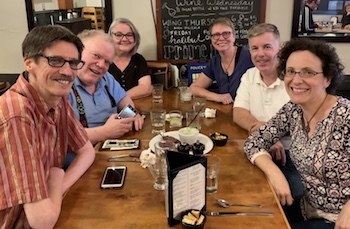


 RALEIGH, NC, August 22, 2019 – – North Carolina State University’s DELTA program (Distance Education and Learning Technology Applications) advances the integration and support of learning technologies in NC State’s academic programs, both on the campus and at a distance.
 Check before you leap…talk to other voice talents about whether they feel their agents are representing them well. You look for referrals on plumbers, why not agents? Not to make too fine a point of it, but five of my agents are in the


