Entries Tagged as 'voice over workshop'

The Least Marketable Skill in Voiceover May Be the Most Important

audio’connell voiceover ear microphoneI’m lucky.

I’ve spent decades talking into microphones.

I could’ve done a voiceover blog post about ALL the different microphones I’ve spoken into if I’d kept count…but only a few microphone-philes (if that’s a word) would really be interested in that.

But a thought occurred to me. I’ve mentioned it before, but I’m always getting new readers here.

The big takeaway is this: your voice is not the most important tool in your VO toolbox.

Neither is breathing, script interpretation or the ability to improvise. (Although if you haven’t mastered those things, you likely won’t have a great voiceover business.)

Nope.

My advice for being a fantastic voiceover actor — and building a great business — is learning how to truly listen.

Listening?

Before I say the words, read the words…before I even think about the words, I have to understand the WHY of the words.

Now, some may say that the “why” is where script interpretation comes in.

I say yes, but also no.

If your only direction is a short paragraph attached to an audition, then yes — interpret away. You have no other choice.

But one of the great gifts we get as voice actors — and one that is too often ignored or stumbled over — is direction from a live person.

It might be a client, a creative director, the script writer, the video producer, the author or the candidate.

To all of these folks, we as voice actors often reveal our sometimes fatal flaw — we are people pleasers. Similar to many other small business owners, but, I think to a higher degree, voice actors really, really, REALLY want to please our clients. We as voiceover talents are somewhere between a four-year-old child and a purebred German Shepherd.

And with that intense desire to please and do well, we sometimes forget to truly listen.

We aren’t being rude. In fact, we may be intensely focused on what the person is saying.

But within the first few sentences, we start to interpret instead of listen.

We start to interject instead of listen.

Sometimes we even interrupt instead of listen.

We’re trying to interact. We’re trying to show interest. We’re trying to demonstrate that we understand.

But what we need to do — and I very much include myself in this statement — is shut up, pay attention and gain understanding.

And when the client is done talking, THEN confirm our interpretation, offer our thoughts and input, make a collectively agreed-upon creative plan…and record.

Sometimes the direction is very specific.

Sometimes it’s, “Give me a little more energy.”

Sometimes it’s, “Less announcery.”

Sometimes it’s that wonderfully precise piece of direction: “I don’t know exactly what I want, but I’ll know it when I hear it.”

And sometimes the direction is a fully formed novel of verbal vomit.

That’s okay, too.

Because that kind of brain-to-paper-to-microphone translation service is at the crux of what a good voice actor does.

We also need to remember that while this job is important to us, all those other people — the client, creative director, script writer, video producer, author, candidate — have something important riding on the project we’re voicing.

Sometimes even their job.

So while you’re doing vocal exercises and improv classes and working on breathing and interpretation and all the rest, spend some time working on listening.

Concentrated listening.

Not listening while preparing your response.

Not listening while deciding what the direction means.

Not listening while waiting for your turn to talk.

Just listening.

It may be the least marketable tool in your voiceover toolbox.

But over the long term, it may be one of the most important tools for building your reputation — and your business.

How to Find the Best Voiceover Practice Scripts (And Why It Actually Matters)

Peter K. O'Connell's Voiceover WorkshopA lot of voice actors treat practice like something they’ll get to eventually.

New talent waits for a coach.

Seasoned pros figure they’ve already got it.

Both groups are leaving real skill development on the table. Good voiceover practice scripts are the gym equipment of this business. Quality matters.

What Makes a Good Voice Over Practice Script?
It should mirror real-world copy you’d actually get hired to read.

Commercial voice over scripts with a clear call to action. Narration with technical language. E-learning that demands authority. If your voice acting practice scripts sound nothing like actual client work, you’re not practicing. You’re just reading out loud.

How to Practice Voice Acting: Start With What’s Around You
Free voice over scripts are hiding in plain sight. TV, radio, streaming pre-roll ads. Real scripts real clients paid real money for.

Read along, then read without the audio and compare.

Here’s a voiceover training tip people overlook and I’ve been teaching FOR DECADES: grab a magazine.

When a brand ad catches your eye, read the copy. Why? Because for some reason you were drawn to that brand and you are connected.

The messaging, tone, and selling points are all there. With a little rewriting you’ve got a solid voice over script for practice and an unlimited, free supply of fresh material.

Where to Find Free Voiceover Practice Scripts Online

There are some other sources that I’m glad to share with you:

  • Edge Studio (edgestudio.com) offers thousands of free voice over scripts for beginners and pros: commercial, narration, animation, e-learning, and more in English and Spanish.
  • Voice Actor Websites (voiceactorwebsites.com) has a solid growing collection covering commercial, narration, IVR, PSAs, and imaging.

Why Voiceover Training Never Really Stops
I’ve been doing this over 40 years. I still practice.

Here’s a working voiceover’s truth: sometimes when a client sends a script, there’s little or no warm-up time. You sit down and you are expected to nail it. Practice gets you pointed in the right direction faster because you work your mind and vocal muscles more regularly and with intentionality (that’s a big teacher word, you should be impressed, say oooo or something).

Record yourself every session. What you think you sound like and what the mic actually captures are rarely the same thing. That gap is where voiceover training can begin to fix or enhance.

Quick Answers

In addition to practice scripts, I often get these questions (which could be their own full blog posts) but for now I’ll just briefly touch on them.

Can I use free voiceover practice scripts for my demo?
Generally no. Free script libraries are for voice acting practice and voiceover training, not demos. A good demo needs original, custom-written copy tailored to your voice.

Finding great voiceover practice scripts is not complicated. It just requires getupandgoness. Yes that’s a word…that I just made up.

Where do beginner voice actors start with training?
Start with a good voiceover coach who can assess your actual strengths and weaknesses. Then practice constantly with real-world commercial voice over scripts, narration copy, and anything else that mirrors the work you want to book. The coach gives you direction. The scripts give you reps.

How often should voice actors practice?
As often as you can manage, but quality beats quantity every time. One focused session with fresh voiceover practice scripts you’ve never seen beats an hour of reading the same three scripts you’ve memorized. Variety is the whole game.

What types of voiceover scripts should I practice?
All of them, eventually. But start with the category you most want to book. Commercial voice over scripts if you want ad work. Long-form narration scripts if corporate or e-learning is the goal. Character scripts if animation is your dream. Practice where the work is.

Do I need a voiceover coach to get better?
Yes. Not because I happen to coach, but because nobody can do this alone. You need a trained professional set of ears acting as an omniscient third-party expert. You simply cannot hear yourself the way an experienced voiceover coach hears you. That outside perspective is not optional. It’s essential.

Finding great voiceover practice scripts is not complicated. It just requires geterdoneness (that’s another big teacher word…don’t you feel edumacated now?)


Peter K. O’Connell is an award-winning professional voice actor and voiceover coach based in Raleigh, North Carolina. Connect with Peter at audioconnell.com.

VOICEOVER WORKSHOP: Taking Direction – The Time You *Might* Know You’re Ready for a Voiceover Career

Voiceover Workshop Taking Direction Peter K. O'Connell Like all of us in our everyday lives, people new to voiceover are in an all-fired hurry to get behind the mic and start recording.

The advice these rush-rush-rush folks get from voiceover pros never sits well with them:

• Take group voiceover lessons
• Take individual voiceover lessons
• It can easily take at least six months before you’re ready to perform

Like Veruca Salt in Willy Wonka and The Chocolate Factory, they want a voiceover career to start NOW!

From a technology standpoint, they can start now…buy a cheap mic, plug it in to a computer (or worse yet just use your phone), sign up at a crappy pay-to-play voiceover site and start auditioning.

Enjoy the crickets of those new jobs more than likely NOT coming in.

So if these new voice acting folks do take the more prudent, thoughtful approach to their new career, if they do take the advice, how will they know when they are ready for their voiceover debut?

The answer varies with every person.

But I was reminded of a good milestone to know when you’re on the right path to a voiceover career the other night when I was teaching a group voiceover lesson.

Simply put,

that milestone is an actor’s ability to “take and execute successfully voiceover direction on the fly”.

What that phrase means is a bit more involved but it’s something every professional voice talent does every day in their job.

What? Lemme ‘splain…

Most scripts come with some written direction on how a producer or client wants a voiceover read to sound. The direction can be as simple as a word or a sentence OR it can be as detailed as a full on creative brief that goes on for a page and sometimes has audio and video examples with it.

But what I refer to as “on the fly direction” is usually direction you get during a voiceover session (or in a voiceover class), usually in-person or in a connected session (like Source-Connect), where you start getting direction outside of the direction listed on the script.

Why would you be getting additional direction? Many reasons but a few might be:

• The director got the takes (sound) they wanted based on the script specs at the start of the recording session but now wants to be creative and have other options to share with the client or hold in reserve in case the client doesn’t like the sound of what they originally agreed to (which happens more than you think)

• The director doesn’t like the read given…it’s not the sound he/she was hearing in his/her head (it has happened to everyone at least once in their career)

• The client doesn’t like the way the audio is turning out even though you did exactly what they asked

The reason for the change in direction doesn’t matter — but what DOES matter is the voice talent’s ability to deliver on the new, unplanned direction.

A trained voice talent, one who has studied voice acting, is not really thrown by such a request but is prepared for it (or at the very least can adapt to it), doesn’t take the changes personally, listens closely to the direction (asking questions for clarification), jumps on the creative band wagon and can usually execute the changes to the producer’s satisfaction.

Attitude for the voice talent in such a situation is almost as important as their line delivery – as that attitude (and their adaptability) can be the difference in ever being hired again by the studio or client.

A pro talent is open to change, accepts tweaks, critiques and even criticism for what it is…part of the journey to satisfy the client and get the job done. Some one who does NOT react or respond well to such changes (most because they weren’t trained in how to deal with it) is going to have immediate and long term reputation problems (cause producers and engineers talk).

Some new voice talents need practice at on the fly direction and some students – like the one I had last week – took the direction and really upped their read. There were still some rough spots but the improvement was amazing. There is a bright VO future there.

So please do the training, get prepared.

No Voiceover Demo Mills In conjunction with the above advice, please consider the pitfalls of voiceover demo mills.

Wait, you may be saying to yourself, what does one have to do with the other. Lemme ‘splain some more.

These demo mills are companies many voiceover newbies find (among other spots) via “free” voiceover classes at places like Community Colleges. You attend the  free class, you’re told you have ‘a bright future in voiceover’, you are offered a program (that you ultimately pay plenty for) where you take a few classes and they make you a commercial voiceover demo in a pretty short amount of time.

So exciting, right? No.

Most of the time, the untrained student gets a demo and not much else to show for it. Rarely any real training.

What I think these demo mills do, besides give somebody rushed lessons, fake praise, false hope and a “demo”, is take a person’s money and leave them with barely passable VO demo.

In some cases, some of the untrained students that fall for these demo mills don’t have the basic talent to be a voice actor (they as performers are just not good) — even if they studied with James Earl Jones every day for 10 years. Other folks in these classes could be but still get no viable training.

In either of the above cases, the demo mills cash in on someone’s dreams, do not help the individual and that’s crappy.

Here’s the nasty secret to demo mills and how I think they REALLY hurt a potential talent – they direct an untrained student “talent” on a few lines of script among seven or eight scripts that gives the producer just enough content to produce the demo.

In the demo production, demo mill producers just focus on getting a mostly untrained student to deliver a close to average or acceptable read on a line or two of copy. They will then edit a bunch of those not great reads into a demo.

But even if the student gives on OK read on those lines (likely after MANY attempts in the demo studio) the untrained student is very unlikely to be able to deliver a FULL PERFORMANCE of that read in a FULL SCRIPT in a studio with a professional producer if the untrained student talent gets hired off the demo mill produced voiceover demo.

The demo mills aren’t teaching script interpretation (which is not at all the same as reading comprehension), they aren’t teaching acting techniques, or anything about breathe control, or versions or you….I could go on and on.

In reality, a producer at a voiceover demo mill (and sometimes the “mill” is just a company of 1) is not teaching an untrained student talent anything except how to voice 1-2 lines of copy well enough to create a read that “sounds” professional…and then collect the demo money.

But…and this is a painful but…should the voice talent get hired off the demo, they are completely ill-trained, ill-equipped to reproduce the demo sound or heaven forbid tweak that sound in an actual recording session. The talent doesn’t know how to really do it because they do not have the training.

Whether the producer fires the talent on the spot or muddles through the session…the talent has made a first impression that is likely unrecoverable.

If you’re looking to get into voiceover, reading this and thinking “I would never make that mistake,” please know that’s what all the people who have worked with demo mills in the past thought too.

Now go back up at read my original advice:
• Take group voiceover lessons
• Take individual voiceover lessons
• It can easily take at least six months before you’re ready to perform

Working quickly can often result in sloppy (read: unprofessional) work.

Nobody’s perfect but be smart and do not start off on the wrong foot.

Please be careful and good luck.


VOICEOVER WORKSHOP: Voiceover Teaching at Theatre Raleigh ACT

Voice Actor Peter K. O'Connell teaching at the Theatre Raleigh ACT studiosMost of the time when I teach a voiceover class through my Voiceover Workshop, it’s a private lesson either in my Raleigh, NC voiceover studio or on a Zoom call somewhere around the world.

But every now and again, I get pulled out of the studio to teach in the voiceover wilderness of eastern and central North Carolina.

Tonight my friend, Wendy Zier, who teaches over at the Theatre Raleigh ACT studios in Raleigh, needed the night off so she called me in as her voiceover teaching understudy.

Great class of students there who really did some great work on the commercial and narration scripts I brought along.

Wonderful time had by all. Thanks!


THE VOICEOVER EXPRESS INTERVIEW:
“Peter K. O’Connell on Voiceover Longevity, Learning, and the Power of Peer Connection”

Voice Talent Peter K. O'Connell July 2024

Award-winning, American male voiceover talent Peter K. O’Connell

Interviewer: THE VOICEOVER EXPRESS
Guest: Peter K. O’Connell – Award-Winning Voice Actor, Voiceover Coach, and Business Owner


With a career spanning over four decades, American male voice actor Peter K. O’Connell has voiced some of the most recognizable campaigns in North America—from Maaco’s iconic “Uh-Oh, Better Get Maaco” to high-profile work for Duracell, Amazon, Disney, Kraft, and L.L.Bean. Media creatives and audio producers trust him for his voice acting versatility and consistency; voice talents seek out his guidance for both performance and business development.

In this exclusive interview with THE VOICEOVER EXPRESS, Peter draws on his deep well of experience not only as a working voice talent, but also as a small business owner and voiceover coach.

He offers thoughtful insights on the state of the industry, shares why WoVOCon – the Voiceover Unconference, remains a standout event for experienced voiceover professionals, and Peter also reflects on what’s helped him—and many of his students—sustain and grow.

The Voiceover Express:
Peter, it’s always a pleasure. Let’s get right to it given your decades in the voiceover industry—what’s the number one question you get from fellow voice actors?

Peter K. O’Connell:
No contest—it’s “How do I grow my voiceover business?” Right behind that is “How do I land more voiceover jobs?” And, of course, “What’s the best voiceover microphone?”

The Voiceover Express:
Classic questions—and all very real. But your answer is what really stands out. How do you typically respond?

Peter K. O’Connell:
For the past year, my answer has been simple and consistent: Go to WoVOCon—the Voiceover Unconference—and get real answers to those questions, plus the ones you didn’t even know to ask.

The Voiceover Express:
That’s a smart pivot—pointing professionals toward a resource instead of giving a one-size-fits-all reply. So tell us about your experience at WoVOCon.

Peter K. O’Connell:
I first went to WoVOCon in Chicago in 2024, and it helped me in all facets of my voiceover business. It wasn’t just useful—it was transformative.

The Voiceover Express:
That’s saying something. For those not familiar, can you break down what makes WoVOCon so valuable?

Peter K. O’Connell:
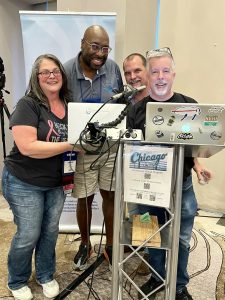
Voiceover Talents Natalie Stanfield, George Washington, III, Mike McGonegal and Peter K. O’Connell at WoVOCon – the Voiceover Unconference in Chicago, 2024

Absolutely. WoVOCon the Voiceover Unconference, is produced by World-Voices Organization (I’m a dues-paying WOVO member and Unconference volunteer). WoVOCon is a peer-to-peer event—meaning the attendees are the presenters. And attendees (who are all members of WOVO) are vetted, working voiceover professionals. They share everything from performance techniques to business strategies and tech workflows. It’s not about somebody pitching or selling services, nothing is ala carte—WoVOCon is about genuine knowledge and sharing of professional voiceover experiences by people who pay their mortgages via voiceover. What you learn at WoVOCon is practical and applicable to your voiceover business right now.

The Voiceover Express:
Incredible. And I love that it’s peer-led. That adds an extra layer of authenticity. What’s the vibe like?

Peter K. O’Connell:
It’s intimate, which is one of its biggest strengths. Attendance is capped at 125 people, so you really get to know folks. And to a person, they’re there to learn and help others grow. It’s a deeply collaborative, voiceover-centric environment.

The Voiceover Express:
That’s refreshing in an industry filled with noise. You also make a compelling case for why every VO professional, especially small studio owners, should attend. Care to expand?

Peter K. O’Connell:
Sure. If you’re a voiceover talent, you’re also a small business owner. And WoVOCon is where practical voiceover training, real industry insights, and meaningful networking happen. You’re not listening to abstract advice—you’re hearing from people who’ve done the thing. You learn from everyone. The only downside? WoVOCon only happens once a year.

The Voiceover Express:
Now that’s the kind of conference we all want—limited, high-quality, and packed with value. When and where is the next one?

Peter K. O’Connell:
This year’s WoVOCon will be held in New Orleans, October 17–19, at the Embassy Suites by Hilton. I’ve got my reservation—I’ll be there. And if growing your client base, sharpening your skills, and mastering the voiceover business matter to you… there’s nowhere better to be.

The Voiceover Express:
Peter, the way you break that down makes it clear why WoVOCon is such a strong recommendation. But you’ve been walking the walk (or more like talking the talk -voiceover humor) in this industry for a long time. For those who may not be familiar—can you take us through your background and career?

The Voiceover Express:
Sure. I’ve been in the voiceover industry for over 40 years now, working as a voice actor and live announcer. Along the way, I’ve been fortunate to build a career that blends versatility, personality, and professionalism—those are the pillars I’ve always tried to stand on. I’ve come to be known in the industry as “Your Friendly, Neighborhood Voiceover Talent,” and I think that pretty well reflects both my approach to the work and the relationships I build with clients.

The Voiceover Express:
That nickname says a lot—it’s accessible but also polished, which feels true to your work. What types of voiceover projects have defined your career?

Peter K. O’Connell:
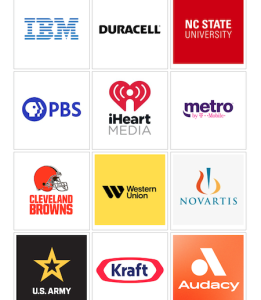
Brands who have featured voice actor Peter K. O'Connell

A small sample of brands who have featured voice actor Peter K. O’Connell

There’s been a great mix. I’ve done national and regional commercial campaigns, non-broadcast narration, and live event announcing. Over time, that variety really helped me stay creatively fresh. One of the more recognizable spots I was part of was Maaco’s iconic “Uh-Oh, Better Get Maaco” campaign. That “everyman” voice really connected with people. On the other end of the spectrum, I’ve done high-energy character work like Crest’s “Pro-Active Defense” ad and brought a warm, relatable tone to L.L.Bean’s “Be An Outsider” campaign.

The Voiceover Express:
That’s a wide range—from friendly guy-next-door to animated character actor. What other brand work has stood out to you?

Peter K. O’Connell:
I’ve voiced campaigns for companies like Duracell, Ford Dealers, and Novartis. Kraft Dinner’s “Pony and Jockey” campaign in Canada was especially fun—it was full of quirky charm. I’ve also voiced content for iHeart Radio, and I’ve handled narration for brands like Amazon Web Services, Deloitte Canada, IBM, General Electric, Tic Tac, and Disney.

The Voiceover Express:
That’s a who’s who of major clients. It seems like narration has become a big part of your portfolio, too?

Peter K. O’Connell:
Definitely. I do a lot of narration work now—explainer videos, eLearning, and corporate storytelling. Whether I’m voicing a whimsical character like a scarecrow for AWS or guiding viewers through something more reverent, like the U.S. Army’s history in Fort Huachuca: An Enduring National Treasure, I always focus on clarity, warmth, and pacing. You’re telling a story—whether it’s 30 seconds or 30 minutes.

The Voiceover Express:
We noted when doing our research for this interview, you’re also a trusted guide for others in the voice acting industry. Let’s talk about The Voiceover Workshop. What inspired you to start coaching?

Peter K. O’Connell:
Honestly, coaching wasn’t part of some grand plan. I just started helping folks because they asked. I’ve been a full-time working voiceover talent for over 40 years—and somewhere along the way, other voice actors began asking me questions. “How do I improve my reads?” “How do I find clients?” “Why isn’t this demo working?” That’s how The Voiceover Workshop came to be, almost 20 years ago now.

Voiceover Workshop Peter K. O'Connell voworkshop.com

Information about male voice talent Peter K. O’Connell’s Voiceover Workshop- VOWorkshop.com

The Voiceover Express:
And now you’re known as the “Voiceover Consigliere,” which we love. What kind of approach do you take in your coaching?

Peter K. O’Connell:
That nickname kind of stuck—probably because it’s more fun than “counselor,” but that’s really what I try to be: someone who helps you get where you want to go. I’m not a professional VO teacher (and there are MANY great ones), I don’t run group classes or focus on a formal syllabus. Every session with me is one-on-one, tailored specifically to what the voice talent wants to focus on—whether it’s script interpretation, narration technique, character voices, demo feedback, or the business and marketing side of things.

The Voiceover Express:
That sounds incredibly practical and personal—especially for an industry where so many people feel like they’re navigating alone.

Peter K. O’Connell:
I believe in practical, actionable help. Every voice talent has different goals, so every session should reflect that. We meet virtually—usually via Zoom or Teams—and we dive deep into whatever matters most to them. It’s been amazing to work with voice actors from all over the world, at every experience level.

The Voiceover Express:
And judging by the feedback from your students, it’s clearly making an impact.

Peter K. O’Connell:
I’m grateful for that. I think the most meaningful part is hearing how something we worked on helped someone land a client or gain confidence in their reads or reframe how they run their business. That’s what matters.

The Voiceover Express:
Peter, your career truly reflects the depth and range that many voice actors aspire to. Thanks for pulling back the curtain and sharing both your insights and experience with us today.

Peter K. O’Connell:
My pleasure. Thanks for having me.


For more information about WoVOCon, visit WOVOCON.com.

Producers can reach out to Peter K. O’Connell directly to discuss voiceover needs—from commercials and narration to live announcing at peterkoconnell.com.

For voice talents ready to grow, refocus, or finally get started the right way…visit voworkshop.com to learn more about The Voiceover Workshop, see testimonials, and schedule your one-on-one session with Peter.

Smart, Simple Advice for Growing Your Voiceover Business – WoVOCon

Voiceover Talents Natalie Stanfield, George Washington, III, Mike McGonegal and Peter K. O’Connell at WoVOCon – the Voiceover Unconference in Chicago, 2024

The question I get asked the most by fellow voice actors: How do you grow your voiceover business?

Right behind that: How do I land more voiceover jobs?

And of course: What’s the best voiceover microphone?

Here’s been my answer for the past year—go to WoVOCon The Voiceover Unconference and get real answers to those questions, plus the ones you didn’t even know to ask.

I went to WoVOCon in Chicago in 2024, and it helped me in all facets of my voiceover business.

WoVOCon Voiceover Unconference Logo 2024WoVOCon – the Voiceover Unconference, produced by World-Voices, is a peer-to-peer voiceover conference built for professional voiceover talent. The attendees are the presenters—working VO pros who’ve built careers in voice acting, voiceover performance, business, and tech.

It’s also intimate, capping out at 125 attendees…so you WILL get to know a lot of people quickly. To a person, they are all at WoVOCon to share knowledge and learn, not sell anything.

Yes, voiceover talent reading this—you, the small business owner of your own VO studio—this is where practical voiceover training, industry insights, and next-level connections actually happen.

The upside? You learn from everyone. The downside? It only happens once a year.

This year it will be held in New Orleans, October 17-19 at The Embassy Suites by Hilton.

Nope, I don’t make a cent from promoting WoVOCon. I just believe in it.

I’ve got my reservation. I’ll be there. You should be too—and if growing your client base, improving your skills, and mastering the voiceover industry matter to you, there’s nowhere better to be.