
The Least Marketable Skill in Voiceover May Be the Most Important
 I’m lucky.
I’ve spent decades talking into microphones.
I could’ve done a voiceover blog post about ALL the different microphones I’ve spoken into if I’d kept count…but only a few microphone-philes (if that’s a word) would really be interested in that.
But a thought occurred to me. I’ve mentioned it before, but I’m always getting new readers here.
The big takeaway is this: your voice is not the most important tool in your VO toolbox.
Neither is breathing, script interpretation or the ability to improvise. (Although if you haven’t mastered those things, you likely won’t have a great voiceover business.)
Nope.
My advice for being a fantastic voiceover actor — and building a great business — is learning how to truly listen.
Listening?
Before I say the words, read the words…before I even think about the words, I have to understand the WHY of the words.
Now, some may say that the “why” is where script interpretation comes in.
I say yes, but also no.
If your only direction is a short paragraph attached to an audition, then yes — interpret away. You have no other choice.
But one of the great gifts we get as voice actors — and one that is too often ignored or stumbled over — is direction from a live person.
It might be a client, a creative director, the script writer, the video producer, the author or the candidate.
To all of these folks, we as voice actors often reveal our sometimes fatal flaw — we are people pleasers. Similar to many other small business owners, but, I think to a higher degree, voice actors really, really, REALLY want to please our clients. We as voiceover talents are somewhere between a four-year-old child and a purebred German Shepherd.
And with that intense desire to please and do well, we sometimes forget to truly listen.
We aren’t being rude. In fact, we may be intensely focused on what the person is saying.
But within the first few sentences, we start to interpret instead of listen.
We start to interject instead of listen.
Sometimes we even interrupt instead of listen.
We’re trying to interact. We’re trying to show interest. We’re trying to demonstrate that we understand.
But what we need to do — and I very much include myself in this statement — is shut up, pay attention and gain understanding.
And when the client is done talking, THEN confirm our interpretation, offer our thoughts and input, make a collectively agreed-upon creative plan…and record.
Sometimes the direction is very specific.
Sometimes it’s, “Give me a little more energy.”
Sometimes it’s, “Less announcery.”
Sometimes it’s that wonderfully precise piece of direction: “I don’t know exactly what I want, but I’ll know it when I hear it.”
And sometimes the direction is a fully formed novel of verbal vomit.
That’s okay, too.
Because that kind of brain-to-paper-to-microphone translation service is at the crux of what a good voice actor does.
We also need to remember that while this job is important to us, all those other people — the client, creative director, script writer, video producer, author, candidate — have something important riding on the project we’re voicing.
Sometimes even their job.
So while you’re doing vocal exercises and improv classes and working on breathing and interpretation and all the rest, spend some time working on listening.
Concentrated listening.
Not listening while preparing your response.
Not listening while deciding what the direction means.
Not listening while waiting for your turn to talk.
Just listening.
It may be the least marketable tool in your voiceover toolbox.
But over the long term, it may be one of the most important tools for building your reputation — and your business.
 The Permission to Experiment
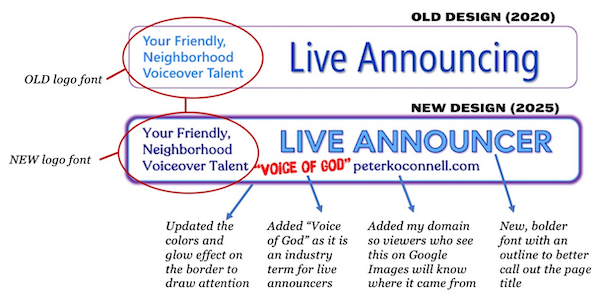
 If voiceover talents are honest with themselves, we really aren’t as good as we should be about keep our stores clean, fresh and repainted.






















 Back in April of 2014, I was in Kansas City and I grabbed dinner with fellow voiceover friends


 My simple advice is don’t take website content updates for granted…try and schedule a 6 month or 12 month check-up with yourself. Be accountable to yourself.


