Entries Tagged as 'voiceover advice'

You Should Pay Me For This But I’m an Idiot, So It’s Free: The 2026 Voiceover Beginner FAQ It Seems Nobody Wrote Down Until Now


Peter K. O'Connell's Voiceover WorkshopLately I’ve been getting out of my home voiceover studio and doing something old-fashioned: networking. Meeting local business owners around Raleigh, Durham and the Triangle in North Carolina. They have been getting a lot of Peter K. O’Connell, Your Friendly Neighborhood Voiceover Talent lately at various small networking groups, and honestly, they seem fine with it.

The reactions when they find out I’m a voice actor are nice. There’s always a “wait, I knew your voice was familiar.” Always a few wide eyes. And then, right on cue, somebody says one of three things:

  • “I’ve always wanted to be a voice actor.”
  • “People tell me I have a great voice.”
  • “How do you get started in voiceover?”

Every. Single. Time.

Look, I love the enthusiasm. I really do. But if I had a nickel for every time someone asked me that last question, I would be networking from a much nicer zip code.

So rather than answer it for the four hundredth time over a business card and a lukewarm coffee (well, Pepsi, and mine is always properly chilled), I finally did the responsible thing. I wrote it all down. You’re welcome in advance.

First things first: how do I get started in voiceover?

I’m going to start off with the bad news first: now is very probably one of the worst times to begin a voiceover career, in my opinion – hey, I’m honest. Why is it a bad time?

First reason is for a while technology has allowed any jackass with a computer microphone to label themselves a voice talent. The work most produce doesn’t even rhyme with the word talent, yet that silo of fakers keeps filling, not diminishing.

But the latest knife in the back of voice talents is AI, artificial intelligence. AI allows almost anybody to take a purchased voice computer made or a voice actor that has sold their voice (yes there are people who sell their voice and, in my opinion, their careers) to free AI voice generators. Those nasty (in my opinion) but perfectly legal companies then mix an AI voice with a downloaded script and that fake voice is now the narrator.

Good, fast and cheap – pick two. With AI, good is not necessary. Humans are a time and financial nuisance to those media producers who use AI voices and they are glad to tell you that.

I haven’t even mentioned those devious, unscrupulous individuals from around the globe who just plain steal human voices from previous recording (completely unauthorized) and sell them as their own. That kind of CRIME has taken place at the HIGHEST levels of business.

I don’t feel like this tornadic truth of the current voiceover climate will be changing any time soon. I HOPE it does but I don’t have that crystal ball and I promised to be honest.

THAT’S the world new voice talent are coming into.

So. Still want to swim in our pool with those sharks? OK. Here’s how you do it right.

Find a qualified voiceover coach, an actual working professional voice actor whose primary business is teaching, not someone whose real business model is selling you a demo. That distinction will save you thousands of dollars and a whole lot of heartbreak. Take individual lessons. Consider group voiceover workshops. Build your foundation before you build anything else.

Now. The other questions.

How do I make a voice acting demo with no experience?

You don’t. Not yet. A voice acting demo is a result of training, not the starting point. A demo produced before you’re ready is an expensive way to tell casting directors you aren’t ready. Why? Because voiceover is not just talking, there is acting, performance technique, script interpretation…so much stuff that you have not been trained in. As an example, if you can find a group voiceover class of voiceover professionals (not beginners), audit the class. Watch and listen to what they do. Then you will REALLY know how NOT ready for a demo you are. Be humble, not eager. Invest in professional voice over coaching first. When your trusted VO coach tells you it’s demo time, that means something. When a voiceover demo production mill tells you it’s demo time after one phone call, that means something too. And it’s very *not* good.

Do I need professional recording equipment to start?

No. For voiceover training and practice (first and foremost), a decent USB microphone and a quiet closet will do just fine. Don’t let gear anxiety stop you from starting if you really have the drive to be in voiceover. That said, as you progress toward auditioning and booking professional voiceover work, your home recording studio setup absolutely matters. Clean audio is non-negotiable for clients. But right now? Record. Practice. Learn. Save your money for lessons.

How long should a voiceover demo reel be?

About :60 seconds for a commercial demo reel. A qualified demo producer will help you on that, you don’t need to obsess about it. More importantly, I recommend that your first demo ALWAYS be your commercial demo. 99% of the time, your first paid VO jobs will be commercials. Even the famous character voice actors will tell you that. Yes, you can do an audiobook demo next (if that’s your passion), but start with commercial. Casting directors and voiceover agents are not sitting around hoping your demo is longer. They decide fast – honestly you have about 15 seconds or less before they know whether they want to consider or hire you.

Should I have different demos for different genres?

Yes, eventually. A commercial voiceover demo and a corporate narration demo serve completely different audiences. An audiobook narration demo and an e-learning voiceover demo are not interchangeable. As your voiceover career develops, separate demos for separate genres signal professionalism and make it easy for the right clients to find the right version of you.

What should I include in a voice acting portfolio?

The more you train, the more you talk with voice over teachers and the more you hang out with fellow voice talents (or just check out the content of their websites) it will become clear. Since you’re just beginning, you don’t need to focus in your portfolio now…but when you’re ready, my recommended areas of focus (ranked by priority are):

  1. On-going, professional voiceover training – (many, many months, not weeks and certainly not in a weekend)
  2. Commercial Demo – (with a professional coach and demo producer with scripts and styles the coach thinks you not only excel at but also differentiate you from many other talents)
  3. Voiceover website – if you’re hot to do something to do right now for your voiceover career, go to a domain registrar (think Go Daddy or someone like that) and see if you can secure your name as a dot com domain. If not your name, then yournamevoiceover.com or yournamevo.com. Then later, when you’re ready for a website…you can start with a one page with an audio player for your demo and some text (and build from there). You just need a landing page when you start out.
  4. A business card – doesn’t have to be fancy….doesn’t have to be perfectly branded. Name, website address, email address and phone number — something you can hand out.

What about a bio? What about a headshot? What about….knock it off. You’re just starting.

OK, you need a project? You want to feel like you’re doing something for your burgeoning voiceover career?

Start an excel spreadsheet. Save it as voiceover database. Across the top, left to right, label the cells “First Name”, “Last Name”, “Company Name”, “Business Address”, “City”, “State”, “Zip Code”, “Email Address”, “Web Address” & “Phone Number”.

Then research and fill out those cells for your regional ad agency Creative Director, Video Production Company Owners and or Producers, Recording Studio Owners and Engineers….this document, more than anything else I have told you, will be the start of your voiceover business.

What do you do with it?

That’s a blog post unto itself. Hope this helps.

How to Find the Best Voiceover Practice Scripts (And Why It Actually Matters)

Peter K. O'Connell's Voiceover WorkshopA lot of voice actors treat practice like something they’ll get to eventually.

New talent waits for a coach.

Seasoned pros figure they’ve already got it.

Both groups are leaving real skill development on the table. Good voiceover practice scripts are the gym equipment of this business. Quality matters.

What Makes a Good Voice Over Practice Script?
It should mirror real-world copy you’d actually get hired to read.

Commercial voice over scripts with a clear call to action. Narration with technical language. E-learning that demands authority. If your voice acting practice scripts sound nothing like actual client work, you’re not practicing. You’re just reading out loud.

How to Practice Voice Acting: Start With What’s Around You
Free voice over scripts are hiding in plain sight. TV, radio, streaming pre-roll ads. Real scripts real clients paid real money for.

Read along, then read without the audio and compare.

Here’s a voiceover training tip people overlook and I’ve been teaching FOR DECADES: grab a magazine.

When a brand ad catches your eye, read the copy. Why? Because for some reason you were drawn to that brand and you are connected.

The messaging, tone, and selling points are all there. With a little rewriting you’ve got a solid voice over script for practice and an unlimited, free supply of fresh material.

Where to Find Free Voiceover Practice Scripts Online

There are some other sources that I’m glad to share with you:

  • Edge Studio (edgestudio.com) offers thousands of free voice over scripts for beginners and pros: commercial, narration, animation, e-learning, and more in English and Spanish.
  • Voice Actor Websites (voiceactorwebsites.com) has a solid growing collection covering commercial, narration, IVR, PSAs, and imaging.

Why Voiceover Training Never Really Stops
I’ve been doing this over 40 years. I still practice.

Here’s a working voiceover’s truth: sometimes when a client sends a script, there’s little or no warm-up time. You sit down and you are expected to nail it. Practice gets you pointed in the right direction faster because you work your mind and vocal muscles more regularly and with intentionality (that’s a big teacher word, you should be impressed, say oooo or something).

Record yourself every session. What you think you sound like and what the mic actually captures are rarely the same thing. That gap is where voiceover training can begin to fix or enhance.

Quick Answers

In addition to practice scripts, I often get these questions (which could be their own full blog posts) but for now I’ll just briefly touch on them.

Can I use free voiceover practice scripts for my demo?
Generally no. Free script libraries are for voice acting practice and voiceover training, not demos. A good demo needs original, custom-written copy tailored to your voice.

Finding great voiceover practice scripts is not complicated. It just requires getupandgoness. Yes that’s a word…that I just made up.

Where do beginner voice actors start with training?
Start with a good voiceover coach who can assess your actual strengths and weaknesses. Then practice constantly with real-world commercial voice over scripts, narration copy, and anything else that mirrors the work you want to book. The coach gives you direction. The scripts give you reps.

How often should voice actors practice?
As often as you can manage, but quality beats quantity every time. One focused session with fresh voiceover practice scripts you’ve never seen beats an hour of reading the same three scripts you’ve memorized. Variety is the whole game.

What types of voiceover scripts should I practice?
All of them, eventually. But start with the category you most want to book. Commercial voice over scripts if you want ad work. Long-form narration scripts if corporate or e-learning is the goal. Character scripts if animation is your dream. Practice where the work is.

Do I need a voiceover coach to get better?
Yes. Not because I happen to coach, but because nobody can do this alone. You need a trained professional set of ears acting as an omniscient third-party expert. You simply cannot hear yourself the way an experienced voiceover coach hears you. That outside perspective is not optional. It’s essential.

Finding great voiceover practice scripts is not complicated. It just requires geterdoneness (that’s another big teacher word…don’t you feel edumacated now?)


Peter K. O’Connell is an award-winning professional voice actor and voiceover coach based in Raleigh, North Carolina. Connect with Peter at audioconnell.com.

The Voice Actor’s Guide to Voiceover Demo Release Anxiety (And Excitement)

Peter K. O'Connell Narration Voiceover DemoFor this voice actor, releasing a new narration demo feels a lot like opening night must feel for a stage actor.


The anticipation, the butterflies, the second-guessing (and third and fourth-guessing), the sheer panic—it turns out voice actors and stage actors aren’t so different after all! Except voice actors get to have our meltdowns in the privacy of a voiceover booth. Same existential crisis, similar plot line, muuuuch smaller audience.

Oh, one other big difference? Stage actors work with a team on their plays and musicals—other actors, directors, musicians, lighting designers. I produce my own demos, so it’s just me, my producer’s ear and the mic having a very one-sided conversation.

I’ve spent hours selecting pieces that showcase my storytelling range—revisiting past projects, recording new segments, tweaking the edit until it flows. The goal is capturing not just what my voice can do, but the depth I bring to every narration project.

I hope you like what you hear.

I hope you hire what hear.

As Bugs and Daffy sang:

“Overture, curtain, lights, This is it, the night of nights. No more rehearsing and nursing a part, We know every part by heart. Overture, curtains, lights, This is it, you’ll hit the heights. And oh what heights we’ll hit. On with the show, this is it. Tonight what heights we’ll hit. On with the show, this is it.”


PLAY THE DEMO ABOVE

The $10.1 Billion Question for Voice Actors: How New Pharma Ad Changes Could Reshape the Voiceover World

“I’m not a real doctor but I play one in commercials” – voice actor Peter K. O’Connell

Voice actors, buckle up.

On this Halloween, this is not a trick but it also may not be a treat either.

A seismic shift is coming to the $10+ billion pharmaceutical advertising industry—and honestly, even the big players in this marketing world aren’t entirely sure where it’s all heading.

I recently came across an excellent piece by Maia Anderson at Healthcare Brew that breaks down what’s happening with pharmaceutical advertising regulations, and it got me thinking about the ripple effects on our corner of the ad industry – voiceover.

If you’ve ever recorded one of those rapid-fire disclaimers about pharmaceutical side effects or told viewers to “ask your doctor,” you know that pharmaceutical DTC (direct-to-consumer) advertising represents a not insignificant chunk of commercial voiceover work. Many of these scripts may not be winning creative awards, but they’ve been reliably helping many of us pay mortgages, insurance premiums, and maybe even fund our home studio upgrades.

Now, the entire marketing landscape might be shifting beneath our feet.

What’s Happening?

(Quick note: This post is purely informational—not a political statement. Just sharing the facts of a news story that could affect our industry.)

A recent policy change by the Trump administration has pulled the plug on something called the “adequate provision” loophole from 1997.

Translation?

Pharmaceutical companies can no longer breeze through safety information in TV ads and direct people elsewhere for details. They’ll need to spell everything out—every side effect, every warning—right there in the commercial.

Read that….now think about the scripts we’ve been voicing…now think about “how in the world are they going to say all that in a TV spot?”

The FDA isn’t messing around either. They’ve already sent out thousands of warning letters and roughly 100 cease-and-desist orders to pharma companies about “deceptive” advertising.

The Numbers That Should Get Your Attention

Let’s talk advertising budget reality here, because this hits right at the heart of what affects us as voice actors:

  1. Pharmaceutical advertising spending hit $10.1 billion in 2024, with about half ($5.15 billion) spent on TV ads alone
  2. In just the first three months of 2025, drugmakers dropped an estimated $729.4 million on commercials for the top 10 pharma brands alone—nearly 30% more than the previous year
  3. Industry experts predict these new requirements will make broadcast pharmaceutical advertising “very expensive and very difficult”
  4. Ad agencies are warning that if advertisers need to buy 30 more seconds of airtime just for safety disclosures, “that’s going to cut down on your spend and cut down on your creative opportunity”
  5. The result? Most TV ads would likely come from only the biggest pharma companies who can afford the longer, costlier ad spots

What This Means for Voice Actors

Here’s where it gets interesting for us and the commercial producers and ad agencies we work with. Longer ads could mean fewer ads. Fewer ads could mean smaller production opportunities and less creative advertising spend. Smaller production opportunities mean… well, you can do that math.

Some pharmaceutical advertising insiders predict a major pivot to “unbranded” advertising—creative ads that talk about conditions rather than specific drugs. Others think marketing dollars will shift toward healthcare professional advertising or patient advocacy. Either way, the traditional :30 and :60 TV spots with our disclaimer voiceovers could become an endangered species. Or maybe not, because…

Nobody Really Knows (And That’s The Point)

What strikes me most about this story—and why it fits perfectly here at voxmarketising where we’ve been covering the intersection of voiceover, marketing, and advertising for decades—is that even the smartest people in pharmaceutical advertising are basically shrugging their shoulders, very unsure of what’s next. One agency managing director summed it up perfectly: “Like everything else with this administration, you just kind of play it day by day and see where things go.”

So what should we voice actors do?

Panic…that’s certainly the best option.

I’M KIDDING!!!!

Stay aware. Keep your VO skills diverse. Don’t put all your eggs in the pharma basket if you haven’t already. And maybe polish up those healthcare professional demo reads—that sector might be getting a budget influx.

The pharmaceutical advertising world is heading into uncharted territory, and we’re all along for the ride.

Stay informed, stay flexible, and keep those mics warm.

I hope this helps.

Standing Out in a Sea of Sameness: Why Voice Actors Must Think Like Creative Marketers

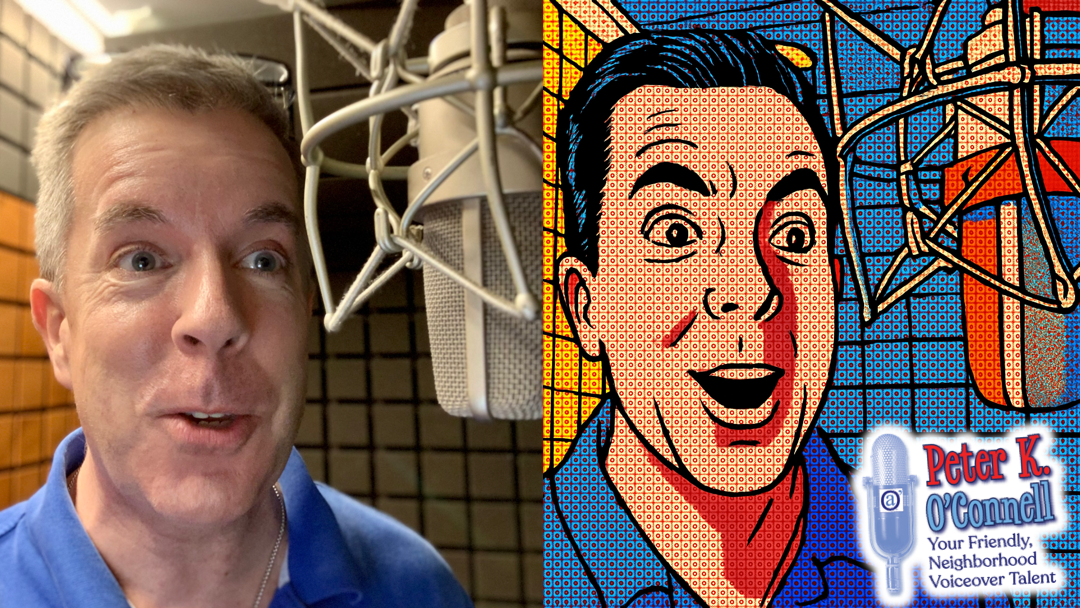
The original headshot of voice actor Peter K. O'Connell with the more comic book look of the voice actor.

A side by side comparison of the original headshot of voice actor Peter K. O’Connell with the more comic book look of the voice actor.

Let’s be honest—we voice actors are surrounded by talent.

Everywhere you look, there’s another professional with a great voice, solid technique, and impressive voiceover demo.

So here’s the million-dollar question: In a crowded marketplace of exceptional vocal performers, how do you capture the attention of the creative directors, advertising agencies, and commercial producers who could hire you?

The answer isn’t just about perfecting your craft in the voiceover booth (though that’s essential). It’s about embracing your role as a creative marketer.

The Accidental Discovery
I was reminded of my long held truth while mindlessly scrolling through social media—you know, that thing we all do when we should be practicing scripts. A photographer’s self-portrait stopped my thumb mid-scroll. His image used a distinctive halftone dot effect, reminiscent of old newspaper printing techniques like those in the Wall Street Journal. Black and white dots creating dimension and depth—simple, yet arresting.

Naturally, I fell down the rabbit hole of visual effects research. That’s when I encountered the bold, vibrant work of artist Roy Lichtenstein, whose signature pop art style featured Ben-Day dots, thick black outlines, and those iconic comic book aesthetics that dominated the 1960s art scene. The primary colors, the graphic punch, the sheer energy of it—I was hooked.

So I did what any curious voice talent would do: I grabbed one of my headshots (professionally captured by the renowned photographer Sel-fie d’Oconnell—yes, that’s me with my smartphone) and started experimenting with filters and editing tools.

The Result?

Comic Book Peter
The transformation was striking. My standard headshot morphed into something that looked like it belonged in a graphic novel. Was it revolutionary? No. Filters and artistic effects have been around forever, and plenty of performers use them in their marketing materials.

But here’s what matters: I tried something that – for me-  was different.

Why Creative Marketing Matters for Voice Actors
Voice actors often think their voice is their only calling card. And yes, your vocal instrument is crucial—whether you’re doing character voice acting for animation, narrating e-learning modules, or delivering that perfect commercial read for a national advertising campaign.

But the creative directors at ad agencies, video producers at production companies, and casting directors at recording studios? They’re visual thinkers. They’re bombarded with demo reels and voiceover submissions every single day. They’re looking for personalities that spark interest, professionals who demonstrate originality not just in their vocal performance, but in how they present themselves.

Think about it: These are the same people who conceptualize innovative campaigns, who push boundaries in storytelling, who live and breathe creativity. They’re naturally drawn to fellow creatives who think outside the conventional box.

Peter K. O'Connell Permission SlipThe Permission to Experiment
Here’s your permission slip: Sometimes your marketing experiments will work brilliantly. Sometimes they’ll fall flat. And that’s perfectly okay.

The real mistake isn’t creating something that doesn’t land—it’s never trying at all.

My comic book-style headshot might resonate with some producers who appreciate the playful, bold aesthetic. Others might prefer my traditional professional photo. But by creating both, I’m giving potential clients a glimpse into my personality, my willingness to take risks, and my understanding that voice acting is about more than just sound—it’s about connection and memorability.

Ten Ways to Differentiate Yourself
So how can you, as a voice talent, stand out in this competitive landscape?

  1. Experiment with Visual Branding: Try fresh approaches to your headshots, website design, or social media presence. Make it reflect your vocal personality.
  2. Share Your Process: Let casting directors and ad agency creatives see behind the curtain. Show your home recording studio setup, your script preparation, your character development.
  3. Create Engaging Content: Blog posts, videos, or social media content that showcases your expertise in voiceover work while entertaining and informing.
  4. Collaborate with Other Creatives: Partner with videographers, animators, or commercial producers on spec projects that demonstrate your versatility.
  5. Tell Stories: Don’t just list your credentials—share the narrative of interesting projects, challenging character voice acting sessions, or how you solved a client’s problem.
  6. Embrace New Technology: From AI tools to advanced editing software, show you’re forward-thinking and tech-savvy.
  7. Develop a Signature Style: Whether it’s your social media voice, your email communications, or your marketing materials, let your personality shine consistently.
  8. Network Authentically: Engage with advertising agencies, production companies, and fellow voice actors in genuine ways—not just when you need something.
  9. Stay Current: Understand trends in commercial production, what recording studios are looking for, and how the voiceover industry is evolving.
  10. Be Willing to Look Silly: Sometimes the most memorable marketing comes from not taking yourself too seriously.

The Bottom Line
We’re fortunate to work in a field that values both technical skill and artistic expression. But in a world where thousands of talented voice actors are competing for the same projects from the same advertising agencies and commercial producers, your creative marketing approach might be exactly what sets you apart.

That experimental headshot, that quirky social media post, that unconventional demo presentation—these aren’t distractions from your voice acting career. They’re essential components of it.

So grab your metaphorical camera (or your actual smartphone), experiment with that filter, try that offbeat marketing idea that’s been bouncing around your head, and see what happens. The creative directors and casting professionals you’re trying to reach?

They’ll appreciate the effort, even if they don’t always say so.

After all, we’re not just voice actors. We’re creative entrepreneurs building distinctive brands in a crowded marketplace. And sometimes, standing out is as simple as being willing to try something new—dots and all.

What creative marketing experiments have you tried in your voiceover career? I’d love to hear about your successes (and spectacular failures) in the comments below.

WOVOCON ’25: What You Missed & Why Voice Actors Can’t Miss Next Time

Rebecca Davis_ Barri Tsavaris_Peter K OConnell at WOVOCON 2025

Voice Actors Rebecca Davis, Barri Tsavaris and Peter K. O’Connell at WOVOCON The Voiceover Unconference, 2025

I’m going to write this voiceover blog post about WOVOCON 2025 – the Voiceover UNconference in New Orleans now because I am on the plane home having just left the event.  So obviously I have a few hours of free time up here at 33,000 feet.

Also, the thoughts are fresh. At my age – that’s important ?.

I don’t want to write this from the position of “here’s what you missed” and thus make anyone feel bad. And I’m not really interested increasing any voiceover FOMO (fear of missing out) for next time.

But I do want to write it for the WOVO members who were not there and those voice talents who have heard about it and may want to look into it the future.

This post has a bigger purpose – a business purpose. Your voiceover business.

YOUR NEW VOICEOVER BUSINESS GOAL

If you like (or even love) what I tell you about this exclusive voiceover event-  (there are other perfectly fine VO events – NONE like what WOVOCON is today) – I want you to do something.

I want you to set a very specific business goal for your voiceover business – no matter what stage you are at.

That goal is to create a budget item or business savings account for you to attend the next WOVOCON.

Post this goal on your booth wall, post it in your business planning folder. However you do it, take it VERY seriously.

Deal? Ok here we go.

WHAT YOU MISSED AT WOVOCON – AND IT WAS ALOT

With a maximum of only 120 people allowed at this voiceover unconference – it already stands apart from all the others. You WILL get to know almost all the participants, which leads to amazing business conversations inside and outside of the sessions.

I cannot be specific because there was lot of company specific information shared and the rule of WOVOCON is what happens at WOVOCON stays at WOVOCON. But what I can share should give you a fairly clear trail that what I and other learned over the weekend would likely have positively influenced your business immediately.

As an example:

  • I’ve been doing live announcing (Voice of God) and emceeing since about 1983 – but when Dan Hurst and George Washington III lead a presentation and discussion on live announcing, I took many notes and listened to the input of many other respected live announcers in the session. Sharing, sharing and more incredibly insightful, immediately impactful (for my business) sharing. Other voiceover conferences? Not like this.

One of WOVOCON’s other point of difference is that the agenda for the meeting is set BY the attendees AT the event. This takes customized learning to the next level. Especially because it becomes so clear from the topic suggestions that many of us have the same questions and interests.

As an example:

  • What are the hot and cold business interaction buttons creative decision makers among different generations? Can you call up a Gen-Alpha the same way you call a Baby-Boomer? Are there texting shortcuts that will freakout a Gen-Z? Tom Test and Matt Jackson had those questions, they had some answers and the rest was opened up to a wide ranging and insightful discussions. Many notes, even more epiphanies.

The hours I have spent in voice acting classes are numerous so naturally I know everything about voice acting…not! There are thoughts and direction that I need that I don’t even know I need and I got a good portion of that new direction came at the 2025 WOVOCON Voiceover Unconference in New Orleans.

As an example:

  • Do you know who offered this acting insight: ‘make sense of the script and the words will take care of themselves’? It was a very famous person. Do you understand the rules for making said sense? I know who said it and I understand the rules a bit clearer now after Hugh Klitzke’s session.

There were many more sessions than just these three examples but I think you now understand the wide scope of what was covered for the professional voice talents in attendance and likely how your business could have greatly benefited by your being a part of the weekend.

BACK TO THE GOAL

I hope you will take serious the goal I put before you. That the uniqueness, the intimate group size and the depth of knowledge immediately available to you – with no selling or up charges – is a really worthwhile investment in you and your business.

I hope you’ll start saving and I hope to see you at the next WOVOCON.