How I Help Hire Female Voice Talent Without Making It Complicated

By Peter K. O’Connell

audio'connell How I Help Hire Female Voice Talent Without Making It ComplicatedI’ve been a professional voice actor for a very long time.

One of the benefits of doing anything for a very long time — besides having stories nobody asked to hear — is that you get to know a lot of talented people.

That’s especially true in voiceover.

Over the years, producers and clients have regularly asked me some version of this question:

“Peter, do you know a good female voice talent?”

Yes. I know quite a few.

And when I’m helping someone find a female voice talent, I’m not simply looking for somebody with a nice voice. There are thousands of people with nice voices.

I’m looking for someone who understands what the script is trying to accomplish, takes direction well, has the right recording setup, delivers professional audio and — this is important — makes the producer’s job easier rather than harder.

Here’s how I approach it.

I start with the voiceover project, not the voice

Before I start thinking about talent, I want to understand what the voice actually needs to do.

Is this a commercial that needs energy without sounding like somebody is selling steak knives?

A corporate narration that needs authority without sounding like the principal just called you into her office?

An explainer that needs to make something complicated understandable?

Healthcare? E-learning? Character work? Social media? IVR?

“Female voice” isn’t a direction.

I want to understand what we’re communicating, who we’re communicating it to and what that audience should take away from it.

That’s where I start.

I listen for interpretation, not just sound

Obviously, I listen to demos.

But I’m listening for more than what somebody sounds like.

I’m listening for whether she understands what she’s saying.

Does she interpret the copy? Does she make choices? Does it sound like she’s communicating something rather than simply reading words nicely?

That’s acting.

Even when nobody gets chased by a dinosaur or dramatically dies in Act III.

I pay attention to professionalism

The best voice in the world isn’t especially useful if the deadline is tomorrow and the talent disappears.

I want to know that I’m recommending a professional.

Can she deliver broadcast-quality audio? Can she work in a directed session when necessary? Does she respond promptly? Can she handle pickups? Does she understand usage and the business side of professional voiceover?

None of that is glamorous.

All of it matters to the producer whose name is attached to the project.

I consider whether the voice actress is easy to work with

This one matters to me.

Talent is important.

So is being a good colleague.

I usually recommend people I know and, in most cases, people I’ve actually worked with. That’s important because when I recommend a voice talent to a producer (female OR male), I’m putting a little bit of my own reputation on the line, too.

I want to know that the woman or man I’m recommending is going to be prepared, professional and pleasant to work with — because I’ve seen them be those things.

The goal isn’t merely to get a good recording.

It’s to recommend someone I trust to help the producer get the job done without making things complicated.

Then I let the producer decide

This is important too.

I’m not interested in becoming the middleman.

I can point a producer toward talented female voice actors I know and trust. The producer can listen, decide who fits the project and contact that person directly.

audioconnell Female Voice Talents.com logoThat’s why I created audio’connell’s Female Voice Talent page as an audio production resource.

It’s a curated group of professional female voice actors I’ve known or worked with, with demos and direct links to the individual talents.

There’s no audio’connell booking fee.

There’s no commission on the voiceover project.

I don’t stand between the producer and the talent.

No need for me to “worry about me” in there.

I just help make the introduction easier.

Both sides know where to find me because that’s how they found each other.

After more than four decades in voiceover, I’ve learned that finding good people shouldn’t be the hardest part of producing good work.


audio’connell Voiceover Talent offers producers a free, direct-to-talent resource for finding and hiring professional female voice talent. Browse audio’connell’s Female Voice Talent roster and contact the talent you choose directly.

9/11 May Be History to You. It Isn’t to Me.

Peter K. O'Connell Reflection on September 11, 2001I don’t have a scary, amazing, heroic or even relevant 9/11 story – when the Twin Towers of the World Trade Center were felled, when the Pentagon was attacked and when a plane full of heroes offered their lives up in a Pennsylvania field so that the U.S. Capitol would not be attacked.

I was in a bagel shop in Buffalo, NY, when the first tower was hit. At work when the second tower was hit.

My story is meaningless in the world and unforgettable to me.

There are millions of 9/11 stories like mine.

But what I want to write here – and maybe this will live on after I am long gone (I’d be 87 on the 50th anniversary, and there are no guarantees I’ll see it) – is this…

Please don’t forget 9/11/01.

I know people who lived through it won’t forget 9/11, but I guess I am really talking to those of you born after 9/11.

To you born later, 9/11 is history. To us who lived through it, it’s fact. A hard reality. Unforgettable.

I wasn’t born during the Civil War, World War I or World War II…to me, that’s history, just like 9/11 would be history to you post-9/11 babies.

But I have always tried to remember just how awfully real those historic events were to the people who – like those of us around for 9/11 – lived through those tragic wars.

I worry that history is becoming less relevant to the generations born over the past 25 years, so that 9/11 might be as easily dismissed as the War Between the States.

Don’t dismiss our history…especially the bad stuff. When we forget, when we get lazy about historic details, we are susceptible to making new mistakes just like some of the old ones our forefathers made.

I’m talking about more than just a moment of silence, a prayer or a reading of names. That’s all very good.

But remember the details. Visit the sites of ALL these historic events. Remember those who were murdered and those who died so that others would not die.

And today, remember 9/11.

God bless America.

A Tale of Two Scripts – What a Live Announcer Does When a Live Event Goes Off Script

By Peter K. O’Connell

Live Announcer EMCEE Peter K OConnell Being a live announcer / Voice of God is like being on a roller coaster — not riding the coaster, DRIVING it.

Some of the hills are smooth, but many of those dips are butt-clenching and can take your breath away.

And live announcers need to control their breathing no matter what happens.

What I have learned in my nearly 45 years of live announcing, hosting and emceeing events is that I don’t have the luxury of getting rattled when things go off script.

“Oh, do things go off script?”

Oh heck yes.

I call it “The Tale of Two Scripts.”

The first script is the text, audio cues, graphic cues, stage position, lighting…everything. It’s the script that you rehearse with and the script you start the show with.

But likely something will change…be it timing, a long-winded guest or someone who is not where they are supposed to be when they are supposed to be there…the show runner or director starts to change things up.

For the live announcer — sometimes called the Voice of God or VOG — (and for everyone else on the production team), this is where the SECOND script kicks in…full of large Xs (noting parts of the script that are now out), lines scribbled through with someone’s typed name replaced by someone’s handwritten name (often misspelled because…live), as well as any number of other marks and adjustments that take place in the middle of the show.

But different from the organized chaos that is backstage at many shows, for the live announcer, it can NEVER, it MUST never sound chaotic. The audience cannot notice any issues from the announcer’s mic.

This is one of the reasons I’ve always enjoyed live work. You prepare like crazy precisely because you know the event probably isn’t going to happen exactly the way everybody prepared for it.

That’s where my experience comes in, both as a radio broadcaster (very live to many STATES at a time) and as a live announcer and host. Besides rehearsing, one of the only practical ways a VOG like me can get really good at the on-mic pivot is to have actually announced A LOT of events.

I can very often calmly adjust because it’s just another day at the office. At least I SOUND calm.

For a live announcer that’s just getting started…well, they will likely learn the very hard way – as we all have.

I just hope it’s NOT with YOUR script at YOUR live event.

About Peter K. O’Connell
Peter K. O’Connell is an award-winning voice actor, broadcaster, live announcer and emcee who has been working behind microphones since 1982. He provides live Voice of God announcing and emcee services for corporate events, conferences, awards programs and other live productions nationwide.

The Least Marketable Skill in Voiceover May Be the Most Important

audio’connell voiceover ear microphoneI’m lucky.

I’ve spent decades talking into microphones.

I could’ve done a voiceover blog post about ALL the different microphones I’ve spoken into if I’d kept count…but only a few microphone-philes (if that’s a word) would really be interested in that.

But a thought occurred to me. I’ve mentioned it before, but I’m always getting new readers here.

The big takeaway is this: your voice is not the most important tool in your VO toolbox.

Neither is breathing, script interpretation or the ability to improvise. (Although if you haven’t mastered those things, you likely won’t have a great voiceover business.)

Nope.

My advice for being a fantastic voiceover actor — and building a great business — is learning how to truly listen.

Listening?

Before I say the words, read the words…before I even think about the words, I have to understand the WHY of the words.

Now, some may say that the “why” is where script interpretation comes in.

I say yes, but also no.

If your only direction is a short paragraph attached to an audition, then yes — interpret away. You have no other choice.

But one of the great gifts we get as voice actors — and one that is too often ignored or stumbled over — is direction from a live person.

It might be a client, a creative director, the script writer, the video producer, the author or the candidate.

To all of these folks, we as voice actors often reveal our sometimes fatal flaw — we are people pleasers. Similar to many other small business owners, but, I think to a higher degree, voice actors really, really, REALLY want to please our clients. We as voiceover talents are somewhere between a four-year-old child and a purebred German Shepherd.

And with that intense desire to please and do well, we sometimes forget to truly listen.

We aren’t being rude. In fact, we may be intensely focused on what the person is saying.

But within the first few sentences, we start to interpret instead of listen.

We start to interject instead of listen.

Sometimes we even interrupt instead of listen.

We’re trying to interact. We’re trying to show interest. We’re trying to demonstrate that we understand.

But what we need to do — and I very much include myself in this statement — is shut up, pay attention and gain understanding.

And when the client is done talking, THEN confirm our interpretation, offer our thoughts and input, make a collectively agreed-upon creative plan…and record.

Sometimes the direction is very specific.

Sometimes it’s, “Give me a little more energy.”

Sometimes it’s, “Less announcery.”

Sometimes it’s that wonderfully precise piece of direction: “I don’t know exactly what I want, but I’ll know it when I hear it.”

And sometimes the direction is a fully formed novel of verbal vomit.

That’s okay, too.

Because that kind of brain-to-paper-to-microphone translation service is at the crux of what a good voice actor does.

We also need to remember that while this job is important to us, all those other people — the client, creative director, script writer, video producer, author, candidate — have something important riding on the project we’re voicing.

Sometimes even their job.

So while you’re doing vocal exercises and improv classes and working on breathing and interpretation and all the rest, spend some time working on listening.

Concentrated listening.

Not listening while preparing your response.

Not listening while deciding what the direction means.

Not listening while waiting for your turn to talk.

Just listening.

It may be the least marketable tool in your voiceover toolbox.

But over the long term, it may be one of the most important tools for building your reputation — and your business.

Saying It, Knowing It and Doing It are Three Very Different Things

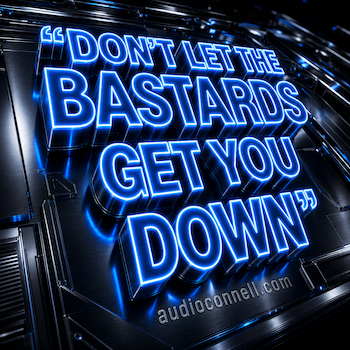
audio'connell Voiceover Talent "Don't Let The Bastards Get You Down"The difference between trite and uplifting when it comes to “sayings” or “motivational words”, for me, boils down to mood.
Sometimes the words are what you “need” to hear and come at just right time.

Sometimes you’d rather just punch the messenger in the nose and simply stew in your own anger, bitterness and foul mood.

Maybe that’s just me…but I’m guessing my feelings are neither that unique nor special.

Neither are my daily or ongoing problems that I face as a family man or business owner. We all keep these awful problems to ourselves knowing in all practicality they are ours to solve and no one is coming.

All this was my consideration this Monday morning when I thought about this phrase my Father taught me. I hope it helps you to hear it:

“Don’t Let The Bastards Get You Down.”

Groovy and thoughtful as motivation if you’re not dealing with any Bastards of direct consequence to your life.

Seemingly useless if you have Bastards surrounding you and directly impacting you in some combination of mental, physical, spiritual, emotional or financial hellishness.

But when you’re ready to hear it, when you find the strength to get out of your own way and really hear it (I respect from experience that’s not easy or simple) —- it is fantastic direction and simple at that.

While the choices to change or alter your circumstances for the better may not be easy and indeed maybe be risky, you do have choices and options and actions you can take that will *not* allow the Bastards to get you down.

Your life has meaning and value – but you have to dictate your direction to betterment. To happiness. Even when (maybe especially when) you feel powerless.

Said another way, wouldn’t rather fail because you tried rather than failing under the oppressive thumb of idiot bastards who don’t care about you anyway?

Changes in attitude and direction are often scary and our brains may focus on what could go wrong or what we could lose. Sure, actions need to be carefully considered for yourself and those who entrusted to your care. For me, I think of caution as a useful, thoughtful tool and less a way of life. You’re mileage may vary.

But if you are in a corner, and it’s a very bad corner, trust yourself (say a prayer) and take forward action. For yourself and for your family and away from the Bastards.

I hope this helps.

I Had an Idea. There Was Nobody Here to Stop Me. Branding My New Political Voiceover Demo.

By Peter K. O’Connell

The line between brilliant and stupid is often blurred when you own a small business.

It’s frequently crossed when you’re also responsible for the creative marketing for said business.

I am a creative guy and I have many good ideas. That’s not ego…I have cashed the checks that confirm that fact.

What you can also bank on is the fact that I have had some really bad ideas that I thought were swell. There is not one creative person who hasn’t lived this truth.

So whether the following is a swell idea or a stinker will have to be left up to history to decide.

We hold these truths to be self evident that this is the honest Abe story.

It’s coming up on the Midterm Elections and I have updated my political commercial demo for campaign managers and political advertising consultants to listen to as they hire voices for all the political ads.

Not quite as important as album cover art of my youth, but the art/look/branding that goes along with political demos can help keep the voice talent as memorable in the buyer’s mind as the voice demo does within the buyer’s ear.

In the past, photos involving the U.S. Capitol and American Flag have adorned my political demo branding — which looked about as bland as it now sounds.

But what could I come up with as a better idea?

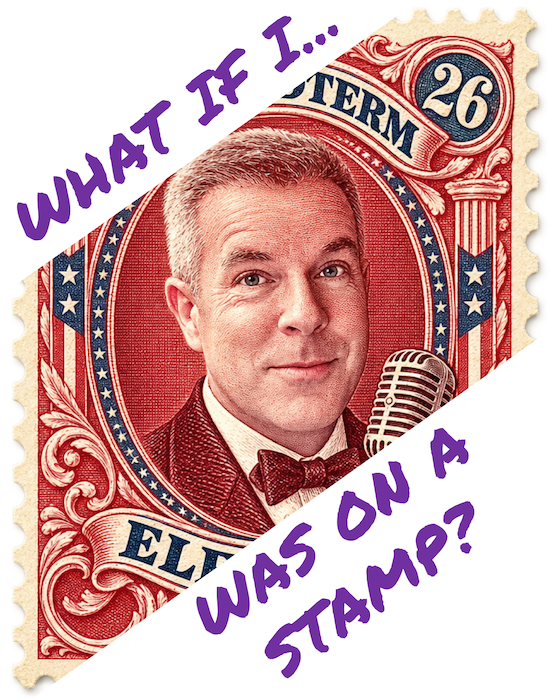
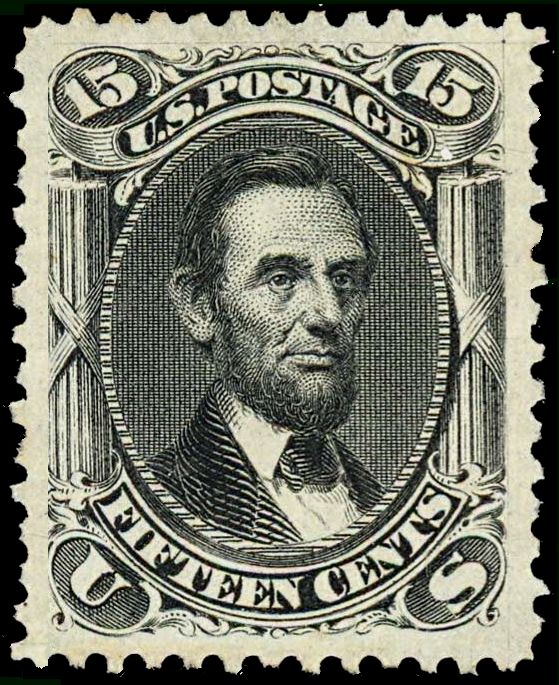
Then I saw an old postage stamp with my pal Abe Lincoln on it. Then I thought ‘what if I created an image of that kind of old time presidential stamp but with picture of me looking kind of old timey.’ All red white and blue but with an 1800’s feel to it.

It had to have a little humor to it so everyone was in on the joke. So working off the Lincoln stamp, I grabbed an old picture of me, put “26” where the stamp cost was supposed to be (for 2026), I put “MIDTERM ELECTIONS” where it said U.S POSTAGE etc., and of course added a microphone to make it blatantly clear what this image was about.

SO this is either another gold standard in voiceover political branding or absolute egotistical crap that will haunt me to my deathbed.

Male Political Voiceover Talent for Radio, TV & Campaign Ads - Peter K. O'Connell

Male Political Voiceover Talent Peter K. O’Connell has released a new Political Commercial Voiceover Demo

In either case, I promise the political voiceover demo is really good.

About Peter K. O’Connell
Peter K. O’Connell is an award-winning male voice actor with more than 40 years of political commercial voiceover experience. He provides political voiceover for radio, television, digital and campaign advertising from his professional Source-Connect equipped studio.

[Listen to my Political Voiceover Demo]