
Entries Tagged as ''

5 Questions for a Professional Voice-Over Talent – Scott R. Pollak


Today’s 5 Questions for a Professional Voice-Over Talent are answered by Scott R. Pollak, a professional voice over talent based in Atlanta, Georgia.

1. The beginning: When did you know you wanted to be a voiceover talent; how did your career begin (please include what year it started) and then when did your passion for voiceover develop into something professional?

I went into college in 1973 majoring in communications, wanting to work in radio (which I did, off and on over the next 30 years or so). I really began to think about shifting from radio into fulltime v/o work in about 2000 or 2001. In about 2004 or so I finally was able to dive into it full time and haven’t looked back since.

2. What is the one thing you know now that you wish someone had told you when you first started out in voiceover?

I hope you won’t mind me twisting your question around and tell you the one thing I know now that I’m glad no one DID tell me when I was starting: How darned hard it is to make a dent in this profession or make a good living doing it. Had I known that, I might have given up. Glad I didn’t.

3. What do you see as the biggest professional or personal obstacle you face that impacts your voiceover business and how are youworking to overcome it?

My personal obstacles are lack of professional training, for one. Other than a few sessions with Nancy Wolfson I’ve had no other voiceover training, but perhaps about 45 or so years of theatre training have helped offset that. Also, my home studio isn’t quite as pristine as it should be and I battle noise floor issues. Getting ready to move to a new home soon, though, so hopefully that will improve. Hopefully. 🙂

4. What personal trait or professional tool has helped you succeed the most in your career so far?

Probably the fact that – honestly – I will do whatever it takes to make the customer ecstatic. MOST clients are very easy to please, and very grateful for the work, but for the few who aren’t, I won’t settle until they’re happy. And I try to price my work reasonably.

5. In your development as a voice over performer, who has been the one particular individual or what has been the one piece of performance advice (maybe a key performance trick, etc.) that you felt has had the most impact on your actual voice over performance and why?

Julie Williams, in about 2001 or so, listened to my first demo (of which I was glowingly proud) and said, in essence “Nice demo… for a radio announcer”. She then went on to shatter my illusions and told me to become a real person and not an announcer. It took some work, but I think I got there. And continue to try to always improve on it.

5 Questions for a Professional Voice Over Talent – Philip Banks

Today’s 5 Questions for a Professional Voice Over Talent are answered by Philip Banks, a professional voice over talent based in Portgordon, Scotland.

1. The beginning: When did you know you wanted to be a voiceover talent; how did your career begin (please include what year it started) and then when did your passion for voiceover develop into something professional?

I’m not certain that I ever really wanted or knew I would be doing voice-over work but suspect it sort of evolved. As a child I was captivated by the announcers on BBC TV who did the links between programmes, never seen, never credited.

In my early teens I saw a documentary about how a product got to market, the subject was Kodak films. As part of the documentary they showed the creation of the TV commercial and blues guitarist/vocalist Alexis Korner was booked to be the voice. His voice was as great simply speaking as it was when he was singing. His sound and the sound of the late Bill Mitchell, a UK based Canadian actor would now blow the so-called greats out of the water in terms of sound and more importantly performance.

In 1989 when I worked for in investment management I met a lady who had worked as a producer for the BBC. She arrived at a brand new commercial radio station close to where I lived. It was a chance meeting and she explained how the company made commercials for clients.

“People, usually actors, travel from station to station doing voice over sessions. They get work by sending a demo (on audio cassette) of their voice” said Alison.

A few weeks later I hired a local music recording studio and spent the afternoon making a demo. It cost me £90 (around $140). Armed with copies of the demo on cassette I called producers on the phone, sent demos and waited. On 28th February 1990 I did my first ever radio commerical session. In May 1992 I went full-time.

It was an organic evolution as opposed to a revolution.

2. What is the one thing you know now that you wish someone had told you when you first started out in voiceover?

Can’t think of a single thing.

3. What do you see as the biggest professional or personal obstacle you face that impacts your voiceover business and how are youworking to overcome it?

There aren’t any. If my job was hard, I’d do something else.

4. What personal trait or professional tool has helped you succeed the most in your career so far?

It’s a rare session when I do not make the people involved laugh with me and AT me.

5. In your development as a voice-over performer, who has been the one particular individual or what has been the one piece of performance advice (maybe a key performance trick, etc.) that you felt has had the most impact on your actual voice over performance and why?

Sadly I’ve was born with the ability to do something which in the grand scheme of things is useless. Don’t get stuck on a desert island with a voice over as they couldn’t build a shelter but the could probably bore one to death.

I try not to analyse what I do or over think it – Open your mouth and just let the words fall out, it’s the natural thing to do. That’s what I do ……….It’s a living.

is the decision of the judges final?

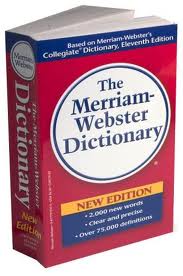
So Stephanie Ciccarelli, of Voices.com, wrote a blog post which was supposed to end for all time the debate regarding how to “properly” spell voiceover (or maybe that spelling is wrong).

So according the M-W, the answer is: voice-over.

But for me and my SEO, I care more about how Google spells it than how Merriam-Webster spells it.

So let’s do a quick check. Here are the results:

voice-over: About 75,600,000 results
voiceover: About 44,300,000 results
voice over About 74,200,000 results

This here is scientific and indisputable fact-like information indicative of…nothing.

But I’m not one to let facts (or non-facts for that matter) get in the way of a plan.

So I guess I’ve got to start adding dashes or hyphens to my voice-over business.

No wait, is it dashes or hyphens? Crap! Here we go again!