Entries Tagged as ''

The $10.1 Billion Question for Voice Actors: How New Pharma Ad Changes Could Reshape the Voiceover World
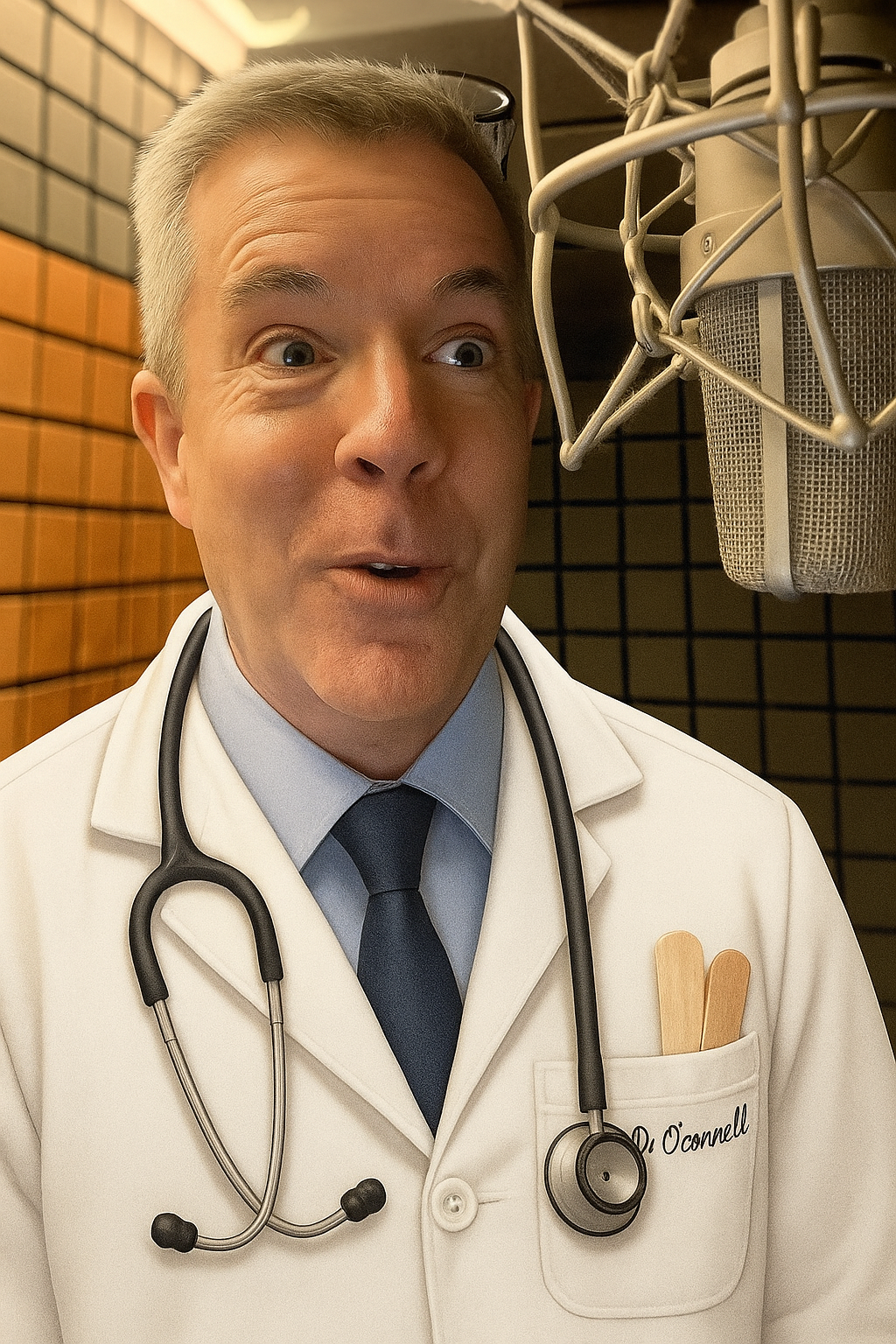
“I’m not a real doctor but I play one in commercials” – voice actor Peter K. O’Connell

Voice actors, buckle up.

On this Halloween, this is not a trick but it also may not be a treat either.

A seismic shift is coming to the $10+ billion pharmaceutical advertising industry—and honestly, even the big players in this marketing world aren’t entirely sure where it’s all heading.

I recently came across an excellent piece by Maia Anderson at Healthcare Brew that breaks down what’s happening with pharmaceutical advertising regulations, and it got me thinking about the ripple effects on our corner of the ad industry – voiceover.

If you’ve ever recorded one of those rapid-fire disclaimers about pharmaceutical side effects or told viewers to “ask your doctor,” you know that pharmaceutical DTC (direct-to-consumer) advertising represents a not insignificant chunk of commercial voiceover work. Many of these scripts may not be winning creative awards, but they’ve been reliably helping many of us pay mortgages, insurance premiums, and maybe even fund our home studio upgrades.

Now, the entire marketing landscape might be shifting beneath our feet.

What’s Happening?

(Quick note: This post is purely informational—not a political statement. Just sharing the facts of a news story that could affect our industry.)

A recent policy change by the Trump administration has pulled the plug on something called the “adequate provision” loophole from 1997.

Translation?

Pharmaceutical companies can no longer breeze through safety information in TV ads and direct people elsewhere for details. They’ll need to spell everything out—every side effect, every warning—right there in the commercial.

Read that….now think about the scripts we’ve been voicing…now think about “how in the world are they going to say all that in a TV spot?”

The FDA isn’t messing around either. They’ve already sent out thousands of warning letters and roughly 100 cease-and-desist orders to pharma companies about “deceptive” advertising.

The Numbers That Should Get Your Attention

Let’s talk advertising budget reality here, because this hits right at the heart of what affects us as voice actors:

  1. Pharmaceutical advertising spending hit $10.1 billion in 2024, with about half ($5.15 billion) spent on TV ads alone
  2. In just the first three months of 2025, drugmakers dropped an estimated $729.4 million on commercials for the top 10 pharma brands alone—nearly 30% more than the previous year
  3. Industry experts predict these new requirements will make broadcast pharmaceutical advertising “very expensive and very difficult”
  4. Ad agencies are warning that if advertisers need to buy 30 more seconds of airtime just for safety disclosures, “that’s going to cut down on your spend and cut down on your creative opportunity”
  5. The result? Most TV ads would likely come from only the biggest pharma companies who can afford the longer, costlier ad spots

What This Means for Voice Actors

Here’s where it gets interesting for us and the commercial producers and ad agencies we work with. Longer ads could mean fewer ads. Fewer ads could mean smaller production opportunities and less creative advertising spend. Smaller production opportunities mean… well, you can do that math.

Some pharmaceutical advertising insiders predict a major pivot to “unbranded” advertising—creative ads that talk about conditions rather than specific drugs. Others think marketing dollars will shift toward healthcare professional advertising or patient advocacy. Either way, the traditional :30 and :60 TV spots with our disclaimer voiceovers could become an endangered species. Or maybe not, because…

Nobody Really Knows (And That’s The Point)

What strikes me most about this story—and why it fits perfectly here at voxmarketising where we’ve been covering the intersection of voiceover, marketing, and advertising for decades—is that even the smartest people in pharmaceutical advertising are basically shrugging their shoulders, very unsure of what’s next. One agency managing director summed it up perfectly: “Like everything else with this administration, you just kind of play it day by day and see where things go.”

So what should we voice actors do?

Panic…that’s certainly the best option.

I’M KIDDING!!!!

Stay aware. Keep your VO skills diverse. Don’t put all your eggs in the pharma basket if you haven’t already. And maybe polish up those healthcare professional demo reads—that sector might be getting a budget influx.

The pharmaceutical advertising world is heading into uncharted territory, and we’re all along for the ride.

Stay informed, stay flexible, and keep those mics warm.

I hope this helps.
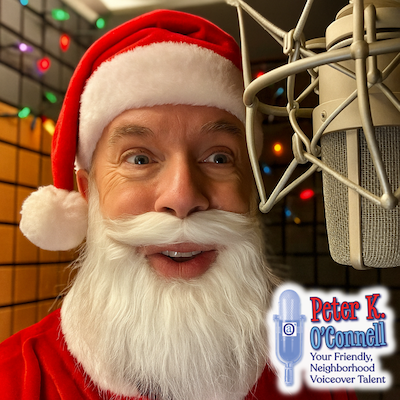
Ho Ho Hold the Mic: Why Christmas Comes Early for Voice Actors

Voice actor Peter K. O'Connell as Santa

Voice actor Peter K. O’Connell as Santa…or is it REALLY Santa??

Okay, okay — I know it’s not even Halloween yet. But here I am, having been knee-deep in Christmas scripts for a while.

Sorry folks, the holidays have arrived again (certainly for some months now — in the world of voiceover).

For voice actors, this time of year is pure magic. The studios have been buzzing with holiday energy, and as you’ve seen and heard in retail stores (and some media) ad agencies, production studios, and digital media teams are cranking out festive campaigns for radio, TV, streaming, and social.

It’s honestly one of the most fun times to be behind the mic.


Why the Holidays Matter So Much in Voiceover

The holiday season is huge — not just for shoppers, but for brands and voiceover professionals alike. Here’s a snapshot of just how important Q4 really is in the U.S.:

Top 5 U.S. Holiday Advertising & Consumer Facts:

  • U.S. consumers planned to spend around $1,595 on average for the 2025 holiday season. (Deloitte)

  • Holiday retail sales were forecast to reach about $1.66?trillion, with 92% of consumers planning to shop this season. (ICSC)

  • Nearly half of U.S. shoppers planned to make purchases before Thanksgiving, showing how early brands need to start their campaigns. (Circana 2025 Report)

  • U.S. digital ad spending was expected to exceed $300?billion in 2025, with digital video (including CTV) growing around 16% year-over-year. (eMarketer)

  • For the 2025 holidays, 37% of consumers planned to shop in September/October, earlier than the 32% planning purchases in November/December. (AdRoll 2025)

Top 5 Voiceover / Audio Advertising Stats:

  • Holiday-themed audio ads can boost purchase intent and brand recall by 26%. (Audacy/Consumable)

  • In Q4 2024, U.S. listeners spent 67% of daily audio time with ad-supported radio, 18% with podcasts, and 12% with streaming audio. (Nielsen)

  • Multi-channel holiday audio ads delivered 55% higher conversions, with festive voiceover cues playing a key role. (Radio Ink Q4 Case Study)

  • Retailers using holiday-themed audio ads saw a +5.2-point lift in unaided brand awareness and a +5.7-point boost in purchase intent. (Audacy / Radio Ink)

  • In-store audio ads with voiceovers influence Gen-Z buying behavior about 5× more than Baby Boomers during the holiday season. (Vibenomics 2025)


The Fun Part: Playing in Santa’s, er…Peter’s Audio Workshop

This is where it gets really fun for us. Around the holidays, we get to lean into all sorts of characters.

I’ve voiced Santa Claus (more times than I can count), elves, reindeer — even the occasional overly excited toy robot. I haven’t voiced Mrs. Claus…yet!

There’s something special about bringing those characters to life — a blend of storytelling, humor, and warmth that keeps holiday advertising feeling personal and memorable.


Why It All Matters for Commercial Producers and Creative Directors

For producers, ad agency creative directors, studio engineers, and digital media creators, the holidays are go time. In my opinion, the only more pressure-filled, deadline ridden time is political season. That’s a special kind of fast and furious.

In Q4, every project has a rush deadline, every brand wants to sound fresh, and every campaign is racing to hit that emotional sweet spot before the year ends.

That’s where seasoned voice talent comes in — folks who can pivot from warm and cozy to bright and energetic, and who can bring characters (and products) to life under tight turnarounds.


So yes — even though it’s technically spooky-season right now, my studio already smells faintly of pine needles and peppermint. And that’s just fine by me.

Here’s to a busy, merry, and microphone-filled holiday season ahead.


The holiday mic is hot, and my studio smells faintly of peppermint. Need a festive voice for Santa, elves, or quirky toys? Let’s make some Christmas voiceover magic — peter@audioconnell.com | 716-572-1800 or 919-283-1516

Standing Out in a Sea of Sameness: Why Voice Actors Must Think Like Creative Marketers

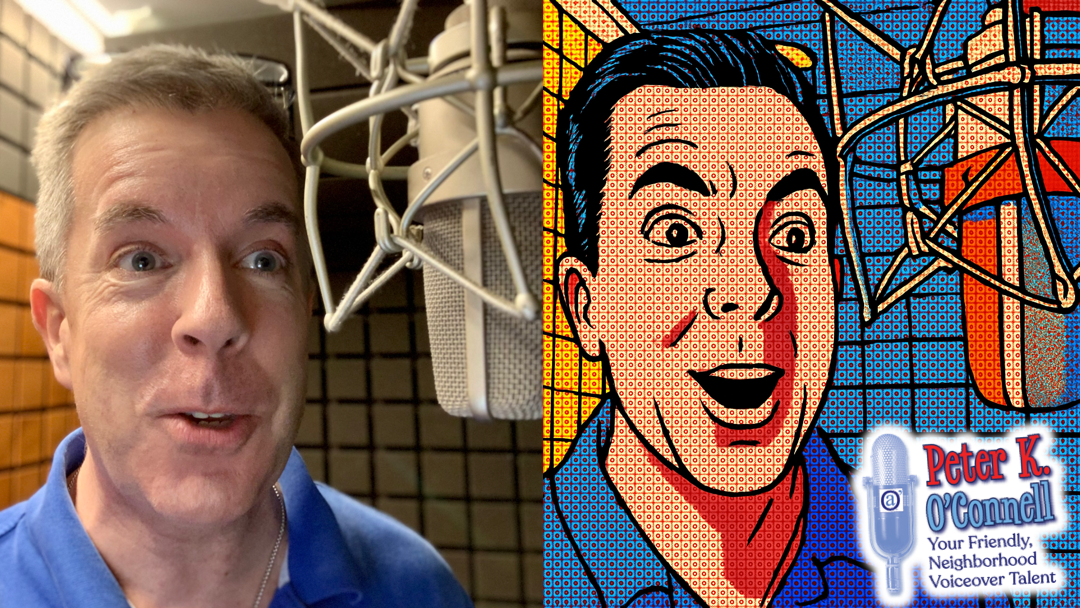
The original headshot of voice actor Peter K. O'Connell with the more comic book look of the voice actor.

A side by side comparison of the original headshot of voice actor Peter K. O’Connell with the more comic book look of the voice actor.

Let’s be honest—we voice actors are surrounded by talent.

Everywhere you look, there’s another professional with a great voice, solid technique, and impressive voiceover demo.

So here’s the million-dollar question: In a crowded marketplace of exceptional vocal performers, how do you capture the attention of the creative directors, advertising agencies, and commercial producers who could hire you?

The answer isn’t just about perfecting your craft in the voiceover booth (though that’s essential). It’s about embracing your role as a creative marketer.

The Accidental Discovery
I was reminded of my long held truth while mindlessly scrolling through social media—you know, that thing we all do when we should be practicing scripts. A photographer’s self-portrait stopped my thumb mid-scroll. His image used a distinctive halftone dot effect, reminiscent of old newspaper printing techniques like those in the Wall Street Journal. Black and white dots creating dimension and depth—simple, yet arresting.

Naturally, I fell down the rabbit hole of visual effects research. That’s when I encountered the bold, vibrant work of artist Roy Lichtenstein, whose signature pop art style featured Ben-Day dots, thick black outlines, and those iconic comic book aesthetics that dominated the 1960s art scene. The primary colors, the graphic punch, the sheer energy of it—I was hooked.

So I did what any curious voice talent would do: I grabbed one of my headshots (professionally captured by the renowned photographer Sel-fie d’Oconnell—yes, that’s me with my smartphone) and started experimenting with filters and editing tools.

The Result?

Comic Book Peter
The transformation was striking. My standard headshot morphed into something that looked like it belonged in a graphic novel. Was it revolutionary? No. Filters and artistic effects have been around forever, and plenty of performers use them in their marketing materials.

But here’s what matters: I tried something that – for me-  was different.

Why Creative Marketing Matters for Voice Actors
Voice actors often think their voice is their only calling card. And yes, your vocal instrument is crucial—whether you’re doing character voice acting for animation, narrating e-learning modules, or delivering that perfect commercial read for a national advertising campaign.

But the creative directors at ad agencies, video producers at production companies, and casting directors at recording studios? They’re visual thinkers. They’re bombarded with demo reels and voiceover submissions every single day. They’re looking for personalities that spark interest, professionals who demonstrate originality not just in their vocal performance, but in how they present themselves.

Think about it: These are the same people who conceptualize innovative campaigns, who push boundaries in storytelling, who live and breathe creativity. They’re naturally drawn to fellow creatives who think outside the conventional box.

Peter K. O'Connell Permission SlipThe Permission to Experiment
Here’s your permission slip: Sometimes your marketing experiments will work brilliantly. Sometimes they’ll fall flat. And that’s perfectly okay.

The real mistake isn’t creating something that doesn’t land—it’s never trying at all.

My comic book-style headshot might resonate with some producers who appreciate the playful, bold aesthetic. Others might prefer my traditional professional photo. But by creating both, I’m giving potential clients a glimpse into my personality, my willingness to take risks, and my understanding that voice acting is about more than just sound—it’s about connection and memorability.

Ten Ways to Differentiate Yourself
So how can you, as a voice talent, stand out in this competitive landscape?

  1. Experiment with Visual Branding: Try fresh approaches to your headshots, website design, or social media presence. Make it reflect your vocal personality.
  2. Share Your Process: Let casting directors and ad agency creatives see behind the curtain. Show your home recording studio setup, your script preparation, your character development.
  3. Create Engaging Content: Blog posts, videos, or social media content that showcases your expertise in voiceover work while entertaining and informing.
  4. Collaborate with Other Creatives: Partner with videographers, animators, or commercial producers on spec projects that demonstrate your versatility.
  5. Tell Stories: Don’t just list your credentials—share the narrative of interesting projects, challenging character voice acting sessions, or how you solved a client’s problem.
  6. Embrace New Technology: From AI tools to advanced editing software, show you’re forward-thinking and tech-savvy.
  7. Develop a Signature Style: Whether it’s your social media voice, your email communications, or your marketing materials, let your personality shine consistently.
  8. Network Authentically: Engage with advertising agencies, production companies, and fellow voice actors in genuine ways—not just when you need something.
  9. Stay Current: Understand trends in commercial production, what recording studios are looking for, and how the voiceover industry is evolving.
  10. Be Willing to Look Silly: Sometimes the most memorable marketing comes from not taking yourself too seriously.

The Bottom Line
We’re fortunate to work in a field that values both technical skill and artistic expression. But in a world where thousands of talented voice actors are competing for the same projects from the same advertising agencies and commercial producers, your creative marketing approach might be exactly what sets you apart.

That experimental headshot, that quirky social media post, that unconventional demo presentation—these aren’t distractions from your voice acting career. They’re essential components of it.

So grab your metaphorical camera (or your actual smartphone), experiment with that filter, try that offbeat marketing idea that’s been bouncing around your head, and see what happens. The creative directors and casting professionals you’re trying to reach?

They’ll appreciate the effort, even if they don’t always say so.

After all, we’re not just voice actors. We’re creative entrepreneurs building distinctive brands in a crowded marketplace. And sometimes, standing out is as simple as being willing to try something new—dots and all.

What creative marketing experiments have you tried in your voiceover career? I’d love to hear about your successes (and spectacular failures) in the comments below.

WOVOCON ’25: What You Missed & Why Voice Actors Can’t Miss Next Time

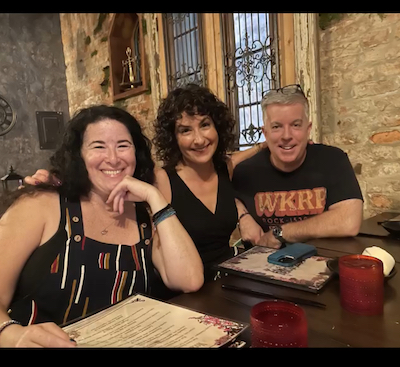
Rebecca Davis_ Barri Tsavaris_Peter K OConnell at WOVOCON 2025

Voice Actors Rebecca Davis, Barri Tsavaris and Peter K. O’Connell at WOVOCON The Voiceover Unconference, 2025

I’m going to write this voiceover blog post about WOVOCON 2025 – the Voiceover UNconference in New Orleans now because I am on the plane home having just left the event.  So obviously I have a few hours of free time up here at 33,000 feet.

Also, the thoughts are fresh. At my age – that’s important ?.

I don’t want to write this from the position of “here’s what you missed” and thus make anyone feel bad. And I’m not really interested increasing any voiceover FOMO (fear of missing out) for next time.

But I do want to write it for the WOVO members who were not there and those voice talents who have heard about it and may want to look into it the future.

This post has a bigger purpose – a business purpose. Your voiceover business.

YOUR NEW VOICEOVER BUSINESS GOAL

If you like (or even love) what I tell you about this exclusive voiceover event-  (there are other perfectly fine VO events – NONE like what WOVOCON is today) – I want you to do something.

I want you to set a very specific business goal for your voiceover business – no matter what stage you are at.

That goal is to create a budget item or business savings account for you to attend the next WOVOCON.

Post this goal on your booth wall, post it in your business planning folder. However you do it, take it VERY seriously.

Deal? Ok here we go.

WHAT YOU MISSED AT WOVOCON – AND IT WAS ALOT

With a maximum of only 120 people allowed at this voiceover unconference – it already stands apart from all the others. You WILL get to know almost all the participants, which leads to amazing business conversations inside and outside of the sessions.

I cannot be specific because there was lot of company specific information shared and the rule of WOVOCON is what happens at WOVOCON stays at WOVOCON. But what I can share should give you a fairly clear trail that what I and other learned over the weekend would likely have positively influenced your business immediately.

As an example:

  • I’ve been doing live announcing (Voice of God) and emceeing since about 1983 – but when Dan Hurst and George Washington III lead a presentation and discussion on live announcing, I took many notes and listened to the input of many other respected live announcers in the session. Sharing, sharing and more incredibly insightful, immediately impactful (for my business) sharing. Other voiceover conferences? Not like this.

One of WOVOCON’s other point of difference is that the agenda for the meeting is set BY the attendees AT the event. This takes customized learning to the next level. Especially because it becomes so clear from the topic suggestions that many of us have the same questions and interests.

As an example:

  • What are the hot and cold business interaction buttons creative decision makers among different generations? Can you call up a Gen-Alpha the same way you call a Baby-Boomer? Are there texting shortcuts that will freakout a Gen-Z? Tom Test and Matt Jackson had those questions, they had some answers and the rest was opened up to a wide ranging and insightful discussions. Many notes, even more epiphanies.

The hours I have spent in voice acting classes are numerous so naturally I know everything about voice acting…not! There are thoughts and direction that I need that I don’t even know I need and I got a good portion of that new direction came at the 2025 WOVOCON Voiceover Unconference in New Orleans.

As an example:

  • Do you know who offered this acting insight: ‘make sense of the script and the words will take care of themselves’? It was a very famous person. Do you understand the rules for making said sense? I know who said it and I understand the rules a bit clearer now after Hugh Klitzke’s session.

There were many more sessions than just these three examples but I think you now understand the wide scope of what was covered for the professional voice talents in attendance and likely how your business could have greatly benefited by your being a part of the weekend.

BACK TO THE GOAL

I hope you will take serious the goal I put before you. That the uniqueness, the intimate group size and the depth of knowledge immediately available to you – with no selling or up charges – is a really worthwhile investment in you and your business.

I hope you’ll start saving and I hope to see you at the next WOVOCON.


VOICEOVER CLIENT TESTIMONIAL: When the U.S. Army Calls – Narrating History at Fort Huachuca


Some voiceover projects come with a built-in sense of responsibility. When Bruce Wittman from Eagle Video Productions called about an audition for a U.S. Army informational video, I knew this wasn’t your typical corporate narration gig. This was Fort Huachuca—a military installation with roots stretching back to the Indian Wars of the late 19th Century, now one of the most critical posts within the Department of Defense.

No pressure, right?

The Audition: Standing Out Among Professional Voice Talent

Here’s something that doesn’t always make it into these testimonial posts: most of the time, you’re not the only voice actor being considered. For the Fort Huachuca project, Bruce was working with a committee of military decision-makers who were reviewing auditions from a wide pool of professional voiceover talent.

When you’re auditioning for government or military video production work, the stakes are different. The tone has to be just right—authoritative without being overbearing, informative without sounding like you’re reading from a textbook, matter-of-fact but still engaging enough to hold attention. It’s a narrow lane to stay in, vocally speaking.

I submitted my audition read and waited. When Bruce called to say they’d selected my voice for the project, it felt like validation—not just that I could deliver the technical requirements of professional narration, but that my vocal tone matched what the U.S. Army needed to tell Fort Huachuca’s story.

Fort Huachuca: Where History Meets Modern Defense

Sabres To Satellites - Ft. HuachucaLet me paint the picture for anyone unfamiliar with this place. Fort Huachuca sits in the Huachuca Mountains, rising out of the San Pedro Valley in southeastern Arizona. It started as a central outpost during the Indian Wars, and today it’s become one of the Department of Defense’s most strategically important installations.
That historical weight matters when you’re the voice talent for an informational video like this. You’re not just describing a military base—you’re narrating a piece of American history that’s still very much active and relevant. The video needed to honor that legacy while communicating what makes Fort Huachuca critical to modern defense operations.
As a narrator, my job was to be the steady, reliable voice that guided viewers through that story. Not dramatic, not theatrical—just clear, authoritative, and human.

The Challenge: Making Changes (Give or Take)
If you’ve worked in video production, broadcast media, or corporate communications long enough, you know how this story goes. The script gets approved. You record the voiceover. Everything sounds great. And then…
“Actually, we’d like to make a few changes.”

Bruce mentioned this in his testimonial regarding the various projects we’ve worked on, and honestly, it’s one of those situations that separates professional voice actors from the rest.

It’s where being directable and easy to work with as a male voice talent really matters. For video producers and creative services directors managing clients (especially clients with multiple stakeholders), producers need a voice talent who isn’t going to push back on revisions or make the process difficult.

My approach?

Stay flexible, keep the performance consistent, and make Bruce’s life easier instead of harder. When you’re dealing with a committee of military decision-makers, changes aren’t optional—they’re part of the process. Rolling with those revisions professionally is just part of delivering quality voiceover work.

Working with Eagle Video Productions

Bruce Wittman is one of those producers who’s seen it all. Decades in media production means he knows what professionalism looks like—and what it doesn’t. After we completed the Fort Huachuca project (and survived the revision marathon), Bruce shared these thoughts:

“If you’re a video producer who needs a professional voice talent, I recommend Peter K. O’Connell. Not only does Peter have impressive national voiceover credits and an incredibly versatile voice acting range, he is one of the nicest, most easy-going and directable talents I’ve worked with in all my decades of media production. He sure made my job easier when one client wanted a bazillion narration changes after approving the script. Thanks Peter!”
Bruce Wittman, Owner — Eagle Video Productions

That kind of feedback means a lot, especially coming from someone with Bruce’s experience. The “directable” part is key—any voice actor can read a script, but being able to take notes, adjust performance, and maintain consistency across multiple recording sessions? That’s what separates a professional voiceover artist from someone who just has a decent microphone.

What Military and Government Video Projects Require
If you’re a video producer, broadcast producer, or communications director working on military, government, or institutional video content, you already know the unique challenges these projects present:

Multiple stakeholders: Decision-making often involves committees, which means more rounds of review and more potential for script changes. Your voice talent needs to be patient and accommodating.

Tone precision: Military and government narration requires a specific vocal quality—authoritative but not aggressive, informative but not boring, professional but still human. Finding a narrator who can nail that balance matters.

Reliability: When you’re working with federal clients or Department of Defense installations, deadlines aren’t flexible. You need a professional voice actor who delivers broadcast-quality audio files on time, every time.

Versatility: Even within a single project, you might need subtle adjustments in energy, pacing, or emphasis. A versatile voice talent can make those shifts without losing the core tone of the narration.

Why This Work Matters

Voicing the Fort Huachuca informational video wasn’t just another narration project—it was an opportunity to be part of telling an important story. From its origins as a 19th-century outpost to its current role as a critical Department of Defense installation, Fort Huachuca represents continuity, dedication, and service.

Being the voice that helps communicate that legacy to viewers? That’s meaningful work.

And when a video producer like Bruce—someone who’s worked with countless voice actors over decades of media production—says you made his job easier during a difficult revision process, that’s the kind of professional reputation you want to build.

The Bigger Picture: Making A Producer’s Job Easier
Here’s what I’ve learned working on projects like this: the best voiceover work is invisible in the best possible way. The viewer shouldn’t be thinking about the narrator—they should be absorbed in the content. That happens when the voice talent understands the assignment, takes direction well, and delivers consistent, high-quality narration that serves the story.
Whether you’re producing military training videos, corporate explainer content, broadcast promos for local TV affiliates, social media video campaigns, or live event presentations, you need a professional voice actor who makes the production process smoother, not more complicated.

If you’re looking for a narrator with the versatility to handle everything from authoritative government work to character-driven commercial spots—and who won’t make you regret those inevitable script revisions—let’s talk about your next project.
Check out the Fort Huachuca informational video below:

Need a professional voiceover artist for your video production, government contract, broadcast campaign, or corporate narration project? Let’s discuss how the right voice can elevate your content and make your job easier. Contact me today to talk about your voiceover needs.

VOICEOVER CLIENT TESTIMONIAL – When Johnny Cash Meets Regional TV – Voiceover for a “Ring of Fire” TV Campaign

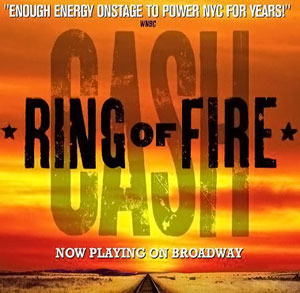
Some voiceover projects ask you to step into a character that’s just outside your everyday speaking voice—but not so far that it feels like you’re putting on a costume. That’s exactly what happened when Full Circle Studios reached out about voicing a series of TV commercials for Studio Arena Theatre’s production of “Ring of Fire: The Music of Johnny Cash.”

Finding the Voice Between Nashville and Buffalo

Ring of FireThe creative brief was specific but not restrictive: think cowboy, but approachable. Low register, but friendly. Southern drawl, but don’t overdo it. In other words, channel a little bit of that Johnny Cash authenticity without turning it into a caricature.
This is where character voice work gets fun for a voice actor. You’re not doing an impersonation—you’re creating a vocal presence that feels right for the project. For these regional TV spots promoting the musical, the voice needed to evoke the spirit of Johnny Cash’s music without distracting from the message: come see this show, buy your tickets, and experience something special.

As a voiceover talent who’s comfortable working across different vocal styles and character reads, this was right in my wheelhouse. The commercials needed that slight gravel, that hint of the open road, but they also needed to connect with Western New York audiences who were deciding how to spend their entertainment dollars.

The Campaign: Multiple Spots, One Consistent Voice

Full Circle Studios logo - audio'connell Voiceover TalentThis wasn’t just a single 30-second spot and done. Studio Arena Theatre and Full Circle Studios were running a regional TV campaign—multiple commercials designed to build momentum for ticket sales over time. That meant consistency was crucial for the voiceover production.

When you’re the voice talent on a campaign like this, you’re not just reading copy. You’re becoming part of the theatre’s marketing strategy. Each commercial needed to maintain that same character voice—the same energy, the same authenticity—while delivering different messages and calls to action.

For broadcast promo producers and creative services directors at local TV stations, this kind of campaign voice work is familiar territory. You need a professional voice actor who can nail the read on the first spot and then replicate that performance across multiple scripts, sometimes recorded at different times. The voice has to be a constant even when the messaging evolves.

Working with Full Circle Studios: A Long-Term Voice Talent Partnership

Founding Partner Terry Fisher, producer Jason Holler and the team at Full Circle Studios are the kind of people who make this business work the way it should. We’ve collaborated on voiceover projects for years, which means there’s a shorthand that develops over time. They know I’m going to ask questions if something in the script isn’t clear. I know they’re going to give me solid direction if we need to adjust the read.

That trust matters, especially on deadline-driven work like regional TV campaigns where air dates are locked in and there’s no room for delays in the voice recording process.

After we wrapped the “Ring of Fire” campaign, Terry was kind enough to share his thoughts:

“If you’re looking for the consummate pro for your narration or voiceover project look no further. Peter K. O’Connell has the experience and the versatility to get it done fast and get it done right.”
Terry J. Fisher, Partner — Full Circle Studios

That kind of feedback from a long-term client means everything. It’s not about one great session—it’s about showing up consistently, understanding the assignment, and delivering professional voiceover work that serves the bigger picture.

Why Character Voice Work Matters for Marketing Campaigns

Here’s the thing about using character voices in commercial voiceover work: when it’s done well, it doesn’t feel like “character work” at all. It just feels right.

For the “Ring of Fire” campaign, going with a straight announcer read would have been fine—perfectly serviceable. But by adding that slight character element, that touch of Western flavor, the commercials immediately connected with what the show was actually about. The voiceover became an extension of the production itself.

That’s what video producers, social media content creators, and live event marketers are often looking for: a voice actor who can bring dimension to the read without overshadowing the message. Whether it’s a slight accent, a particular tone, or a specific energy level, the right character choice makes the whole spot more memorable.

The Practical Side: Fast Turnaround, Professional Results

Terry mentioned two things in his testimonial that matter in any voiceover production: speed and accuracy. Let’s talk about both.

Fast: Regional TV campaigns have hard deadlines. When a commercial needs to air, it needs to air. That means your voice talent has to deliver studio-quality audio files on schedule, every time. For audio recording studios and production companies, this reliability is non-negotiable.

Right: Getting the read right the first time (or with minimal pickups) saves everyone time and money. That comes from experience—knowing how to interpret copy, take direction, and adjust performance in the moment. Whether you’re a creative services director at a TV affiliate or a social media video producer working on a tight content calendar, you need a professional voice actor who makes your life easier, not harder.

What This Work Reminded Me

Every voiceover project is different, but they all come down to the same core truth: the voice has to serve the story. For the “Ring of Fire” campaign, that meant honoring Johnny Cash’s legacy while helping Studio Arena Theatre fill seats. It meant being consistent across multiple spots while keeping each read fresh and engaging.

Working with Full Circle Studios on this campaign was a reminder of why long-term client relationships matter in the voiceover business. You build trust over time, you understand each other’s working styles, and when the right project comes along, you already know you can deliver something great together.

If you’re a broadcast producer, video content creator, or marketing professional looking for voiceover talent who can handle character work, commercial narration, or anything in between—someone who delivers on deadline and gets it right—I’d love to talk about your next project.


Looking for a professional voiceover artist for your next TV commercial, video production, social media campaign, or live event? Let’s talk about how the right voice can elevate your project.