Entries Tagged as 'voice casting'

“what people say they want, and what they are actually looking for.” – dick tufeld

dick_tufeld

There is occasionally downtime in the voice over world of audio’connell Voice Over Talent. While I should say that I am always marketing or developing new business when the mic isn’t on, well, that’s not always true.

Sometimes I surf. And not on water.

But a recent surfing expedition (which really was a key word search on Google) led me to a 1997 interview on a “Lost In Space” website with a fairly well known announcer by the name of Dick Tufeld. Dick was the voice of “The Robot” in the series “Lost In Space” and reprised his role when the movie came out. (And, if you like, there seems to be another interview with Dick here).

Dick’s career has spanned a great deal more than just “Lost In Space”. I remember him as a long time announcer of the Grammy’s among other shows (his signoff that I remember was “This is Dick Tufeld speaking”). I can’t find too much present day information on him to know if at 82 he’s still working, other than some somewhat suspect web sites that I cannot confirm as credible.

But what I loved though, from the 1997 interview, was this quote, telling a story that almost every professional voice talent can relate to and laaaughh!

Q: How did you get the voice job of the Robot?
Dick Tufeld: When I was 18 years old, I was working one summer at KLCA-LA radio, and I used to announce shows and do station breaks, etc. There was a literary agent named Irwin Allen, who must have been, I’m guessing, 35 years old at the time, who would walk in and nod to me, and I’d nod to him — I was just a kid at the time. He had a Hollywood gossip show, and I’d spin the theme music for it and announce him, for 15 minutes once a week. Then he’d leave and nod to me, and I’d nod to him. That was the extent of our conversation.

Twenty years go by, and he was walking out of the commissary at 20th Century Fox and there was a guy named Emmett Labry, Jr. who was in the business affairs department. Irwin ran into Emmett and said that he had a new series going on air in a few weeks. “We need a narrator and is there anybody you can think of?’ Emmett was a friend of mine, and said “How about Dick Tufeld?”

In one of the most astonishing statements I’ve heard repeated to me, Irwin turned to Emmett and said “Dick Tufeld, my oldest and dearest friend — great idea!” Which I think is pretty funny. Irwin contacted my agent, and they got an audio tape of my voice doing some narration. Irwin liked it and I became the narrator of the show.

About two weeks later I got a call from Irwin’s office asking me to read for a robot character. So I go in there, and think this is good. He hands me some copy, and I say “Irwin, I presume what you are looking for a mechanical, robot-ian kind of robot sound.” He looks at me and says “My dear boy, that is precisely what I do not want. This is a very highly advanced culture in the year 1997.” Of course that seemed to be very far away to everybody [chuckle]. “I want a cultured low- key voice, (I would equate this with the voice of computer Hal in “2001”), an Alexander Scourby” — the wonderful NY actor and narrator voice who has passed on – and he said “that’s what I’m looking for.”

So I started reading for Irwin with my best Scourby imitation, and I’m not coloring the words and I’m doing an unemotional read and I’m saying “Warning that does not compute.” He says no, that’s not it, and I do it again, and then he says no, that’s not it, and I try something else and that’s not it. All this time I’m trying to do my best Alexander Scourby imitation. And he finally says to me, after about 10 minutes, “Well Dick, I appreciate you coming in. To be honest with you, you’re not getting this, so I have to look further for this. But you’re still the narrator on this show.” And I say to Irwin, “Thank you very much.”

I take my reading glasses off and start packing up my attaché case. And God knows why I even did this. I say to Irwin, “Let me try one more thing for you just before I go.” And now I read the line in my best mechanical, robot-ian kind of way and I say “Warning that does not compute.”

And he says “Jesus Christ, that’s the Alexander Scourby approach I was looking for, what the hell took you so long?” Honestly, I had to literally turn away from him, so as not to laugh in his face, because I was so convulsed.

It was the classic example of what people say they want, and what they are actually looking for. They are two different things. In a sense I was *very* fortunate to become the voice of the Robot, because if I had not said “let me try one more thing” as I was walking out obviously I would never have been the voice of the Robot. It was a kind of a fluke the way it happened.

That IS a classic and oddly timeless truth that makes me smile, knowing the challenges of today in voice over aren’t actually that different from those great talents who paved the way for us.

Thanks Dick. Love your voice, love your humor!

the mysterious political female voice talent

mystery_woman

Want to know the name of the female voice over talent whose voice has been used to attack Obama in McCain commercials?

Her name is Joan. The rest is on a need to know basis.

dora’s new voice

flintstones- all rights reserved and acknowledged

If you had asked me three years ago who the h-e-double hockey sticks Dora the Explorer was I might have guess a nickname for a medical device that was part of an unpleasant medical experience – the older I get the more I start to think that way.

But most everyone with kids knows its an ungodly popular TV animated show and billion dollar enterprise for Nick Jr. I have about a dozen Dora related products in my home (more to come I’m sure) including pull up diapers because as the Muppets will tell you you’re not really a hit in TV animation until your animated likeness is plastered all over a…diaper. Please insert your own joke here.

But for fans of the show and for voice over, this upcoming season will unveil a new voice talent for Dora. Caitlin Sanchez, a 12 year old from New Jersey and new to VO, is set to fill the role of Dora. While I offer my congratulations to her as I’m sure she’ll do a fine job, I wonder if the current audience will notice the change as the producers hope they won’t.

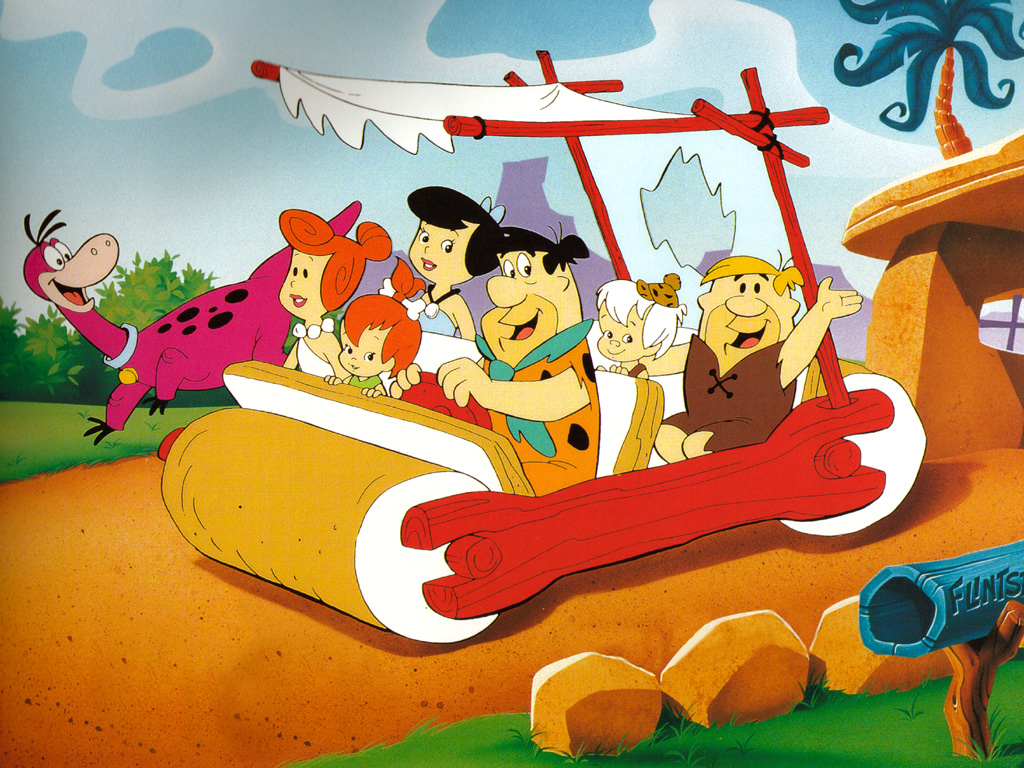
For example, even as a child I noticed voice acting changes on the Flintstones during the series and its various incarnations and the later voices made me tune out. Now maybe I was a VO producer even as a child but I think kids are more discerning that adults give them credit for or even hope they’ll be.

I’ll be interested to observe if a certain young lady around our house notices any difference in her must-see-TV.

Thanks for reading.

If you haven’t already, we’d be honored if you subscribe to voxmarketising – the audio’connell blog and podcast by clicking the “subscribe” button on this blog.

If you have previously subscribed, as of August 1, 2008 we’ve implemented a new RSS feed. Please update your subscription now in your reader because as of September 1, 2008, the old subscription feed will go away and we want you to stay!

If you really like this post (of course we hope you do), please feel free to bookmark and or promote it by clicking the buttons below on your preferred services.

walking away

I walked away from a talent agency relationship today.

Now it could be easy to cast this agency as bad guys or disreputable. I don’t think they are and my due diligence (that I do with every possible agency relationship I negotiate) currently indicates I am right. Nor should it be seen as proudly proclaiming that I dumped some group. None of that is the point here (nor is it to name names), rather I simply hope others can learn from my experience(s).

This was an agency that has sent me leads, I’d met with the owner personally and we’d work out a contract — that was left unsigned because they were too busy to take 5 minutes to review minor changes (flag on the play!). Friends who are with them as talents speak well of them. They repeatedly and categorically stated they wanted me to sign as a voice talent with their agency. Now about that flag…. 😉

What I witnessed first hand and experienced with their company was total organizational chaos (not organized chaos, there’s a difference). It was like their agency was working at DefCon 2  and pushing it up to 1 was an imminent outcome. And this group wasn’t in New York, LA or Chicago — where you might expect such behavior (yet I’ve not seen that with the agencies there I deal with.)

My professional experience (i.e. 25+ years within the voice over world’s school of hard knocks) has been if you have to chase agencies down too much, if there seems to be no follow up but loads of platitudes when you do connect, a voice agent’s operation is faltering in some way.

Maybe they’re making money but details are being left out and they are frustrating the client (unbeknownst to the talent). Maybe money is tight and they are short staffed. Maybe it’s one of a myriad of other issues (the agency business is a tough one, I will grant you). But in this case it was at least unnecessary and worse unprofessional chaos.

That’s not something I want my professional brand associated with in front of clients nor do I care to spend my valuable time dealing with it or fretting over it.

Maybe it’s my attitude that I’ve always held about representation. At the very least, an agency relationship should be a partnership where each side uses their talents to make money for the other. In many ways, agencies work for the talent because it is the talent that earns the agent their money (agents need something to sell). I certainly prefer the partnership concept but what I will never support is an agency who thinks any talent is beholden to them and ‘oh aren’t we lucky just to have representation’. To me that’s not confidence, that’s arrogance – I’ve seen it and I won’t hire it.

The good news is there are a lot of great, hard working, qualified and organized talent agents out there. I am proud to be represented by many of them with a couple of new ones about to be announced. So it’s not so much an industry issue; each new agency negotiation needs to be analyzed on its own merits. And to be fair, there have been an agent or two who have not wanted to represent me…rejection in the VO world is not limited to auditions (some folks are very geocentric in their representation policies and I respect that).

Look, I know running a small business is stressful and at times chaotic. But not 24/7. If it is, then there’s a management problem.

The gut check said walk away.

What do you think, good move or bad?

peter o’connell’s new commercial demo

A unique title (not) because “my commercial voice over demo” sounded weird to me. Better I speak of myself in the third person like all the self-important pro athletes (not all just some). Mmmm, maybe not.

Anyway, this new voice talent demo was long over due and joins the political commercial demo, audiobook demo and the radio imaging demo as recently re-done.

Got some more work to do on the narration and character voice demos now.

More to come. Let me know what you think (good or bad). I’d rather you be honest. Enjoy

LISTEN HERE!
[audio:http://www.audioconnell.com/clientuploads/mp3/Peter_OConnell_Commercial_Demo_080713.mp3]

dipping a toe into the performers’ unions discussions

I am a non-union voice over talent.

I have never been a member of a performer’s union like the Screen Actor’s Guild (with an estimated 120,000 members) or the American Federation of Television and Radio Artists (with an estimated 70,000 members).

Both unions are negotiating their new contracts with the studios via the Alliance of Motion Picture and Television Producers. Normally, the two unions negotiate together. This time they are not. They are at war and they will both lose. AFTRA is voting on their contract with the producers and SAG is angry about it (there’s a lot more to it and you can read more details, starting here.)

I feel so badly for all the performers affected by this as they are simply trying to work within the system that’s been established. It has to be terribly frustrating. Adding my voice to the discussion won’t mean much but its been weighing on my mind for so long because of various discussion I have has with my fellow voice talents that I finally figured I should get it off my chest so that it can be summarily ignored.

WHY NON-UNION?
As a potential member, I am not against these unions but rather their features and benefits have never outweighed the features and benefits of being non-union. It’s a personal choice for every performer. It does not mean I wouldn’t consider union membership at another point in my career…if it were worth it.

As I have stated before, if I lived in New York City, Los Angeles or Chicago, I would likely have joined a union there, as most of the work up until recently has been primarily union. (Yes, the italics indicate where we should insert the dramatic music of a soap opera organ.)

CREATED FOR GOOD, CORRUPTED BY GREED
The foundation for these two unions (the primary unions for television, radio, movie and yes, voice over performers) was as necessary for the entertainment industry as it was for most other unions in other industries…management abused and neglected workers and wasn’t going to stop doing that unless they were forced to stop.

The creation of unions within many industries developed that force. Wages became equitable, working conditions improved, health benefits were established to name just a few of the benefits unions provided. Further, union membership was also meant to imply that the quality of worker was better (sometimes that worked and sometimes it didn’t). But as some unions gained prestige, they seemed to have become somewhat drunk with the abusive power that necessitated their inception. Power was abused, laws were broken and some union necessitated costs sky rocketed.

THE WHOLE IS STRONGER THAN THE HALF
The fiscal reality that surrounds any business is that two entities that are bashing their brains out trying to go after the same customers, spending good money after bad to do so, might be better served by merging. Airlines do it; banks do it…all business does it. If it doesn’t cannibalize the market, merge – the businesses will be more successful.

AFTRA and SAG have been discussing merging for a while now and recently decided not to merge. 44,000 AFTRA members are paying two union dues by also being members of SAG…that a lot of crossover and in my opinion wasted money.

I don’t know the specific reasons each party had for walking away from the deal but in such matters I have sixth sense that, if it kicks in hard enough, always assures me I’m right. I call this sense the “Logic Sense”. It’s when an answer appears so blatantly obvious to everyone that it’s clearly the course to follow. Having over 50% of AFTRA members also paying dues to SAG (securing union services that overlap significantly) simply because there are two union contracts in place is to me crazy. One union would have been the smarter way to go.

But I also get the sense (maybe it’s my “seventh” sense) that ego, selfishness and pride (an ailment affecting all of us that may be slightly magnified in Hollywood and New York) is what was at the heart of the merger breakdown. But I wasn’t there so I don’t know for sure.

NEGOTIATING FROM A POSITION OF WEAKNESS
I’m not much of a protester. Carrying placards and signs at a rally or in front of a building is not my style.

One, I would find it embarrassing and that’s not an easy thing to do.

Two, I think a picket’s effectiveness to embarrass the people you have to negotiate with is really minor. After a few days and barring violence (never a good idea) the protest becomes blasé.

Three, I think the public ultimately sees it today as a nuisance; people don’t want the interruption in their lives (“You’re protesting to help provide for your family is getting in the way of me providing for my family and if I have to pick between the two, I pick my family over yours!”). There’s less “us against them” thinking (like in the unions early days) and more “me, me, me!’ thinking today. Yes that may seem selfish but I think it’s where we are today, like it or not, and again this is my opinion based on what I have observed and heard. And because it devalues a good part of what a union does (certainly visually) I think it puts the very foundation of all unions at terrible risk.

So while protesting and picketing has served the unions well in the past, watching the SAG members protest yesterday and reading about it just gave me the feeling that this whole negotiation isn’t going to end well for the members or for the union’s perception among the public.

Here was yesterday’s protest challenge as I understand it: SAG has to sway the opinions of 44,000 overlapping AFTRA members not to ratify the new AFTRA deal and then SAG has to go negotiate a new deal with producers. Yikes. Negotiating a new deal is tough enough but trying to get people to vote against a deal that would let them get back to their business and their lives for a few years too?! A two fold problem rather than being able to focus time, talent and treasure on one problem puts SAG in a position of weakness at the negotiating table. Maybe they can win both…good for them.

HOW’S THE NEW UNION MEMBER RECRUITMENT GOING?
So if you’re the Vice President for New Union Member Recruitment for either SAG or AFTRA, (if there even is such a job), do you like your job right now?

Sure, studio contracts say performers have to be in a union to work so you’ve got a good chance of getting a certain amount of new recruits every year….if you are in New York, Los Angeles or Chicago.

But there a lot of performance work that goes on outside those markets and the union’s regional recruiters I’m guessing are having a tougher time selling the value of union membership while watching all these goings on in L.A.

Then, in addition to the strike malaise a recruiter has to deal with, consider:

• The growing fondness producers have for working with non-union performers (especially in commercial work and voice over)
• The growth of non-union performers
• The dirty little secret of union performers working non-union jobs under pseudonyms or entirely un-credited.

I could mention financial core union membership as a tool to recruit new members, but from what I have been told, Fi-Core members are not looked fondly upon by the unions or its full boat members. Fi-Core may be legal but you’ll likely be as welcomed as the First Kazooist at the Philharmonic.

A SINGLE, UNIFIED PERFORMANCE UNION IS NEEDED
While I am sadly watching the performance unions self-destruct (in my opinion) I am not an advocate for non-union work either. Especially in voice over, the market is inundated with unprofessional, talentless voices that are bringing down the quality of work and the fees that are paid…it’s hurting the industry. Management who hire these less than stellar talents aren’t so worried about their sound as their wallets.

Sort of sounds like a place where a union might come in handy, doesn’t it?

There have been many non-union voice talents like me who have charged a fair wage that was either at slightly less than union scale. We also work primarily via full buyout rather than the residuals system that union performers enjoy. Many clients in the American market also cannot or will not support union fees for work in their projects. These are the prime value factors of working with a non-union talent. For the talent, in summation, we are not subjected to the various requirements and rules that restrain union talent from taking work nor do we have to share our revenues with the unions in the form of dues or fees. So non-union work is a quality option, as it should be.

But non-union work has its challenges too.

Technology, which has been a prime negotiating topic for many performing unions, has also become a problem for non-union talent as well. With technology so abundant, there are people now calling themselves professional performers and charging vulgarly low fees which adversely affect the perceived value of the voice over market. It’s becoming a garage sale at times (especially on some pay-for-play sites), which is bad.

If someone could show me a unified performance union, that controlled one contract with studios, agencies etc., kept all fees reasonable (for members and clients) and operated with as little politics as possible (certainly no political leanings or strong arming) I would be very willing to discuss membership. I think it could happen and I think the benefits for everyone would be significant.

But I don’t think it will happen and I think performance unions as we know them today will be significantly different, smaller and less effective than they ever have been or certainly were originally meant to be. And that’s probably not good for any of us.