Share


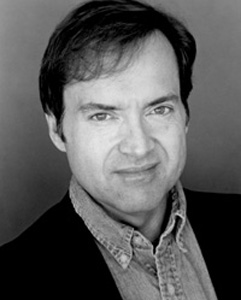
Today’s 5 Questions for a Professional Voice Over Talent are answered by Bruce Miles, a professional voice over talent based in Portland, Oregon.
1. The beginning: When did you know you wanted to be a voiceover talent; how did your career begin (please include what year it started) and then when did your passion for voiceover develop into something professional?
I started by being the class clown, always cutting up, often getting into trouble. In fifth grade I improv’ed a line in a school play making 300 kids laugh in a big roar and I was hooked for life. Like many others in this business I spent a large amount of my youth with a tape recorder creating commercials and shows in my bedroom. In high school I snuck out of the house late at night and visited disc jockeys at the hot Top 40 stations and after observing their “glamorous” line of work the first phase of my career was set.
Starting in 1970 I spent 10 years full-time and 4 years part-time in radio playing rock, pop, and country, I did news, lots of audio production and program directed in Phoenix and San Diego. Being funny, interesting, and informative were my usual goals. From radio I got a lot of experience recording commercials that went beyond the station and getting paid for them (yay!) so my passion for VO started early. During those days and afterwards I also got opportunities to do TV commercials and shows, movies, and plays. I love all those performing formats.
From 1989 to 1993 I co-owned and managed a live theater company and produced 40 plays and 40 music concerts, most with good to excellent reviews. We couldn’t make a decent profit at it so I went back to full time acting. As I lost my boyish good looks my work shifted more and more to voiceover. I built a home studio in 2001 and that’s been my office and man cave ever since.
2. What is the one thing you know now that you wish someone had told you when you first started out in voiceover?
Befriend Peter O’Connell right away. He’s great to talk to and buys you a nice dinner when he visits your town. Only somewhat more seriously there are two things to work on from day one in a VO career.
a) If you don’t already know how, learn how to schmooze and market yourself. As a rule, the most successful among us are the ones who do this best. Until you’ve reached Philip Banks status, one who has people clamoring for his talents, marketing requires about 50% of your time (give or take 40%) to make it big in the biz. Yes, agents and production houses can bring you some work, but how do you convince them to sign you on? Good schmoozing.
b) The second important thing to do is be a sponge. Study the craft. Learn what the greats are doing right and what the so-so’s are doing wrong. Mimic the best until you create your own best styles. Study the news, be up on the general interest stories and trends of the day. Conversing intelligently with clients earns you loads of respect and just makes you a better talent overall.
3. What do you see as the biggest professional or personal obstacle you face that impacts your voiceover business and how are you working to overcome it?
It amazes me that while communication is at the core of my business (I’ve easily talked to 200,000 people at a time on live radio and TV, and 3,000 people staring at me in a theater), talking to just one stranger about using my communication talents is really difficult. I’m clearly not shy, however, I am very modest about my talents, so it must be my trepidation about extolling my virtues that holds me back.
To conquer this I just do it. I have a script I try to ad lib off of, and the more calls I make and the more positive responses I get the easier it gets. But I have to tell myself what I just told you here every day before I start calling.
4. What personal trait or professional tool has helped you succeed the most in your career so far?
Here I go extolling a virtue, but I think I’m very good at interpreting copy. How to stress, manipulate, massage certain words and phrases. How to make copy interesting for the intended audience even when I don’t find the subject matter personally of interest. That’s where being a sponge has been a help…studying styles of read and absorbing content that might help me later. My brain may explode some day, but I know I’ll die happier. I read that somewhere.
5. In your development as a voice over performer, who has been the one particular individual or what has been the one piece of performance advice (maybe a key performance trick, etc.) that you felt has had the most impact on your actual voice over performance and why?
I have a man crush on a number of great voiceover artists: David McCullough, Keith David, Liev Schriber, Peter Coyote, Orson Welles just to name a few. The first three have a great natural style. The next two a great theatrical style. I study them when I listen to them. What are they doing/thinking/feeling that makes them read that way?
I’m thankful for the fellow deejay who told me early in my career to stop “puking” on the air (playing with words unnecessarily, artificially). And that leads me to offer, don’t fall in love with your voice; fall in love with the copy. Make the words and ideas special and the rest will follow.
Tags: 5 Questions for a Professional Voice Over Talent, 5Q:VO, voice talent, voiceover, voiceover advice by peter k. o'connell, your friendly, neighborhood voice-over talent
8 Comments »