
Entries Tagged as ''

5 Questions for a Professional Voice-Over Talent – Dan Lenard

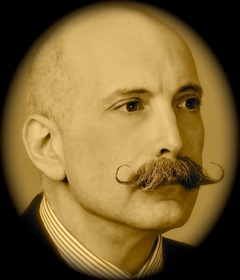
Today’s 5 Questions for a Professional Voice Over Talent are answered by Dan Lenard, a professional voice over talent based in Buffalo, New York.

1.The beginning: When did you know you wanted to be a voiceover talent; how did your career begin (please include what year it started) and then when did your passion for voiceover develop into something professional?

Since high school. In 197..4 I was always interested in filmmaking and audio recording. I was on the school announcements club and very active in theater. I attended Bowling Green State University in Ohio for a year to study broadcasting (It was big then, just post Watergate) and then transferred to Buffalo State College for the same program. I started working at campus radio stations and learned radio production techniques. When I graduated in 1980, I was immediately hired at WJYE here in Buffalo. At the same time, I had a friend who worked in advertising, producing radio commercials and invited me into work on some spots in “The Big Studio” in town. Working just as a voice is something I always pursued since that time, but it was difficult in a small market, no home recording capabilities and no internet to distribute work. It wasn’t until 2002 when the opportunity to work at home came about, 12 years after getting out of broadcasting. While working on my masters degree, I was asked to create a radio documentary on a local Jazz musician. I bought some digital recording equipment and rapidly learned digital editing. It then hit me that if I could record at home and send stuff as MP3’s anywhere in the world, then I should. A quick search on Google (We had it back then) showed the new emerging industry that was developing. I jumped in and never looked back.

2. What is the one thing you know now that you wish someone had told you when you first started out in voiceover?

That the people who pay the least, are the most demanding.

3. What do you see as the biggest professional or personal obstacle you face that impacts your voiceover business and how are you working to overcome it?

Improving a natural, unforced, conversational style to my voice. Radio taught me bad habits. Well, they weren’t bad habits at the time. But the read wanted today is not that traditional radio read, unless someone is looking for a parody of that. Many radio people fresh out of radio have a hard time making the transition. The answer is finding an acting coach who truly believes in you and has a great reputation for helping people sound natural. If I can master that further, I can start being more competitive for more great paying national flight material. Commercials, documentary narration etc.

4.What personal trait or professional tool has helped you succeed the most in your career so far?

My technical skills in the studio. Being able to produce superior quality audio and knowing how to process and package the audio for seamless use by a client. That alone has created many long time clients who provide me work on a daily basis. I make their job easy.

5. In your development as a voice over performer, who has been the one particular individual or what has been the one piece of performance advice (maybe a key performance trick, etc.) that you felt has had the most impact on your actual voice over performance and why?

Marc Cashman, who has many great axioms as a voice-over coach, says, “The copy is not in stone.” If you can let go of the sentence and read its essence another way, go for it. Just changing a word can make a statement more powerful. Have the courage to take that risk when appropriate. It always pays off in one way or another. You may not get the job, but they won’t forget you.
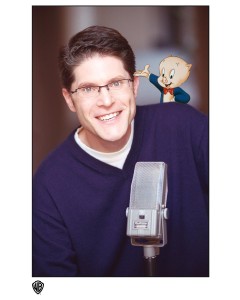
5 Questions for a Professional Voice-Over Talent: Bob Bergen

Today’s 5 Questions for a Professional Voice Over Talent are answered by Bob Bergen, a professional voice over talent based in Tarzana, California.

1. The beginning: When did you know you wanted to be a voiceover talent; how did your career begin (please include what year it started) and then when did your passion for voiceover develop into something professional?

I wanted to be Porky Pig at the age of 5. I had a tape recorder next to the TV at all times and recorded hours of cartoons, as well as any time a voice actor was on a talk show. My dad moved the family to LA when I was 14 and I started studying voiceover. I studied with anyone and everyone who offered a class in Los Angeles. My main animation instructor was Daws Butler, who voiced among many others Yogi Bear. During those 4 years of VO training I also did a 2 year acting technique class as well as 3 years of improv training. I made my first demo and secured my first agent a week out of high school. I worked as a tour guide at Universal Studios for 5 years before I was able to make a living full time as a voice actor. So the entire journey from first class to working actor for me was 9 years. When I was 25 Mel Blanc passed away. The following year after a series of auditions I booked Porky Pig for the first time March 8, 1990, which happened to be my 26th birthday.

2. What is the one thing you know now that you wish someone had told you when you first started out in voiceover?

To be honest, nothing. I had great mentors who thoroughly prepared me for this business. I had no surprises, and I was well prepared for every up and down.

3. What do you see as the biggest professional or personal obstacle you face that impacts your voiceover business and how are youworking to overcome it?

Well, just the fact that an actor doesn’t know where their next job will be is an obstacle, but it’s also just a part of show business. But in VO diversity is key. The more genres of VO one does the more opportunities. If it’s slow commercially you might be busy with animation. If narration is dead you might be doing promos. Etc. The more varied your skills the better your chances of working.

Now, the biggest obstacle in VO today is the amount of P2P and non union work that is out there. When I started out there was plenty of non union work. But I never took part in that. My feeling was I always wanted to play with the major players, and I felt that you were as good as the company you kept. So I always strove to compete on a national level. And until the time I was able to make a living at VO I had my day job to pay the bills. I wanted a career, not work from time to time. But today technology has brought VO to anyone with a modem. The good news is there are more opportunities today than ever before. The bad news is, a huge chunk of it has gone non union. This is fine for those who don’t desire health benefits and retirement from VO. But it sucks for the professional actor who relies on benefits. The ironic thing is many who partake in the world of non union and P2P also desire the opportunity to compete on a national level, securing agents in larger markets, etc. What they don’t realize is that they themselves are a huge factor as to why larger agents aren’t interested. With the numbers doing non union or taking lesser session fees, the major agents are having a hard enough time keeping their signed talent working. When I started out agents took risks to develop new talent often. They don’t have the luxury anymore and it’s harder and harder for new talent to break into the major leagues. Now again, you don’t have to compete on a national level. But I think it’s very rare that a voice talent doesn’t want to be at the top of their field. Butcha can’t have it both ways.

4. What personal trait or professional tool has helped you succeed the most in your career so far?

Being positive. Pursuing VO not for the money, but for the love of being in front of the mic. You need to get the same high auditioning as you do getting paid. If you do it for the money you will never feel successful, because it will never be enough money. You’ll always want more. But if you do it because you love it, because you can’t see yourself doing anything else, because it feeds your soul, then you are right for show business. This is, and has always been my philosophy. I can make money doing anything. But being able to do VO, and especially cartoons? It doesn’t get any better than that!

5. In your development as a voice over performer, who has been the one particular individual or what has been the one piece of performance advice (maybe a key performance trick, etc.) that you felt has had the most impact on your actual voice over performance and why?

Wow, so many!! One that comes to mind came from Paul Winchell, who did a lot of cartoons. He was the voice of Tigger in the Winnie the Pooh cartoons. I asked him for career advice when I was about 18. He said, “Never worry about money. Because you are going to make it. But then you are going to lose it. But then you’ll make more. Then you’ll lose it. Etc. If you worry about it, you’ll do nothing but worry about it, because there is never a guarantee of it. Never a constant. But if you do this for the love of doing it, for the creative joy it brings, you will always feel like a success.” And Daws advised, “Live below your means and save 10% of everything you make. Even if it’s a dollar residual, put 10 cents away. You’ll be amazed how quickly it will add up!”