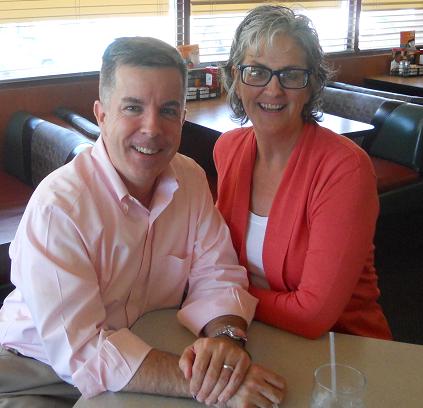
I don’t believe the song “Meet Me in St. Louis” included anything in the lyrics about Denny’s but that’s where I met my first class voice-over talent friend and popular audiobook narrator Donna Postel. And my friend has been very busy with her audiobooks!
She just got back from the schmoozing and learning at the AudioBook Publishers Association Conference in NYC. And she’s about to start another book…all in addition to the commercials and other corporate narration work she does.
Hopefully she’ll also make it to FaffCon 5! It was great to see her again!


Today’s 5 Questions for a Professional Voice Over Talent are answered by Frank Frederick, a professional voice-over talent based in Park City, Utah.
1. The beginning: When did you know you wanted to be a voiceover talent; how did your career begin (please include what year it started) and then when did your passion for voiceover develop into something professional?
Way back in 1972, I was training to become an Olympic swimmer. The Olympics were un-sponsored in those years and it was a matter of finding money to fly to events and meets to be a candidate for the United States team. My friends and I listened to the radio a lot and I surmised my becoming one of those “high paid” DJ’s to help pay my way to a dream.
I found a radio station, which hired me part, part, part, part time because of my winning braces filled smile. Within a short few months I had become the Program Director of the station and found I was still not able to meet the financial demands to continue my swimming goals. I didn’t make it to the Olympics but I did stay in radio.
Through the radio gigs, I became friends with some stars in the Country music industry and some talented groups in the Rock ‘N Roll genre. Several of the new friends commented I should be making money with my voice and not by selling out to a specific radio station. Many of the stars of music asked if I could sing, I would reply; “…You sing and I will talk that will make everyone in audience happy!”
I followed the suggestions, and in 1973, while still in high school, started a boutique advertising agency with a Program Director/mentor/friend. Together we created radio and TV audio for commercials for clients nationwide featuring me as the VO talent. I knew immediately I was on to something. I didn’t know what.
These events allowed me the freedom to meet with many recording studio engineers and top shelf talent in the music industry. Interacting with a plethora of people who made the stars and starlets who they were fueled my desire to do more with voiceover.
So I did, and here I am today.
2. What is the one thing you know now that you wish someone had told you when you first started out in voiceover?
Voiceover is a business. Work hard, but have fun!
3. What do you see as the biggest professional or personal obstacle you face that impacts your voiceover business and how are you working to overcome it?
Basically, I am an introvert with a Type A personality. I like working alone, but have a need to be with others – once in a while. Coming out of my shell is oftentimes difficult, but I am working on it.
4. What personal trait or professional tool has helped you succeed the most in your career so far?
Learning the technique of “paying homage to the words” is something every voice actor needs to understand – even vocalists (singers). As a voice talent, you are not just reading the words, which are on a page or script; you must be able to share the emotion and create a world, which draws the listener into “a theater of the mind”. Voiceover is not about your voice, but about the words and messages shared and; how they affect others.
5. In your development as a voice over performer, who has been the one particular individual or what has been the one piece of performance advice (maybe a key performance trick, etc.) that you felt has had the most impact on your actual voice over performance and why?
Early on, I had a mentor named Les Bagley, he was the P.D. at my first real radio gig; he offered me these words: “I don’t have a great voice like you, but I know how to use what I have.”

You know you’ve got a true voice-over friend when he’ll drive two hours to come have dinner with you.
Voice talent and video producer extraordinaire Todd Ellis did that this evening in St. Louis and we had an awesome time as it had been about three years since we last visited. He took me over to Pat’s Bar and Grill in the Irish part of town (because I speak the language) and just laughed the whole night.
We must have been a fun pair because the waitress said we were her best and funniest table.
Thanks Todd!
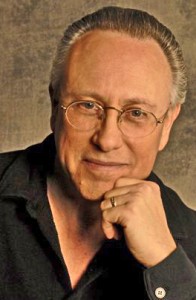
Today’s 5 Questions for a Professional Voice Over Talent are answered by Marc Cashman, a professional voice-over talent based in Stevenson Ranch, California.
1. The beginning: When did you know you wanted to be a voiceover talent; how did your career begin (please include what year it started) and then when did your passion for voiceover develop into something professional?
I started doing voiceover almost as soon as I started writing and producing Radio commercials in Los Angeles in 1978. A number of my clients asked me to voice their commercials, even though I offered to cast other voice talent (and better ones, in my opinion). When I saw that I’d probably continue in this role, I was lucky enough to be invited to join a V-O workout group of veteran talent that met once a week on Tuesday nights for three hours in a studio, where we performed and directed each other in myriad forms of copy and text. I did that for eight years. I also learned an enormous amount just listening to the extraordinary voice talent I directed in my Radio and TV commercials. I had been a professional singer/songwriter in the heyday of the 60’s and 70’s, and saw voice acting as an extension of my singing and performing days, albeit in a more anonymous setting, which suited me just fine. But my passion for voice acting deepened considerably when I started narrating audiobooks, about five years ago. Since then I’ve narrated over 100 audiobooks and have been named–twice–one of the “Best Voices of The Year” by AudioFile Magazine, and have earned numerous Earphones Awards from them.
2. What is the one thing you know now that you wish someone had told you when you first started out in voiceover?
That the best actors never stop learning. I would’ve taken more classes in every area I could. I envy my colleagues who studied with Daws Butler, who was teaching in Los Angeles in the 80’s.
3. What do you see as the biggest professional or personal obstacle you face that impacts your voiceover business and how are youworking to overcome it?
The only obstacle (if you could call it that–I call it a challenge) in my voiceover career is time. My commercial production, writing, public speaking and V-O instruction careers take a lot of time, so I find that I have to be judicious in how I allot my time doing voice acting. So far I’ve been able to find a healthy balance, but it does require some long hours. But I’m always thinking of ways to promote my voiceover career. Currently, I’m sending out (via snail mail) a 4-color bookmark to dozens of audiobook publishers. On it is my head shot, with the words “Book Marc!”, with a list of my accomplishments, phone numbers to contact and a URL to listen to my demos.
4. What personal trait or professional tool has helped you succeed the most in your career so far?
A good sense of humor, a willingness to help people and share my knowledge, a constant desire to have fun in whatever I do, determination, generosity, a sense of total responsibility, utter professionalism and pride of work, endless creativity and self-promotion, a desire to be a role model to my daughter and solid consistency.
5. In your development as a voice over performer, who has been the one particular individual or what has been the one piece of performance advice (maybe a key performance trick, etc.) that you felt has had the most impact on your actual voice over performance and why?
I’ve learned and now teach a multitude of V-O performance tips, tricks, tools and techniques, and I’d say that the most important skill a voice actor needs is the ability to infuse their performance with emotion. Too many times I hear people just saying words, with no connection to what it is they’re saying. The concept of coloring word and phrases accurately and subtly is the hallmark of every great actor, whether off-camera or on.
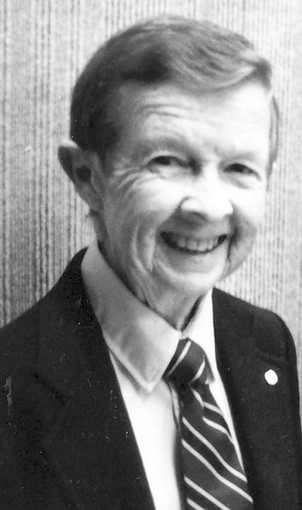
His talent and his voice were mighty even though he sounded like a young boy.
He was “Speedy”
He was “Gumby” dammit!
Dick, thanks so much for paving the way for the rest of us.