Entries Tagged as '5 Questions for a Professional Voice Over Talent'

5 Questions for a Professional Voice-Over Talent: Bob Bergen
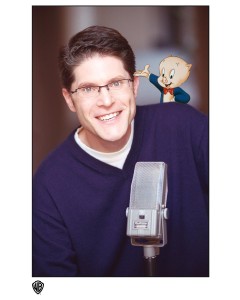
Today’s 5 Questions for a Professional Voice Over Talent are answered by Bob Bergen, a professional voice over talent based in Tarzana, California.

1. The beginning: When did you know you wanted to be a voiceover talent; how did your career begin (please include what year it started) and then when did your passion for voiceover develop into something professional?

I wanted to be Porky Pig at the age of 5. I had a tape recorder next to the TV at all times and recorded hours of cartoons, as well as any time a voice actor was on a talk show. My dad moved the family to LA when I was 14 and I started studying voiceover. I studied with anyone and everyone who offered a class in Los Angeles. My main animation instructor was Daws Butler, who voiced among many others Yogi Bear. During those 4 years of VO training I also did a 2 year acting technique class as well as 3 years of improv training. I made my first demo and secured my first agent a week out of high school. I worked as a tour guide at Universal Studios for 5 years before I was able to make a living full time as a voice actor. So the entire journey from first class to working actor for me was 9 years. When I was 25 Mel Blanc passed away. The following year after a series of auditions I booked Porky Pig for the first time March 8, 1990, which happened to be my 26th birthday.

2. What is the one thing you know now that you wish someone had told you when you first started out in voiceover?

To be honest, nothing. I had great mentors who thoroughly prepared me for this business. I had no surprises, and I was well prepared for every up and down.

3. What do you see as the biggest professional or personal obstacle you face that impacts your voiceover business and how are youworking to overcome it?

Well, just the fact that an actor doesn’t know where their next job will be is an obstacle, but it’s also just a part of show business. But in VO diversity is key. The more genres of VO one does the more opportunities. If it’s slow commercially you might be busy with animation. If narration is dead you might be doing promos. Etc. The more varied your skills the better your chances of working.

Now, the biggest obstacle in VO today is the amount of P2P and non union work that is out there. When I started out there was plenty of non union work. But I never took part in that. My feeling was I always wanted to play with the major players, and I felt that you were as good as the company you kept. So I always strove to compete on a national level. And until the time I was able to make a living at VO I had my day job to pay the bills. I wanted a career, not work from time to time. But today technology has brought VO to anyone with a modem. The good news is there are more opportunities today than ever before. The bad news is, a huge chunk of it has gone non union. This is fine for those who don’t desire health benefits and retirement from VO. But it sucks for the professional actor who relies on benefits. The ironic thing is many who partake in the world of non union and P2P also desire the opportunity to compete on a national level, securing agents in larger markets, etc. What they don’t realize is that they themselves are a huge factor as to why larger agents aren’t interested. With the numbers doing non union or taking lesser session fees, the major agents are having a hard enough time keeping their signed talent working. When I started out agents took risks to develop new talent often. They don’t have the luxury anymore and it’s harder and harder for new talent to break into the major leagues. Now again, you don’t have to compete on a national level. But I think it’s very rare that a voice talent doesn’t want to be at the top of their field. Butcha can’t have it both ways.

4. What personal trait or professional tool has helped you succeed the most in your career so far?

Being positive. Pursuing VO not for the money, but for the love of being in front of the mic. You need to get the same high auditioning as you do getting paid. If you do it for the money you will never feel successful, because it will never be enough money. You’ll always want more. But if you do it because you love it, because you can’t see yourself doing anything else, because it feeds your soul, then you are right for show business. This is, and has always been my philosophy. I can make money doing anything. But being able to do VO, and especially cartoons? It doesn’t get any better than that!

5. In your development as a voice over performer, who has been the one particular individual or what has been the one piece of performance advice (maybe a key performance trick, etc.) that you felt has had the most impact on your actual voice over performance and why?

Wow, so many!! One that comes to mind came from Paul Winchell, who did a lot of cartoons. He was the voice of Tigger in the Winnie the Pooh cartoons. I asked him for career advice when I was about 18. He said, “Never worry about money. Because you are going to make it. But then you are going to lose it. But then you’ll make more. Then you’ll lose it. Etc. If you worry about it, you’ll do nothing but worry about it, because there is never a guarantee of it. Never a constant. But if you do this for the love of doing it, for the creative joy it brings, you will always feel like a success.” And Daws advised, “Live below your means and save 10% of everything you make. Even if it’s a dollar residual, put 10 cents away. You’ll be amazed how quickly it will add up!”


5 Questions for a Professional Voice-Over Talent – John Weeks

Today’s 5 Questions for a Professional Voice Over Talent are answered by John Weeks, a professional voice over talent based in Morristown, Tennesee.

1. The beginning: When did you know you wanted to be a voiceover talent; how did your career begin (please include what year it started) and then when did your passion for voiceover develop into something professional?

I knew I wanted to be in radio at age 13, which was 1967. I started in radio in 1969 and really didn’t know people would actually pay me to voice commercials until 1976. However, it wasn’t until 1983 that I realized it could turn into a fulltime profession. There’s nothing like doing what you love to do and someone paying you to do it!

2. What is the one thing you know now that you wish someone had told you when you first started out in voiceover?

Be yourself and don’t be afraid to let your personality shine through. Don’t try and be someone else, because your voice and personality are unique to you and only you.

3. What do you see as the biggest professional or personal obstacle you face that impacts your voiceover business and how are you working to overcome it?

I’d say marketing would be my weakest area. I’ve been lucky enough over the years to have work come to me via word of mouth and through my own fault have depended on that too much. I’ve done some cold calling and have had a pretty good return with that, but am always open to ideas!

4. What personal trait or professional tool has helped you succeed the most in your career so far?

I think it’s treating every client like they are my ONLY client, no matter how big or small they are. Also, doing your best on every project.

5. In your development as a voice over performer, who has been the one particular individual or what has been the one piece of performance advice (maybe a key performance trick, etc.) that you felt has had the most impact on your actual voice over performance and why?

The thing that helped me most was when I learned to color my words. Way back in the 1970s, I was told by my mentor to, “Say the words with feeling and make them sound like what they mean. If you’re saying something is big, it’s B I G and if something is small, it’s small”.

5 Questions for a Professional Voice-Over Talent – Tasha Johnson

Voice-over Tasha Johnson_TashaTalks.com

Today’s 5 Questions for a Professional Voice Over Talent are answered by Tasha Johnson, a professional voice over talent based in Atlanta, Georgia.

1. The beginning: When did you know you wanted to be a voiceover talent; how did your career begin (please include what year it started) and then when did your passion for voiceover develop into something professional?

I would read aloud all the time, and re-deliver every commercial from the family couch, line by line. I honed my skills by mimicking the people already being paid for what I wanted to grow up to do.

At the time, I didn’t know it was called ‘voiceover’, and nobody told me to do that, but parroting the TV and the radio was one of the main ways I entertained myself.

Interestingly enough, we all now understand that emulating the people who are already successful at what one wants to do is one of the best ways to sharpen your skillset.

Like a lot of us, I had a brief stint in radio, but I didn’t actually become a professional voiceover talent til 2005.

I was an intern for an advertising agency, voicing about half the spots that came out of production for 6 months. From these commercials, I produced my own demo, and shopped it to agents myself.

After I secured my agent, I started booking, and the rest is history.

There are a million different ways to be in this business, but I’m grateful that Georgia is a right to work state. Most of my work is national and union.

2. What is the one thing you know now that you wish someone had told you when you first started out in voiceover?

I would say that I wish someone had told me how much legwork and marketing of ones’ skills is required in this business.

I discovered that one on my own, but if someone had told me before I got started and perhaps helped me put a clear, consise plan together, I wouldn’t have struggled so hard in the beginning.

I invested in my equipment, yes, but I wasn’t prepared for the marketing!

3. What do you see as the biggest professional or personal obstacle you face that impacts your voiceover business and how are youworking to overcome it?

The biggest professional and personal obstacle is getting my name and my body of work out there so more people know who I am, and what I can do.

My current marketing strategy will overcome it, but if I tell you any more, I’d have to kill you.

4. What personal trait or professional tool has helped you succeed the most in your career so far?

I think my sunny disposition has helped me almost as much as my unique ability to interpret copy.

Even the most seasoned among us get in our heads sometimes, but when I do, I pause, take a big breath and tell myself:

“You booked the gig because you do your job WELL. So smile and DO IT!”

A positive self image and positive self talk works wonders.

5. In your development as a voice over performer, who has been the one particular individual or what has been the one piece of performance advice (maybe a key performance trick, etc.) that you felt has had the most impact on your actual voice over performance and why?

I had a rather unconventional start in the business, so I can’t name an individual who’s had an impact on my performance, but I am grateful every day for the love of the fellow voice talents who are my community. The support of one’s peers will take you far.

5 Questions for a Professional Voice-Over Talent – Corey Snow

Today’s 5 Questions for a Professional Voice Over Talent are answered by Corey Snow, a professional voice over talent based in Seattle, Washington.

1. The beginning: When did you know you wanted to be a voiceover talent; how did your career begin (please include what year it started) and then when did your passion for voiceover develop into something professional?

From a very young age I was absolutely enthralled by audio. I used to pretend to be a DJ with a turntable and headphones in my room; I’d listen to a track, announce the next one to an audience of toys and action figures and play it. I’m sure I drove my parents up the wall as I only had a small collection of records. I could do that for hours- this was when I was probably eight or nine years old. I really wanted to be a DJ; to be one of those guys I heard on the radio was my fondest desire. As I grew older I became fascinated by radio in general- the process, the technology and of course the production. My friends and I would go up to the top of a hill near town on weekends in the evening to lay down hundreds of feet of wire to make a giant skywave antenna. We’d do all the math and try to get the lengths right to be optimal. We could sometimes pick up signals from thousands of miles away. I think we even once got something in Russian, although I was never sure. I was lucky to have a bunch of serious audio/electronic geeks as friends.

I knew I wanted to be in the business of audio from a very young age; that desire didn’t formulate itself as concrete action until I was about 17. At that point I tried to attend a broadcasting school, but I had a sort of “ick” vibe from the place; they didn’t seem to take me seriously and I was looking for other options as the place just seemed to want my money more than to educate me.

It became moot as a few things went wrong at that point. I lost my car in a wreck, I was hospitalized for emergency surgery (with no insurance) due to an unrelated household accident, became very ill, lost both my jobs because of that illness, and basically had a streak of bad luck that put me on my heels with no resources to fall back on. I chose to avoid being homeless or living off my father and instead joined the Army, and from that point my career went wildly differently than I had envisioned. I became a computer expert and software developer- not easy to do while being a paratrooper, but I had enough idle time to pursue my technical interests. By the time I was in my late 30s I was working at Microsoft and arguably could be said to be on the right trajectory for a stunning career in software development. However, I still remembered my passion for wanting to be a voiceover talent.

By this time I had the resources and the stability to explore this career while not risking my home or family’s welfare. Oddly enough it was the fact that I worked at Microsoft that sparked things. Another very talented voice actor, Jeffrey Kafer, used to work at Microsoft and had even been featured in the internal newsletter. I mentioned offhandedly to my boss one day that I was looking at becoming a voice actor- specifically an audiobook narrator, and he recalled the piece about Jeffrey, looked it up and sent it to me.

I tried to contact Jeffrey via internal email but he was no longer there. I found his contact information via a Bing search (yes, Bing- I did work at Microsoft after all!) and sent him an email on August 3, 2010. I could reproduce the whole thing here but it was very short and essentially was the stock “Hi I’d like to be a voiceover what can you tell me about how to go about it” email. Jeffrey responded with a very kind note and his form letter (the one many of us have) to novice VOs, and pointed me in the direction of some great coaches. I took his advice, went out and did some reading, a ton of practice, took a BUNCH of classes and worked with a great coach named Scott Burns.

I dialed my tech career back; I left Microsoft to take a position closer to home, affording me more time as well as being much less stress while keeping my income stable, yet allowing me to really focus on my VO work. It paid off; six months later I was doing audiobooks for Jeffrey Kafer’s audiobook imprint as well as another audiobook company. I also fell in with Amy Snively by way of helping her with some technical issues on her PC, which became an opportunity for me to work on the FaffCon web site and other technical projects- an opportunity for which I will forever remain grateful- that alone has made more opportunities available to me than any other thing in my VO career. I’ve also been using my tech prowess (rawr) to help other VOs with their web sites and such, which allows me to use my first career to great effect in the service of my second.

My income thus far from VO has not been close to what I have garnered from my first career, of course. That’s only to be expected when trying to change careers at the age of 40! But it’s been growing steadily month over month and I could not be more pleased with my current trajectory. I’ve been finding my niche in this business and then branching out from it and it’s been an incredible experience.

2. What is the one thing you know now that you wish someone had told you when you first started out in voiceover?

That raw talent means nothing. Being good at talking, telling stories well or having a “good voice” doesn’t help at all without the craft, and developing that craft takes hours, days- years, even! of hard work. I think I knew that intellectually when I started but we all have that little thing inside us that says “I’m the exception”. Well, I wasn’t. A lesson hard-learned but one I take to heart every day is that I’m never good enough. Once we decide we’re good enough we don’t develop any further and then we’re done for.

3. What do you see as the biggest professional or personal obstacle you face that impacts your voiceover business and how are youworking to overcome it?

This is an interesting question as it’s one that I would have answered very differently only a few weeks ago.

The biggest obstacle I have faced in my voiceover business is a fear of success. I think it’s something we all grapple with at some point or another, in our personal or professional lives but I didn’t realize that I was doing it to myself- literally sabotaging my own success because I was afraid of it; I was afraid that I wasn’t good enough to be worthy of where I was trying to go and that I would be found out for being a fraud. Of course, we all have those feelings- I was letting it actually hurt my work. I had an epiphany about this not long ago and looking at my actions through this lens I was able to see clearly what I had been doing.

As to how I’m working to overcome it, simply recognizing it is the first step. Being able to tell myself that I’m being silly for being afraid to even try is vastly empowering. Also, I’ve tried to rearrange things a bit in my life to give me some time to focus on the things I need to every day. My life can be sort of hectic and it was always easy to take the excuse of “oh, I’ll do it tomorrow” when things just kept coming up. So I now fence off my voiceover career and treat it like something that must happen and not just something I’d like to happen.

4. What personal trait or professional tool has helped you succeed the most in your career so far?

I think the best way to put it would be my desire to see others succeed. I really do care about people’s feelings and desires; I like it when people are happy and when someone is not, I try to find a way (if I can) to address it. In my voiceover career I try to project a friendly attitude (not hard, I’m actually a pretty friendly guy) and a professional demeanor. It’s amazing how effective just being able to communicate effectively with someone can be; whether it’s a client or a peer, taking an interest in them and making sure they know that you actually do care about their needs can be the most valuable marketing you can ever do. I like to be there when they need me, in their minds when they find a desire I can fulfill, and invisible when they’re busy with something else.

Being friendly and professional means taking others’ desires into account as part of your own. I know that my desire to see others succeed has made it possible for me to be more successful because people tend to reciprocate. People really can tell if you like them or you’re just pretending to.

5. In your development as a voice over performer, who has been the one particular individual or what has been the one piece of performance advice (maybe a key performance trick, etc.) that you felt has had the most impact on your actual voice over performance and why?

Since I can only pick one- Scott Burns. He’s been my VO coach, my demo producer and I’ve taken a number of classes from him, so while I can say I’ve gotten amazing amounts of great advice from many talents (the list of which would be far too long for this space), Scott’s had the largest overall impact. It’s not just one trick or piece of advice I could point to; rather, it’s the combination of all the advice, direction and performance hints he’s given me. I’ve spent more time behind a mic with him as the director than anyone else. I have to say that so many other people have given me great advice that I feel guilty not listing them here, but I hope they all know I love each and every one of them and that my gratitude for their help is bottomless.

5 Questions for a Professional Voice-Over Talent – Caryn Clark

Today’s 5 Questions for a Professional Voice-Over Talent are answered by Caryn Clark, a professional voice over talent based in Fort Myers, Florida.

1. The beginning: When did you know you wanted to be a voiceover talent; how did your career begin (please include what year it started) and then when did your passion for voiceover develop into something professional?

I don’t have a background in radio or broadcast. I was an English major in college (Go Gators!), with the intent of going to law school. But my undergraduate grades were not so great, so I decided to move to NYC after college and landed a job in marketing/writing for the financial industry.

When I was in high school and college, I sang in choirs… you know, like Women’s Chorus, and like the one in the show “Glee.” But I really wasn’t THAT good – certainly not good enough to make a living. When I started working in the “real” world, I missed singing. It had always been a relaxing and cathartic pass time. But there really wasn’t a choir I could join, so at a loss, one of my brothers suggested I look into voiceover as a way to use my voice. In 1995, I took my first voiceover classes, and made a demo. (By the way, I was NOT a natural. The class was full of actors and artsy types) Once the demo was produced, I did absolutely nothing with the demo. Those were the days when you had to get the “Ross Reports” booklet of agents, write letters, mail cassette tapes. I had a job, I wanted to be a good corporate soldier, and I guess I was just too lazy. And I think, intimidated. I knew from the class I had taken that I wasn’t like everyone else in the business.

Fast forward 10 years, to 2005. I had moved to Fort Myers in 1999, and had been working from home for the same company I worked for in NYC, doing the same job. Over time, I realized I was not really a good corporate solider, and I desperately needed to find another job. But, having worked from home for 6+ years, I knew I couldn’t work in an office again. I needed to create my own business. And do something fun, exciting, that used my talents, since corporate life had been ANYTHING but all of that.

I had toted around those 60 cassette tape demos, and my original DAT, though every move since 1995. They were in a brown grocery bag, deep in my office closet. I thought, “Hmmmm… maybe there’s a way to do this?” I started Googling voice over and coaches, and found the esteemed Randy Thomas (she’s voiced The Oscars, The Tonys, and is the voice of “Entertainment Tonight”) lived right in Fort Myers!!!

Serendipity. Fate. Whatever you want to call it. It was meant to be.

Randy happened to offer a group class a couple of months later. I went, and I did EVERYTHING she suggested. I joined the online vo marketplaces. I bought a cheap mic I could plug into my corporate-issued laptop. I would throw a comforter over my head, sweat my bootay off, and audition for EVERYTHING I could.

Eventually, I landed a gig! It was a narration of a TV show a production company was pitching to the Travel Channel, about Halloween in New Orleans. I booked a studio in town, and recorded the session. and got paid. Granted, I didn’t make much, but I didn’t care.

Two hours later, the client called. They wanted to re-record. And coach me beforehand. They were going to pay me an additional fee. I agreed.

The next day, they called again.

They decided to hire another talent.

I was fired from my first gig. And I was devastated. I called the guy who engineered the session that day (he became a friend) and sobbed. And sobbed. And sobbed to my husband. I was so defeated.

But, honestly, I sucked. I really was NOT very good. At all.

Yet, I still wanted to be a voice over actress. I’m not sure why. Maybe it was being rejected. Maybe it was trying to improve myself. Maybe it was because there just seemed to be so much to aspire to. It was probably a combination of all of those things. And, I’m stubborn.

So, I auditioned… and auditioned… and auditioned. And found a coach so I could take private lessons. I booked, little by little. and eventually, created a resume for myself.

Then, I landed a series of commercials for Hannah Montana dolls and other products.

That was my big break. I marketed the HECK out of those commercials. Postcards, emails, on my web site… to anyone who would listen.

In the summer of 2007, I quit my corporate job to pursue voice over full time. Not that I had any business quitting my day job. I was making very, VERY little money with voice over. But I was also very stressed out by my corporate job, and just wanted to be happy, no matter how hard I had to work to make voice over happen.

In 2010, I left my husband. I’ll use that phrase again – “not that I had any business” leaving my husband since I still wasn’t making much money in voice over. Certainly not enough to be comfortable like I had been, and honestly, not really enough to sustain myself. It takes time to build a business, especially a voiceover business, because it IS so competitive. And you have to make an investment of both time and money, only to have a long shot at making a living. But I told myself, I’m a smart girl, I’ll figure it out.

And somehow, someway, I did. By the grace of God, I make a very decent living as a full-time voice over actress. I am very, very blessed, and there isn’t a day that goes by that I don’t recognize that.

2. What is the one thing you know now that you wish someone had told you when you first started out in voiceover?

Hmmmm… that’s a tough one. I don’t really know that I’ve been surprised by anything. I can say that what I’ve realized lately is that this career is an open door of opportunity. There’s always something to aspire to be better at. And as life has handed me different situations, experiences, and life challenges, I’ve noticed my voice changing… well, expanding its range… and I’m booking different types of reads (along with the old ones that are my “wheelhouse.”) It’s really cool to make this observation, and makes me totally excited for what’s next in my career.

3. What do you see as the biggest professional or personal obstacle you face that impacts your voiceover business and how are youworking to overcome it?

Quoting rates for freelance jobs. That can be challenging. You have to know to ask the exact right questions in order to assess the scope of the project and set a rate that’s fair to both the client and you.

4. What personal trait or professional tool has helped you succeed the most in your career so far?

I think I would say, not taking things personally. We audition for jobs constantly, and we don’t land most of them. I used to be so afraid of rejection (and well, getting fired from my first vo gig didn’t help), but I’ve learned it’s not personal. The client has a certain sound for their project in their head, and, despite what the specs might say, they just know the voice when they hear it. One of my bestest friends in the whole wide world is a voice over talent, and we sound very much alike. We audition for the same gigs constantly. But we’re not at all threatened by each other. It’s not up to us. It’s up to the client. We just do the best we can.

Also, I’d say that not having an ego is a big trait. Be humble.

5. In your development as a voice over performer, who has been the one particular individual or what has been the one piece of performance advice (maybe a key performance trick, etc.) that you felt has had the most impact on your actual voice over performance and why?

Randy Thomas was a great mentor. I spent a lot of time just watching her work, and when I was getting started, I was just amazed by her ability to knock out a script with what seemed like was little effort. I mean, if you talk to me, I can barely spit out a sentence without stumbling a lot of times, but her energy and rich tones just lift the words off the page… she can make them dance.

As for performance advice, I think it’s just being yourself. You’re portraying you, but in different situations. But be just be you. No one does you like you do.

5 Questions for a Professional Voice-Over Talent – Scott Nilsen

Today’s 5 Questions for a Professional Voice-Over Talent are answered by Scott Nilsen, a professional voice over talent based in Placentia, California.

1. The beginning: When did you know you wanted to be a voiceover talent; how did your career begin (please include what year it started) and then when did your passion for voiceover develop into something professional?

Unlike many of the people I have come across in this business, I did not come out of a radio or advertising background. I was a pastor. In the mid-to-late 90s we were living in Southern California, and I would see this particular advertisement in the newspaper for a place in Irvine called Del Mar Media Arts, featuring a headshot of Gordon Jump (“Mr. Carlson” of TVs “WKRP in Cincinnati”), offering classes in acting and voiceovers. We made a couple of moves to different states, but 2005 found us moving back to the area. I started seeing the same ad in the paper again. Life circumstances had changed drastically and I found myself in June 2005 as a widowed father of 3 who really didn’t want to go back to pastoring. I thought this was as good a time as any to check this place out. I started taking classes for voiceover (as well as on-camera acting) and really enjoyed it. I got my first voiceover job in 2006 and have been working more and more steadily ever since.

2. What is the one thing you know now that you wish someone had told you when you first started out in voiceover?

I think the fact that this is a business, and that you can’t wait for things to come to you. If no agents come knocking down your door, what are you prepared to do?

3. What do you see as the biggest professional or personal obstacle you face that impacts your voiceover business and how are you working to overcome it?

It can be very easy to get caught in a rut, so continued training and practice is important. I am fortunate to live close enough to L.A. that there are plenty of workshops and coaching/training sessions available. I’m working on squirreling away a little cash regularly for these to try and keep sharp.

4. What personal trait or professional tool has helped you succeed the most in your career so far?

There are a lot of people in this business that I have found to be very generous with their wisdom and advice. I don’t think I’d be anywhere near as successful as I’ve been without the voiceover folks I’ve interacted with on the VO-BB and other places.

5. In your development as a voice over performer, who has been the one particular individual or what has been the one piece of performance advice (maybe a key performance trick, etc.) that you felt has had the most impact on your actual voice over performance and why?

The thing that sticks out most is the importance of being yourself. It can be very easy to get caught up in trying to mimic or copy someone else’s voice, and be another “them.” But there’s only one YOU. Show what “you” and “your voice” bring to the table.