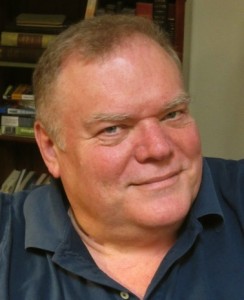
Entries Tagged as '5 Questions for a Professional Voice Over Talent'

5 Questions for a Professional Voice Over Talent – Erica Risberg

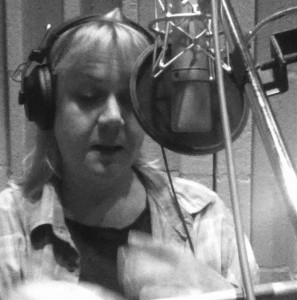
Today’s 5 Questions for a Professional Voice Over Talent are answered by Erica Risberg, a professional voice over talent based in Portland, Oregon.

1. The beginning: When did you know you wanted to be a voiceover talent; how did your career begin (please include what year it started) and then when did your passion for voiceover develop into something professional?

I knew I wanted to be a cartoon voice when I was about 4. My parents were very big influences on me – my mom was a kindergarten teacher and read stories with a variety of different voices; my dad did character voices and accents for as long as I can remember. I had a second life goal pop up when I was 12. My grandfather (aka my best friend) had died when I was ten, and I found out he wanted to be a physician when I was 12. I knew I didn’t have the fortitude to spend my days around blood, so I determined that I would be the family doctor, but I’d major in history. That second life goal took 25 years to attain, and kept me from focusing on my first love. I looked into voiceovers in my 20s, and again, when I started grad school in 2000 at the University of Maine. I went to the New England School of Communications and asked if they had voiceover classes. They convinced me to sign up for an announcing class instead. Great advice… I finished the class, and then took a course at the UM on making documentaries using archival sound. Thus was born another passion – sound preservation.

While living in Maine, I volunteered for the Maine Audio Information Reading Service, and then got a job as a part time announcer with the Maine Public Broadcasting Network. I got involved with a local film company, Edge Studio, in Bangor, and voiced the openings to their TV series “Strange America”, and did PSAs for MPBN. I graduated in 2006 with my sought after Ph.D., and moved to the Seattle area, where I decided to invest in my original passion. I came across Penny Abshire’s and James Alburger’s Voice Academy and started listening to calls. From there, I heard Marc Cashman and learned about the Voice 2010 conference, and decided that if I was serious about my pursuits, I wanted to have Marc as my coach, and that I would attend the conference. Between 2010 and April of 2011, I moved across the country twice, so, once again, I had to put my dreams on hold a little to attend to family issues, but I’m VERY happy to say that I’m settled now and can focus on my career. I had my demos done in January, and have started focusing in earnest on growing my business.

2. What is the one thing you know now that you wish someone had told you when you first started out in voiceover?

How critical networking is to growing your business. I am much wiser now, and have strategically targeted groups that I invest time in, and it would’ve been very helpful to know that up front so I would’ve invested my time more effectively.

3. What do you see as the biggest professional or personal obstacle you face that impacts your voiceover business and how are you working to overcome it?

The biggest obstacle I’m facing is becoming a known quantity in the community. I’ve moved a lot and had lots of family members pass away in the past 6 years, and I’m finally at a place in my life where I can settle down and establish roots. I have enthusiasm and dedication, but until I break through and develop a reputation like I have as a researcher, I will keep spinning wheels. That requires a lot of investment in places that are out of my comfort zone, such as signing up as an extra for film and TV. In Portland, the best way to get known is to get myself out there in the community, and so, while I’m not a huge fan of being in front of the camera, it enables me to meet people that have connections. From there, it will grow, but I have to start where I live.

4. What personal trait or professional tool has helped you succeed the most in your career so far?

It’s hard to choose one. I listen very well and have an aptitude for hearing nuances and mimicking them with my own voice. I also have a very high standard of responsibility, and my manners seem to work well too. I’m also personable and a problem solver. More than you probably wanted to know, but I did say it was hard to choose.

5. In your development as a voice over performer, who has been the one particular individual or what has been the one piece of performance advice (maybe a key performance trick, etc.) that you felt has had the most impact on your actual voice over performance and why?

Marc Cashman has been incredibly helpful as a voiceover coach. I met him at the Voice 2010 conference and asked him if he’d like to take me on as a student. The growth I’ve had under his guidance has been remarkable. His balance of constructive criticism and encouragement has helped me develop my voice to a level I hadn’t imagined. I also have to thank Pat Fraley for his courses as well – I’ve practiced his “Greatest Cartoon Voice Tricks Ever Smuggled out of Hollywood” pretty regularly, and have developed quite an aptitude for some of the sounds. Past them, well, I have to say that the entire voiceover community is incredibly welcoming and supportive. There are several individuals whom I haven’t worked with personally, but have been really encouraging. Everyone I’ve met personally or online has been so forthcoming with their knowledge it’s amazing. It’s really a pleasure to be working in such a great environment.
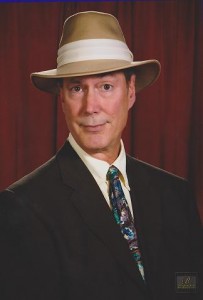
5 Questions for a Professional Voice-Over Talent – Scott R. Pollak

Today’s 5 Questions for a Professional Voice-Over Talent are answered by Scott R. Pollak, a professional voice over talent based in Atlanta, Georgia.

1. The beginning: When did you know you wanted to be a voiceover talent; how did your career begin (please include what year it started) and then when did your passion for voiceover develop into something professional?

I went into college in 1973 majoring in communications, wanting to work in radio (which I did, off and on over the next 30 years or so). I really began to think about shifting from radio into fulltime v/o work in about 2000 or 2001. In about 2004 or so I finally was able to dive into it full time and haven’t looked back since.

2. What is the one thing you know now that you wish someone had told you when you first started out in voiceover?

I hope you won’t mind me twisting your question around and tell you the one thing I know now that I’m glad no one DID tell me when I was starting: How darned hard it is to make a dent in this profession or make a good living doing it. Had I known that, I might have given up. Glad I didn’t.

3. What do you see as the biggest professional or personal obstacle you face that impacts your voiceover business and how are youworking to overcome it?

My personal obstacles are lack of professional training, for one. Other than a few sessions with Nancy Wolfson I’ve had no other voiceover training, but perhaps about 45 or so years of theatre training have helped offset that. Also, my home studio isn’t quite as pristine as it should be and I battle noise floor issues. Getting ready to move to a new home soon, though, so hopefully that will improve. Hopefully. 🙂

4. What personal trait or professional tool has helped you succeed the most in your career so far?

Probably the fact that – honestly – I will do whatever it takes to make the customer ecstatic. MOST clients are very easy to please, and very grateful for the work, but for the few who aren’t, I won’t settle until they’re happy. And I try to price my work reasonably.

5. In your development as a voice over performer, who has been the one particular individual or what has been the one piece of performance advice (maybe a key performance trick, etc.) that you felt has had the most impact on your actual voice over performance and why?

Julie Williams, in about 2001 or so, listened to my first demo (of which I was glowingly proud) and said, in essence “Nice demo… for a radio announcer”. She then went on to shatter my illusions and told me to become a real person and not an announcer. It took some work, but I think I got there. And continue to try to always improve on it.

5 Questions for a Professional Voice Over Talent – Philip Banks

Today’s 5 Questions for a Professional Voice Over Talent are answered by Philip Banks, a professional voice over talent based in Portgordon, Scotland.

1. The beginning: When did you know you wanted to be a voiceover talent; how did your career begin (please include what year it started) and then when did your passion for voiceover develop into something professional?

I’m not certain that I ever really wanted or knew I would be doing voice-over work but suspect it sort of evolved. As a child I was captivated by the announcers on BBC TV who did the links between programmes, never seen, never credited.

In my early teens I saw a documentary about how a product got to market, the subject was Kodak films. As part of the documentary they showed the creation of the TV commercial and blues guitarist/vocalist Alexis Korner was booked to be the voice. His voice was as great simply speaking as it was when he was singing. His sound and the sound of the late Bill Mitchell, a UK based Canadian actor would now blow the so-called greats out of the water in terms of sound and more importantly performance.

In 1989 when I worked for in investment management I met a lady who had worked as a producer for the BBC. She arrived at a brand new commercial radio station close to where I lived. It was a chance meeting and she explained how the company made commercials for clients.

“People, usually actors, travel from station to station doing voice over sessions. They get work by sending a demo (on audio cassette) of their voice” said Alison.

A few weeks later I hired a local music recording studio and spent the afternoon making a demo. It cost me £90 (around $140). Armed with copies of the demo on cassette I called producers on the phone, sent demos and waited. On 28th February 1990 I did my first ever radio commerical session. In May 1992 I went full-time.

It was an organic evolution as opposed to a revolution.

2. What is the one thing you know now that you wish someone had told you when you first started out in voiceover?

Can’t think of a single thing.

3. What do you see as the biggest professional or personal obstacle you face that impacts your voiceover business and how are youworking to overcome it?

There aren’t any. If my job was hard, I’d do something else.

4. What personal trait or professional tool has helped you succeed the most in your career so far?

It’s a rare session when I do not make the people involved laugh with me and AT me.

5. In your development as a voice-over performer, who has been the one particular individual or what has been the one piece of performance advice (maybe a key performance trick, etc.) that you felt has had the most impact on your actual voice over performance and why?

Sadly I’ve was born with the ability to do something which in the grand scheme of things is useless. Don’t get stuck on a desert island with a voice over as they couldn’t build a shelter but the could probably bore one to death.

I try not to analyse what I do or over think it – Open your mouth and just let the words fall out, it’s the natural thing to do. That’s what I do ……….It’s a living.

5 Questions for a Professional Voice Over Talent – Bruce Miles

Male Voice Talent Bruce Miles

Today’s 5 Questions for a Professional Voice Over Talent are answered by Bruce Miles, a professional voice over talent based in Portland, Oregon.

1. The beginning: When did you know you wanted to be a voiceover talent; how did your career begin (please include what year it started) and then when did your passion for voiceover develop into something professional?

I started by being the class clown, always cutting up, often getting into trouble. In fifth grade I improv’ed a line in a school play making 300 kids laugh in a big roar and I was hooked for life. Like many others in this business I spent a large amount of my youth with a tape recorder creating commercials and shows in my bedroom. In high school I snuck out of the house late at night and visited disc jockeys at the hot Top 40 stations and after observing their “glamorous” line of work the first phase of my career was set.

Starting in 1970 I spent 10 years full-time and 4 years part-time in radio playing rock, pop, and country, I did news, lots of audio production and program directed in Phoenix and San Diego. Being funny, interesting, and informative were my usual goals. From radio I got a lot of experience recording commercials that went beyond the station and getting paid for them (yay!) so my passion for VO started early. During those days and afterwards I also got opportunities to do TV commercials and shows, movies, and plays. I love all those performing formats.

From 1989 to 1993 I co-owned and managed a live theater company and produced 40 plays and 40 music concerts, most with good to excellent reviews. We couldn’t make a decent profit at it so I went back to full time acting. As I lost my boyish good looks my work shifted more and more to voiceover. I built a home studio in 2001 and that’s been my office and man cave ever since.

2. What is the one thing you know now that you wish someone had told you when you first started out in voiceover?

Befriend Peter O’Connell right away. He’s great to talk to and buys you a nice dinner when he visits your town. Only somewhat more seriously there are two things to work on from day one in a VO career.

a) If you don’t already know how, learn how to schmooze and market yourself. As a rule, the most successful among us are the ones who do this best. Until you’ve reached Philip Banks status, one who has people clamoring for his talents, marketing requires about 50% of your time (give or take 40%) to make it big in the biz. Yes, agents and production houses can bring you some work, but how do you convince them to sign you on? Good schmoozing.

b) The second important thing to do is be a sponge. Study the craft. Learn what the greats are doing right and what the so-so’s are doing wrong. Mimic the best until you create your own best styles. Study the news, be up on the general interest stories and trends of the day. Conversing intelligently with clients earns you loads of respect and just makes you a better talent overall.

3. What do you see as the biggest professional or personal obstacle you face that impacts your voiceover business and how are you working to overcome it?

It amazes me that while communication is at the core of my business (I’ve easily talked to 200,000 people at a time on live radio and TV, and 3,000 people staring at me in a theater), talking to just one stranger about using my communication talents is really difficult. I’m clearly not shy, however, I am very modest about my talents, so it must be my trepidation about extolling my virtues that holds me back.

To conquer this I just do it. I have a script I try to ad lib off of, and the more calls I make and the more positive responses I get the easier it gets. But I have to tell myself what I just told you here every day before I start calling.

4. What personal trait or professional tool has helped you succeed the most in your career so far?

Here I go extolling a virtue, but I think I’m very good at interpreting copy. How to stress, manipulate, massage certain words and phrases. How to make copy interesting for the intended audience even when I don’t find the subject matter personally of interest. That’s where being a sponge has been a help…studying styles of read and absorbing content that might help me later. My brain may explode some day, but I know I’ll die happier. I read that somewhere.

5. In your development as a voice over performer, who has been the one particular individual or what has been the one piece of performance advice (maybe a key performance trick, etc.) that you felt has had the most impact on your actual voice over performance and why?

I have a man crush on a number of great voiceover artists: David McCullough, Keith David, Liev Schriber, Peter Coyote, Orson Welles just to name a few. The first three have a great natural style. The next two a great theatrical style. I study them when I listen to them. What are they doing/thinking/feeling that makes them read that way?

I’m thankful for the fellow deejay who told me early in my career to stop “puking” on the air (playing with words unnecessarily, artificially). And that leads me to offer, don’t fall in love with your voice; fall in love with the copy. Make the words and ideas special and the rest will follow.

5 Questions for a Professional Voice Over Talent – Moe Egan

Today’s 5 Questions for a Professional Voice Over Talent are answered by Moe Egan, a professional voice over talent based in New Hampshire (a state with only one area code).

1. The beginning: When did you know you wanted to be a voice over talent; how did your career begin (please include what year it started) and then when did your passion for voice over develop into something professional?

My first VO was at WSPN- the Skidmore College radio station sometime in 1980-81. I was a theater major with a concentration in acting and fell in love with college radio (graduated as General Manager)- I had the luxury of learning how to write and produce spots in a place that was fun and totally creative and mistakes were all part of it. My first paid VO was in 1985, when the production director at WPRO AM in Providence learned I studied acting in college, I’d be called in to voice young female parts in spots occasionally. Those weeks, there was always extra money in my paycheck. I thought that was pretty cool. I continued doing VO sporadically – goes hand in hand with radio but I never thought I could do VO full time. I had moved to NH to raise my family- unless you were in a big city full time VO was not an option. The technology wasn’t available to build home studios. Nor was I interested in schlepping to Boston for VO work- my job as Mom always came first and that meant staying close to home to be there for the returning school bus. I’ve always loved voice over, because it’s the perfect marriage of the two careers I love- acting and broadcasting.

Year pass (sfx: harp gliss) I’ve spent the better part of 25 years behind a radio microphone in NH. My VO client base continues to grow organically and slowly, and the technology makes it possible to think about a home studio…some day. In 2004 I am shown the door from the local Clear Channel station . As I am doing the walk of shame out of the building with all my possessions in a cardboard box -I am thinking “THIS is the right time to try VO for real. Things can’t get any worse, I can only go up from here!” Before I hit the front door of the station, I knew, I was going to be a full time voice over- or give myself three years to get it out of my system then find a real job. As it happened, it took me three years to make a living wage…and by living wage, I mean I earned more than the meager wages one earns in NH Radio. In the following five years, I have tripled that salary.

2. What is the one thing you know now that you wish someone had told you when you first started out in voice over?

Your ‘normal’ voice IS your best voice – don’t try to sugar coat it, or hide it or make it something it’s not. Just sound like you. It’s scary at first, you feel naked behind the mic, but it’s real and it’s that voice that will truly connect with your listener- and ultimately deliver the message you’ve been hired to deliver.

3. What do you see as the biggest professional or personal obstacle you face that impacts your voice over business and how are you working to overcome it?

Oddly, my biggest obstacle to success is also my personal trait that helps me succeed at VO (question #4) . I don’t take it too seriously. I treat it like a very well paying hobby. I grew up as an executive brat, my dad was a workaholic vice president of sales who was always on a sales trip somewhere. Before I knew what I wanted to be when I grew up, I knew what I DIDN”T want to be- tied to and defined by what I did for a living. I never wanted to put my family second behind a job. So – even though I realize I could be making four times what I currently make as a free lance voice over talent with just a little bit of effort (just like all those darned teacher conferences back in the day “She could be getting ‘A’ work with just a little more effort)- I am succeeding- because I am able to balance my children and my work- in a way that very, very few Americans get to. I realize how lucky I (and you) are to wake up every morning and look forward to getting to work- to connect with clients and to do what we love for a living. I don’t ever want to turn this into a job. It’s way too much for for that.
However, the thought of eight straight years of college tuition payments is actually encouraging me to get my marketing plans in order- new website and logo, new demo being produced and cold calls are being made.

4. What personal trait or professional tool has helped you succeed the most in your career so far?

I don’t take things too seriously. I’ve always had a Zen approach to my VO work. I can’t explain it, but I trust that it will happen, and it does. I have stopped counting the times I’ve been asked by cubical dwelling friends “How can you live like you do, not knowing what next week’s pay is going to look like?” A normal, rational human being (who happens to be a single parent) with one kid in college, another heading in that direction and a mortgage to pay every month would probably freak out when days get quiet. I don’t. I know the work will come, and it does. Kind of sounds like the opening to a dime store novel, doesn’t it?

I LOVE and live by the words of Bruce Miles “You either learn to ride the waves or watch from the beach.” I don’t want to sit on the beach. I love this unpredictable, self defined job/lifestyle. VO really is more than a job- it is a lifestyle choice- I can’t imagine doing anything else. Yes, it’s fun and at times scary, and at times exhilarating and at times boring waiting for something to happen. It’s all the best parts of a roller coaster. =)

5. In your development as a voice over performer, who has been the one particular individual or what has been the one piece of performance advice (maybe a key performance trick, etc.) that you felt has had the most impact on your actual voice over performance and why?

My VERY first voice over class was with Will Lebow in Boston. This was prior to my being kicked off the good ship CC. There were maybe a dozen other students at various stages of VO experience in the class which met Saturday mornings for a few months. Toward the end of the class, he told me flat out “You will NEVER make a living doing voice overs. You have a ‘happy, shiny veneer over EVERYTHING you read.” I did. His words popped the ‘it’s good enough’ bubble and made me work very hard at scraping the radio out of my voice, unlearning all the lazy, bad habits one picks up in broadcasting and reacquainting myself with my acting skill set. I knew I was going to make it in VO when I got mad at what he said- not at him, but at myself – because he was right and honest enough to say it to me. I was willing to bust my larynx to prove him wrong. April 2012 marks my 8th year as a full time voice over. Ha! I guess I did it.

5 Questions for a Professional Voice Over Talent – Natalie Stanfield

Voice Over Talent Natalie Stanfield Thomas

Today’s 5 Questions for a Professional Voice Over Talent are answered by Natalie Stanfield, a professional voice over talent based near Corning, NY.

1. The beginning: When did you know you wanted to be a voiceover talent; how did your career begin (please include what year it started) and then when did your passion for voiceover develop into something professional?

I remember being captivated at an early age with Disney’s Wonderful World of Color (followed by Mutual of Omaha’s Wild Kingdom), nerdlet that I was, the ones I found most fascinating were the documentaries and docu-dramas! I was drawn to the voice of the narrator (yes even Marlin Perkins), and how he breathed emotion into the action before me (poor Jim didn’t know that lion was hungry). It began to occur to me that there was a dearth of female narrators though, except of the PBS stations, where they invariably had clipped British accents; which brings me to the next bridge of sorts in my journey. I loved cartoons, bad puns and comedy, so the Rocky and Bullwinkle Show was a natural draw for me. But there was also a shortage of female characters in these shows. I paid close attention to the few that were there and discovered I was actually good at mimicking accents (yes, even the PBS Narrator Lady). I picked up on Rocky and Natasha Fatale fairly quickly and soon was annoying friends and family with impressions of everyone from Rocky and Lambie Pie to Mae West and Carol Burnett’s Tarzan yell. Always a fan of Broadway, Hollywood and all things showbiz, I fell in love with CBS Radio Mystery Theater, which lead to a desire to do Theater (cue thematic transition music).

I had the great fortune of having a high school theater teacher with a wonderful vision for a radio/TV/Theater department who introduced all of his students to the production side of both radio and TV. I was fascinated with audio production. I followed this through college and into my first radio job. Though I loved commercials, and was an excellent copy writer, being “a girl” in the early 80’s, we were not ‘encouraged’ to pursue the technical end of the business so much as the on-mic/on-camera side, …except in the journalism arena; so I decided to pursue radio news casting! During my first on air gig as a morning news anchor in 1984, while goofing around off-mic one day the show host discovered my talent for character voices. He chose to add me to his repertoire of bits which I got to help produce. This was a game-changer for me. I began to learn the production room, which by the way, engineers always designed for the ‘wingspan’ of a typically tall man- reel to reel over here, turntable over, there a control board over – here…aaaaand GO!

I would later move to another station as a morning radio co-host and honed my copywriting skills and changed my focus to commercial and bit production. I loved the process of creating sound, of making an effective spot! Most people in radio do the commercials so they can get to be on the air. I did the airtime so I could get to do the commercials. I did morning and midday radio “Town to town, up and down the dial” and eventually received my RAB certification as a Certified Professional Commercial Copywriter. (cue time lapse music) I landed in network radio for a Contemporary Christian Radio network in 2003. By this time I had been writing and recording spots and had some outside clients, but primarily identified myself as an audio producer and copywriter. I wanted to ‘be’ a voice actor. But didn’t yet identify myself with the heroes I had in my head. It didn’t occur to me that when people bought my spec spots and said “no we’ll take it like it is” that they were validating me as a professional, even though these spots were playing all over the country. It took another voice actor that I admired greatly, my friend and mentor, Bob Souer, to point out to me they hired me because they wanted ‘me’.

One thing I love about the voiceover community is our ability to encourage one another. Because sometimes we can be so short-sighted, that we can be striving so hard for something, and be very good at it, but not recognize it until someone holds the mirror up to for us to see. And our community is so generous and so gracious to be quick to point those things out to one another. I’m thankful that Bob did that with me. Because it made me realize I had been in a rut of ‘trying’ when I was already ‘doing’!

Once the blinders were off things began to progress rather quickly. I realized I hadn’t been considering myself an entrepreneur. Once I made the mental shift, my business began to grow from more than a sideline to a full-time endeavor. Though still employed by a network as an audio producer, I have my own enterprise and client base in my voice over business, and serve as a copywriting consultant, contract copywriter and audio producer.

2. What is the one thing you know now that you wish someone had told you when you first started out in voiceover?

Wow, there are so many things that I can look and say “If I knew THEN what I know NOW” but I think by and large the most important thing would be to not let fear stop me. I was so intimidated by THEM, these VOICES, these people who were THE voices. But when I stepped into the arena, I found this was not like any other area of the business I have experienced. There was no one waiting to knock me down. No one waiting to sabotage my audition (and those that are don’t last long). What I found was a community of regulars, nerds and nerdlets, band geeks and squares, who are now the Cool Kids Table. I found the most welcoming tribe of gypsies that were willing to share what they knew. Many had the same off-beat humor as I, and all were so willing to foster, mentor and share! So what’s left to fear?

3. What do you see as the biggest professional or personal obstacle you face that impacts your voiceover business and how are you working to overcome it?

My biggest professional obstacle is me. I get in my own way all the time. It’s important to know what you know, but it’s more important to know what you don’t know. I need to know more about what I don’t know so that I can make better management decisions, better marketing plans (I’m not good at marketing), better business models, better purchasing decisions.

4. What personal trait or professional tool has helped you succeed the most in your career so far?

Friendship. I use that word instead of networking because I’m so NOT a networker. Networking makes me think of handshaking and passing business cards, not really connecting. I am a friendly person, and I genuinely LIKE the people for and with whom I work. I think this is why my business has continued to grow consistently by referrals (I told you I’m not good at marketing – yet). I’m also rather good at remembering names and at least something about what a person does and sometimes even something they need. Often I’m able to suggest a connection between friends that can be of help, and that’s one of my most favorite moments! I think People are tied to your Purpose and to your Prosperity, but if you don’t genuinely like people you won’t ever get to the other two. Genuinely liking people, genuinely connecting, and genuinely enjoying helping my client/friends, I think that would be it.

5. In your development as a voice over performer, who has been the one particular individual or what has been the one piece of performance advice (maybe a key performance trick, etc.) that you felt has had the most impact on your actual voice over performance and why?

I can’t pick one. I have had so many wonderful people pour into me from Dan O’Day and his Radio Creative Production Summit. To the three guys who each taught me so much: Bob Souer, Blaine Parker, and Dick Terhune. Then there’s my wonderful voice coach Nancy Wolfson, and Harlan Hogan with his “Starting Your Voiceover Business” class, and my character voice acting teachers Pat Fraley and Richard Horvitz. How do I pick one? Each fit what I needed when I needed at the time. That in itself is part of the key that I learned I think. They each have given something valuable, individual, and not anything the other could give.

I take that to the mic with me when I audition. I can only bring ‘me’. The key is, “I’m not competing against YOU when I audition. Because you can’t do ME and I can’t do YOU. We’re all just auditioning to see if we fit what this guy needs right now!”