Entries Tagged as '5 Questions for a Professional Voice Over Talent'

5 Questions for a Professional Voice Over Talent – Liz de Nesnera


Liz_de_Nesnera_Voice Over Talent

Today’s 5 Questions for a Professional Voice Over Talent are answered by Liz de Nesnera, a professional voice over talent based in New York.

1. The beginning: When did you know you wanted to be a voiceover talent; how did your career begin (please include what year it started) and then when did your passion for voiceover develop into something professional?

We all get to this crazy VO path from different places, which allow each of us to bring something unique to our reads….so my “beginning” has to go back a bit.

I grew up in a multi lingual family. Languages were always a huge part of my life.

I started my professional career working for the French Government in New York City.

I was that 20-something yuppie commuting to work in the power suit and sneakers, had 5 weeks vacation and I was using both my French and English skills every day. And I hated it. By 25 I was dragging myself to work with more and more difficulty.

So I made a change. I went back to school and learned audio production.

Much to my educated, multi-lingual parents’ horror, I left NYC to take a 50% pay cut as Production Director and Copywriter at a small independent Radio station in the wilds of Northern New Jersey. “You won’t be using your languages!” my mom lamented. But I fell in love with razor blades and tape (yes, the “olden days!”), and the craziness of radio. I soon started voicing some of the commercials that I wrote and produced. It was so fun! And yes, I LOVED hearing my voice on the radio! I was being creative and learning about new businesses every day. (Coming from New York City, I had NO idea what it meant to “detail” a car!)

Then, one day, one of the owners of the station told me that while they loved my writing and production skills, they did not want me to voice spots any more. I was devastated. I continued to write and produce (and still voice every now and then 😉 but realized that I needed another change. So the week after I turned 30 I went out on my own as a freelance copywriter & producer. 4 months later, on November 17th, 1994, my mother had a massive hemorrhagic stroke.

I spent the following 18 months caring full-time for my wheelchair bound mom, and my dad, who by this time had been diagnosed with Alzheimer’s disease.

By 1996, having run through my savings, I went back to work at a corporate recording studio. For 9 years I sat “behind the glass” listening to and directing some of the best voiceover talent in the NYC-metro area. I learned digital editing, client relations, project management, billing, accounting practices and voiceover talent wrangling. Did I mention I was using my languages again? Because of my English and French bilingualism, my conversational Russian, and my knowledge of German and Hungarian, I was able to direct and edit talent in many different languages, and yes, I was even able to get in front of the mic occasionally. It was great, but I was itching to move on. I just didn’t know how.

Then, in 2005, I got laid off. How wonderful! I was finally free to pursue my freelance dream again. And I did.
I had realized over the years behind the glass that although I loved production, being in front of the mic was even more fun.

My first client was a contact I had made as my corporate recording gig. I was on my way. The business skills that I had learned at the recording studio were a huge help in getting my voiceover business off on the right foot. I started getting clients though the “Pay to Play” sites as well as through referrals and my own research.

I’ve been a full-time voice talent for 7 years, and love it. There are ups and downs, of course, as in any business. But being able to pursue a career that challenges me, which allows me to be creative and work with fun people is a joy.

2. What is the one thing you know now that you wish someone had told you when you first started out in voiceover?

Don’t let the bastards get you down. Just because someone is an “expert” doesn’t mean that what they say is always correct. Trust in yourself, do your own homework. Oh, and yes, there IS math in voiceover.

3. What do you see as the biggest professional or personal obstacle you face that impacts your voiceover business and how are you working to overcome it?

Not letting the bastards get me down! I have a tendency to want to be perfect at whatever I do (Yes, I’m a Virgo) and when someone tells me that I am “less than”, I tend to jump to the conclusion that they are right. Over the years, I have come to realize that although I am not perfect (sigh…) I don’t stink either. I have regular clients who keep hiring me and new ones who regularly come on board. Yet, even today, I sometimes still need to call on good friends (you know who you are!) to remind me that I do have skills. It’s by having a wonderful support network that I am able to be move onward and upward.

4. What personal trait or professional tool has helped you succeed the most in your career so far?

Personal trait: Compartmentalizing. I spent 15 years being a caregiver while working and building a business. Being able to concentrate and build my business even while seeing my parents decline actually kept me sane! Frankly, clients don’t care about your personal problems. Yes, some clients become friends, but they hire you to do a job and they depend on you to do it. Being able to deliver even with “everything else going on” was vital to building my business, and my clients’ trust.

5. In your development as a voice over performer, who has been the one particular individual or what has been the one piece of performance advice (maybe a key performance trick, etc.) that you felt has had the most impact on your actual voice over performance and why?

In terms of my performance, the person who has been the most influential is Nancy Wolfson (http://www.braintracksaudio.com/ ). Working with Nancy has definitely taken my skills to the next level. She was able to hone in on exactly what I needed to work on to improve my performance. She’s tough, no nonsense and has an amazing ear. Having her in my corner has been amazing.

Now, as they say, this is show business. And while yes, of course, performance is key, you also have to embrace the business aspect of your development as a voice performer. Being a great performer with no business skills, leads to no one to perform for. In that regard there are several people who have been vital to my career development (sorry, Peter, I know I’m breaking the rules…I’m such a rebel ;-):

Barbara Winter (http://www.joyfullyjobless.com/ ), whose commitment to entrepreneurial thinking has been an inspiration.
Philip Banks (http://www.philipbanks.com/) & Bob Souer (http://bobsouer.com/ ) whose concrete numbers gave me financial goals to reach for.

Moe Egan (http://www.voiceoversbymoe.com/ ) whose friendship and nuts and bolts advice on the day-to-day realities of life as a full-time VO have been invaluable.

Basically, having a support network of talented people is what keeps me moving ahead and improving every day.

5 Questions for a Professional Voice Over Talent – Dan Friedman

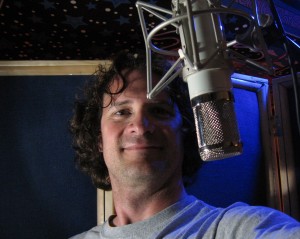
Dan Friedman Voiceover Talent

Today’s 5 Questions for a Professional Voice Over Talent are answered by Dan Friedman, a professional voice over talent based in Asheville, NC.

1. The beginning: When did you know you wanted to be a voiceover talent; how did your career begin (please include what year it started) and then when did your passion for voiceover develop into something professional?

I will always consider the beginning of my career to be the day I was asked if I wanted to learn how to run live sound. The year was 1994, I was working with a band doing photography, graphics and artwork, as well as writing and developing promotional materials. We had a house gig at a club that had a full 24 channel front of house system and separate 6 way monitor system. The house engineer, Josh, was leaving for vacation and couldn’t find anyone to fill in during the time he was going to be away. I was there all of the time with the band and would run the lights during shows (this largely consisted of tapping a button to the beat of the music and occasionally pushing a few faders up or down). I got to know Josh really well and he asked me if I wanted to learn how to run sound and take over for him while he was away. Without hesitation I answered… “hell yes!” Six months later I stopped bouncing from college to college and major to major and went to recording school. I then started working in radio and in a recording studio and ran live sound for bands all over Tampa. I continued to do live sound work in Atlanta and Asheville. In total, I did that regularly for about 10 years.

The voiceover bug bit me while I was working in radio in Atlanta. I was co-host of the local music show for about a year and then left radio for a job at a company specializing in recording voiceovers for telephony. It was there that I met a number of great voiceover talent including Pete Turbiville (who built my custom U47 microphone) and Paul Armbruster who became my coach. After taking his class, Paul said that I needed at least a year of solid practice before I could get into voiceover as a career. About five years later… I actually did my first paid gig. 🙂 It was in Paul’s class where I learned most everything I needed to learn to become a VO producer and director as well as become a talent. It was during his class when I felt that feeling for the first time, that almost out-of-body-experience you feel, when you’ve delivered the copy exactly right. After that, I was truly hooked.

2. What is the one thing you know now that you wish someone had told you when you first started out in voiceover?

That the audition to actual jobs ratio would be so big. Seriously, I had no idea.

3. What do you see as the biggest professional or personal obstacle you face that impacts your voiceover business and how are you working to overcome it?

I don’t see just one big obstacle, I see many small obstacles. Obstacles always exist, but they often change from day to day and they also change in size and scope. Some of these obstacles are my own creation, such as impatience and frustration and some are simply other people’s perceptions. For example, It is possible to be both an audio engineer AND a voice talent. Some people see you as one and it is hard for them to wrap their head around the idea that you can also do the other.

I don’t think anything is impossible. I’m always interested in finding solutions to problems and not letting anything prevent me from achieving my goals. When I was just a kid, I wanted to meet and work with rock stars. I wasn’t a musician, so I discovered ways to use my strengths and abilities to get where I wanted to go. By the time I was in my early thirties, I had met, hung out, or worked with hundreds of rock stars and musicians; everyone from Van Halen to the Steep Canyon Rangers.

While obstacles exist, by always viewing them as small nuisances rather than big problems, they are far easier to overcome. Keep it positive. Don’t panic. Have fun. Make it happen. Those are my mottos.

4. What personal trait or professional tool has helped you succeed the most in your career so far?

The short answer is… my ears. Being an audio engineer has helped. I have no fear of the gear. But even more than that, listening to so many voice talent over so many years has enabled me to connect what I hear in my head with what comes out of my mouth.

Which brings me to the most important thing of all, working at ProComm Voices has been the greatest asset to my career in every way. From being able to listen and learn from hundreds of voice talent and thousands of recording sessions, to being allowed to spread my wings and work as a voice talent both on the ProComm roster and through outside agents, I wouldn’t have had any of the success I’ve had without ProComm Voices and everyone on the staff. I’m so grateful to all of them and especially to our owner John Brooks, who has created such an awesome work environment in one of the prettiest cities in the United States… Asheville, North Carolina.

5. In your development as a voice over performer, who has been the one particular individual or what has been the one piece of performance advice (maybe a key performance trick, etc.) that you felt has had the most impact on your actual voice over performance and why?

I think many people (myself included when I’m advising talent) say, “relax and be yourself.” The truth is that people who are trying to be voice talent and just aren’t very good at it, are usually very obvious to everyone. But when comparing good talent, it all comes down to the ears of one decision maker. When you win… you win. When you lose it isn’t necessarily because someone didn’t like you or because you didn’t deliver the copy well, they just liked someone else more or felt someone else represented their brand better.

As far as who has had the greatest impact…? This is a very difficult question because there are so many people who have been so helpful and supportive. Everyone I’ve mentioned in this article as well as those I’ve mentioned in articles I’ve written for my blog have all played important roles in my performance as well as in my personal and professional development. Being a voice talent takes life experience. You have to experience emotion to be able to deliver it. Looking at it that way, everyone who has ever made me happy, sad, angry, jealous, enthusiastic, proud or feel any other emotion has played a part.

But… okay, okay…. if I have to pick just one individual, I’ll say… Peter O’Connell. Thanks for asking me to be a part of your series. 😉

5 Questions for a Professional Voice Over Talent – Rowell Gormon

Rowell Gormon_Voice Actor

Today’s 5 Questions for a Professional Voice Over Talent are answered by Rowell Gormon, a professional voice over talent based in Raleigh, NC.

1. The beginning: When did you know you wanted to be a voiceover talent; how did your career begin (please include what year it started) and then when did your passion for voiceover develop into something professional?

I knew I wanted to be a “voiceover talent” long before I even knew what it was. As a little kid during the late 1950s and into the 60s, sitting in front of the TV, absorbing the characters of Mel Blanc, Daws Butler, Don Messick, Paul Frees, Bill Scott, Dayton Allen, Stan Freberg, and so many others…I had no idea I was studying characterization, timing, and other aspects of voice acting. I found myself using those voices, or my versions of them, in play…with puppets, plastic toy figures, or just goofing around with buddies. Of course, I knew I’d never be doing those cartoons. But the fun of creating “something out of nothing” kept me at it.

Then came radio. Not “Radio”…just “radio”. My uncle’s friend was Chief Engineer at the local radio station and in 1968, my junior year in high school, he heard they needed a part-timer and got me an audition. I still have the tape, and to this day I don’t know why they ever hired me. Years later I played it and sat there, waiting for “me” to come on, instead of that awful-sounding guy mangling some Associated Press copy.

But radio got me in front of real microphones, real tape machines. I was taught basics of the equipment and the timing needed to “ride a tight board”. I learned to “talk to someone…not ‘the Folks out there in RadioLand'”. And while it was often cringe-worthy, I found places where my voices could sneak in and entertain, using these new toys. This wasn’t a rock station, it was multi-format. So the people I learned from were more “personalities” than “disc jockeys”. I think that may have helped me get a better start than some.

My parents bought me my first tape recorder (those 3-inch reels!), and I started making my own audio “cartoons” in my basement “studio”, swiping sound effects and inspiration from cartoon kiddie records.

Then: college, and real “Radio” with a capital R. Unfortunately, I was learning it as ancient history. People called it the Golden Age, with radio comedies and dramas at a network level…only available to me as recordings saved by collectors. I quickly latched onto a couple of these collectors and became one myself. Now I had a new universe of inspiration: Orson Welles, Jim Jordan (Fibber McGee), Gale Gordon, Bill Thompson, Gosden & Correl…Jack Benny and his crew (Mel Blanc again!), Fred Allen and the denizens of Allen’s Alley, and all the vocal “shorthand” tricks they and the other voices…stars and bit players…used in creating something out of nothing.

Again, wonderful stuff. But hardly anything I was going to be able to use to make a living…since that style of Radio had been largely sidelined (though, thankfully, it still exists on a smaller scale). A college buddy and I even tried our luck as a production company, cranking out a few local ads…and 65 episodes of a radio sketch comedy series we had no idea how to sell (and never did).

But wait! There’s more! That’s right: then came…Advertising.

The great Stan Freberg was once asked what qualified him to create advertising. He answered it was his years as “an enraged consumer!” I already knew the Freberg voice and style through his comedy records (and there was Daws Butler again…and Paul Frees again!). So it wasn’t too hard to spot his style showing up in clever, entertaining ads and public service campaigns. Here was hope that there might actually be an outlet for these “audio cartoon” things I’d been playing at.

After two years of unemployment following my sterling college education…during which time I collected some very nice rejection letters from Disney, Hanna-Barbera, and even Blanc Communications (hey, at least they all wrote back personal replies to that kid in Indiana!)…I answered an ad from a small radio station in North Carolina for a production job: “If you think like Freberg and can keep it clean, call me.” It was posted by a guy named Jack Shaw. They flew me out for an interview and we became instant friends…but I didn’t get the job. Evidently I had asked for too much money.

But Jack called me every few weeks. We’d swap tapes of old radio shows, or newer stuff being produced by Dick Orkin, Gary Owens, and others. After a few months he called again and said, “Would you take the job out here for a hundred-thirty-five a week and all the records you can eat?” They’d gone through at least three other guys since my visit, none of whom had been able to live up to their demo tapes!

During the next year, Jack taught me how to write commercial copy, how to adapt what I’d learned about reel-to-reel multi-track production with my college buddy into working with cart machines and turntables…and deadlines! Also during that year, he got a better offer, moved on, and I inherited his job as production manager, winning a few local Addy awards in the process and coming to the attention of a larger station in Raleigh.

Before Jack left, he tried to impress upon me that it was okay if I didn’t sound like the “regular” announcers and DJs…that the character work I could do was something more rare — something a lot of the announcers wished they could do. I have to admit I didn’t really believe Jack then, and wouldn’t for quite some years down the road.

2. What is the one thing you know now that you wish someone had told you when you first started out in voiceover?

I wish someone had made me…forced me…to take courses in sales and marketing, in promotion and basic accounting. But what did I need those things for in the 1970s? I worked for broadcasting companies and did voice work as a freelancer. The station had sales people, I had steady exposure on a highly-rated station, and I had a decent accountant to help me keep me straight with the IRS on any outside income. That lack of business sense has been my biggest stumbling block since the world changed and I wound up being my own one-person-shop. The protective insulation which the station job provided left me woefully ill-equipped to go out and sell my product (me) in person, or even over the phone. It’s a problem that continues to this day.

3. What do you see as the biggest professional or personal obstacle you face that impacts your voiceover business and how are you working to overcome it?

At first I was going to answer, “See the above”, but that’s not altogether true. Over and above that lack of business and promotion savvy, I (like many other “creative types” I know) work under an additional burden of shyness, and its ugly cousin…lack of self-confidence. And for all the truly wondrous freedoms working as a freelance voice talent provides, working solo also removes the daily support group of friends and co-workers to distract from that inner voice which can fill the void with taunts of self-doubt. The fear of failure, or making the wrong move, or the wrong impression, can stifle even the first attempt toward success. It’s the one “voice” in my head which has had absolutely no useful purpose…and the one which teacher Nancy Wolfson once said she wished she could reach into my head and strangle! To date, I’ve only been able to chip away at that problem and the lack of business accumen, with what sparse coaching and workshop-ing I can afford, and collecting advice from other freelancers as to what works for them.

4. What personal trait or professional tool has helped you succeed the most in your career so far?

There are several personality traits, and even more technological tools I could credit. But if I have to point to one single thing over the course of my life, it would have to be “Imaginaton”. From those very real cartoon characters in the 50s, through the worlds brought to life in my mind from those Radio shows, right through to this week’s work in the booth, my ability to do what I do well is possible when I can imagine I am what the script says I am…doing what I am supposed to be doing…in whatever setting I’m supposed to be inhabiting. It’s an off-shoot of playing with those toys while doing their voices.

In fact, Richard Horvitz (Invader Zim) says a willingness to allow oneself to be “at play” is essential for any kind of voice acting, not just cartoon or character work. And he’s right. You’re not just doing a voice, you’re pretending to be someone or something you are not…and having fun doing it, even if it’s a straight “announcer” part. Halfway measures don’t yield full results. I suppose one can be a voiceover success without much Imagination…but I wouldn’t want to try it.

And let me hastily add a P.S. to the above: two other things I deem essential to developing my Imagination were: 1) my parents’ encouragement to READ from an early age. I love books. The best-written stories play out in my head like movies;
and 2) the ability to LISTEN. So many actors, voice or otherwise, seem only to be focused on their own lines. The best ones listen…either to the other actors, or to the story behind the words of a commercial script.

5. In your development as a voice over performer, who has been the one particular individual or what has been the one piece of performance advice (maybe a key performance trick, etc.) that you felt has had the most impact on your actual voice over performance and why?

As I think about this one, it’s really been the same piece of valuable advice phrased in different ways by different people I’ve encountered. And I’d be remiss if I didn’t acknowledge it still hasn’t fully sunk in, because every so often someone has to tell me again in a different way.

From my friend and teacher Jack Shaw: “Don’t worry about sounding like all the other guys. They’re dime a dozen. A lot of them wish they could do what YOU do.”

From a wonderful theatre director (and friend), Jack Hall: “You tend to rush through your part as if you were trying to get out of the way of the ‘real’ actors. These lines were written for you. Claim your time, use it, then make way.”

From the brilliant and insightful voice coach Nancy Wolfson: “You…are…enough.” (…although I encounter a lot of audition-seekers who might dispute that, you know what she means.)

From generous mentor and wonderful friend Bob Souer: “You have no competition. Because no one can do a Rowell Gormon voice better than you can.”

When I can get myself in that groove, the work becomes fun…the job becomes play…imagination takes over. And more often than not, everyone has a good time and the client is pleased…and is more than likely to come back for more.

5 Questions for a Professional Voice Over Talent – Matt Young

Voice Talent Matt Young

Today’s 5 Questions for a Professional Voice Over Talent are answered by Matt Young, a professional voice over talent and Production Director with Entercom in Buffalo, NY.

1. The beginning: When did you know you wanted to be a voiceover talent; how did your career begin (please include what year it started) and then when did your passion for voiceover develop into something professional?

It began for me in March of 1987. I had wanted to get into it in some capacity during my Junior year of college in 85/86, but was already committed to a different major and quite possibly would have had to change schools. Through a friend I was able to get a meeting with a program director at a local station who felt I presented myself in a professional enough manner to warrant me making him a demo tape. This was February of ’87, I was hired to do weekends shortly thereafter. It was quite a rapid turn of events to say the least considering I had almost no experience in the field. I realized in the fall of that year that I could make this a career as my skills started to improve through repetition.

2. What is the one thing you know now that you wish someone had told you when you first started out in voiceover?

That this is a very unforgiving business and that workload and looming deadlines can sometimes stand in the way of creativity. You also have to be careful with your opinions and ultimately know your place. There are times when a client will very much rely on your input, and other times when you are simply there to read what’s on the script.

3. What do you see as the biggest professional or personal obstacle you face that impacts your voiceover business and how are you working to overcome it?

At this point, especially over the last decade, there is an over abundance of voice over talent available to clients. The biggest reason is obviously all the corporate consolidation that has taken place since February of ’96. What I try to do is educate my clients by demonstrating how my engineering skills can give me an advantage over the competition in terms of overall sonic quality in my finished product.

4. What personal trait or professional tool has helped you succeed the most in your career so far?

Attitude is key. You have to be flexible to people’s needs, and at the same time try to encourage and coach the best out of them if you’re in a situation where you’re producing as well as voicing with someone else. I’m in a position where I’m not just the main voice, but also working with people who might not have the skills to be doing voice work and I have to know how to coax the best performance out of them. The main thing in these situations is to be positive and try to bring out their best qualities, or know how to adjust the session to fit their abilities. Working in a studio, whether a broadcast facility, or a full scale production house can be nerve wracking to people. Get to know you’re clients, where they grew up, attended school etc. This may sound silly, but tell a joke, get them to laugh, then do a take right away. Odds are it will be best take because they’re much looser in that scenario.

5. In your development as a voice over performer, who has been the one particular individual or what has been the one piece of performance advice (maybe a key performance trick, etc.) that you felt has had the most impact on your actual voice over performance and why?

Not an easy answer as there have been many people over the years that have shared their expertise with me. If I can go back to square one, it would be John Piccillo who not only gave me my first job, but also helped train me in how to properly project my voice. I was afraid of being too loud and over the top, and he just said “be too loud, and I’ll teach you to bring it down to a better level”. It’s almost as if I had to work backwards to get to an acceptable level, but it worked. I still give that advice when working with other talent.

5 Questions for a Professional Voice Over Talent – Lee Gordon

Male Voice Talent Lee Gordon

Today’s 5 Questions for a Professional Voice Over Talent are answered by Lee Gordon, a professional voice over talent based in Connecticut.

1. The beginning: When did you know you wanted to be a voiceover talent; how did your career begin (please include what year it started) and then when did your passion for voiceover develop into something professional?

When I was a kid, way back in the 50s, I would hear voices like the great Don Pardo or Johnny Olson on TV. I may not have known I wanted to do that for a living, but I knew it was cool. In high school, perhaps inspired by the popularity of Vaughn Meader’s JFK impersonations, I used to try to amuse my friends by doing impressions of my own. That, and being a fan of my local radio DJs, lead me to college radio, and from there to commercial radio starting in 1969. Eventually, I transitioned from DJ to Production Director and began doing some VO on the side. By the 90s I knew that radio station consolidation would ultimately lead to a contraction of radio jobs, probably including my own, so I prepared to try VO as a full time career, which happened in 1997, when my radio position was finally eliminated.

2. What is the one thing you know now that you wish someone had told you when you first started out in voiceover?

I kind of knew, but the point has now been driven home, that this is really two jobs. The easier one is doing voiceovers; the real work is drumming up the business. I sometimes tell people that I audition for a living.

3. What do you see as the biggest professional or personal obstacle you face that impacts your voiceover business and how are you working to overcome it?

Frankly, my biggest obstacle is me. For years I put in 50-60 hours a week at my radio job plus a few more doing the VO on the side. Once I was on my own I reacted to that by deciding not to work that hard for my new boss (me).

4. What personal trait or professional tool has helped you succeed the most in your career so far?

One trait that has paid off for me has been curiosity. Throughout my life I have found a wide variety of subjects interesting and so I have retained a little bit of knowledge about a lot of things. As a result, I have been able to record narrations and e-learning projects, even fairly technical ones, and sound like I know what I’m talking about. Being a good observer has also allowed me to incorporate a pretty decent range of styles into my repertoire.

5. In your development as a voice over performer, who has been the one particular individual or what has been the one piece of performance advice (maybe a key performance trick, etc.) that you felt has had the most impact on your actual voice over performance and why?

I’ve been doing this for so long, it’s hard to pin down just one individual or one bit of advice. Way back in college I learned a lot from working side by side with some very talented guys. Two in particular were Bruce Nadeau and Al Bartenhagen. As my radio career evolved I worked with a production and copywriting genius named Lance Drake. And in recent years I’ve picked up some incredibly useful information from colleagues such as Bob Souer and Doug Turkel, who have so generously shared their insights.

5 Questions for a Professional Voice Over Talent – Jodi Krangle

audioconnell jodi krangle voiceover

Today’s 5 Questions for a Professional Voice Over Talent are answered by Jodi Krangle, a professional voice over talent based just north of Toronto, Canada.

1.The beginning: When did you know you wanted to be a voiceover talent;how did your career begin (please include what year it started) and then when did your passion for voiceover develop into something professional?

I’ve been a singer all my life so using my voice was never anything I was unaccustomed to or embarrassed about. I also remember calling in to local radio shows to talk with the DJs about whatever issue they seemed to want to talk about in those days – and that was happening when I was around eleven. I remember sneaking to the phone to dial up CKEY in Toronto (which is now long defunct) when I was supposed to be sleeping. I don’t know if my parents knew about it and just let it happen, or if they genuinely had no idea. I have a feeling it was the former.

I even used to occasionally attempt to tape record these calls with the radio station with a huge boom box I had saved up for. (Believe it or not, I was doing door to door sales of stationary and little knick knacks (anyone remember Regal Greetings and Gifts?) when I was eleven to about thirteen to make some extra money beyond my allowance). THERE’S something that would never happen today! But I digress.

Fast forward to about 1995 and I hear about a program going on for the CNIB (Canadian National Institute for the Blind) where they’re reading books (or magazines) on to tape. Using reel to reels. This was before digital. I only did that until late in 1996 (their volunteer recording facility was really far away from me so the trip was kind of grueling) but the bug had bit.

For the next long while, I thought about it in the background … and I did some personal projects, reading stories I’d written myself on to tape, put to music by a friend of mine. But nothing really substantial or for pay until 2007 when I finally got so bored with the business of promoting websites (SEO and Internet Marketing) that I just HAD to find something else to do.

I was already self-employed at that time – and had been for several years – so the stretch of going out on my own wasn’t really all that big of a stretch. It was just a different direction to focus my efforts. I started looking online, since I’d been an early adopter (I created a popular songwriting resource called The Muse’s Muse in 1995 and that’s where I first started experimenting with promoting websites). The web was part of my everyday routine. So when I needed information, that’s the first place I looked.

Things got going pretty quickly from there.

2.What is the one thing you know now that you wish someone had told you when you first started out in voiceover?

Actually, it’s something that I’ve heard over and over now that I’ve been involved in the voice over community for a while. And of course, hindsight is 20:20, right? But I wish I’d had someone tell me to take coaching before making my first – and second – demo. It was the total lambasting of my second demo, professionally produced, mind – but long before I was actually *ready* for it – that got me really learning the craft. Before that … I don’t know. I guess I thought I’d just learn it by doing. Not the greatest idea. 😉

If there’s one thing I would tell a person just getting into this, I would say – find yourself a mentor, take coaching, and only when that coach or mentor tells you you’re ready for a demo should you make that demo. You’ll save yourself a LOT of wasted time and money by being careful about that. And never EVER think that a day class is going to make you ready. Maybe for a really small percentage of people, that’ll work. I don’t know. But in general? It’s something that comes after a great deal of hard work.

3. What do you see as the biggest professional or personal obstacle you face that impacts your voiceover business and how are you working to overcome it?

Actually, in the past, it’s been my health. I’m generally decently healthy, but I’ve been noticing that I’ve been catching more and more colds lately … And as we all know, catching a cold can really ruin things when it comes to our voices. 🙁 To combat this – and just to feel better in general, I’ve become a vegetarian and I’ve started juicing to get more fruits and vegetables into my system. I grew up with parents who were vegetarians (though they do eat fish, eggs, milk and cheese – just no chicken, beef, pork, etc, so kind of “modified” vegetarians) so it wasn’t that big of a stretch for me. I’ve really started to feel a LOT better. If anyone’s interested in hearing more about this, I’m happy to talk about it, but I won’t take up too much time with it here. 🙂


4.What personal trait or professional tool has helped you succeed the most in your career so far?

Tenacity. Wow – has that word really become a staple of my vocabulary. Sticking with it – or just plain STUBBORNNESS has been a trait of mine from a very young age. In this business you get a LOT of rejection. Tenacity – never giving up – is what will get you through it. If not this job, then another. If not this agent, then another. I challenge myself to keep on taking steps forward, no matter how small or how many obstacles are put in front of me. It’s worked really well for me so far. I have to say that while talent is great to have, tenacity may actually get you further!

5. In your development as a voice over performer, who has been the one particular individual or what has been the one piece of performance advice (maybe a key performance trick, etc.) that you felt has had the most impact on your actual voice over performance and why?

When I first decided to get into voice overs, I went to the VO-BB and to Julie Williams’ voice-overs.com message board. I gleaned all I could from the fantastic people at both places. That second demo I posted for critique was posted on voice-overs.com – and Lee Kanne, a fantastic actor from the Chicago area, is the one who lambasted it – and then proceeded to work with me over the phone and through exchanged .mp3s until I learned that there was actually *acting* involved in this. 🙂 He helped me find my own voice, going way out of his way for nothing but profuse thank-you’s – and for that, I’ll be forever grateful.

This really is such a wonderful community – both online and in person. I’ve never met such a generous bunch of people and I certainly do all I can to pay it forward.