Entries Tagged as '5Q:VO'

5 Questions for a Professional Voice-Over Talent – Craig Crumpton


Today’s 5 Questions for a Professional Voice Over Talent are answered by Craig Crumpton, a professional voice over talent based in Atlanta, Georgia.

1. The beginning: When did you know you wanted to be a voiceover talent; how did your career begin (please include what year it started) and then when did your passion for voiceover develop into something professional?

I was already an animation fanatic by the time I was in preschool, and by middle school I noticed various cartoons had similar voices. Mel Blanc’s name was already familiar thanks to Looney Tunes, but I started to watch the credits for the cartoons I loved in the 80s and found sources at the library that helped me to identify who some of them were like Frank Welker, Daws Butler, Don Messick, June Foray, and Paul Frees. I was especially fascinated with how Mel, Frank and Daws could do so many different characters and I began to mimic what I heard and found I had a talent for it. But it wasn’t until I got to college in ’91 that a friend suggested that I look into voiceovers as a career — my small mind hadn’t even considered that people got paid to do voiceovers. So I started researching everything I could about the industry. A local library had copies of Susan Blu’s voiceover instructional tapes and Pat Fraley’s “How to Create Character Voices for Fun and Profit.” And it was Pat’s audio instructional that really fueled my passion for voice acting and the desire to become a professional voice talent.

In 1999, I started publishing “Voice Actors in the News” as a hobby but I lacked the confidence that I would ever “break into” the voiceover industry because I knew the realities of how competitive it was. Voice acting was also a hobby during that time — I booked occasional gigs as a storyteller for kids and as a comedian/impressionist until I started touring full-time with a couple music groups, so I put my interest in pursuing voiceovers on hold. And then in 2005, after performing in an Atlanta talent show I was approached by one of the show judges — a representative for the Arlene Wilson Talent Agency who said she would like me to interview with the agency for voiceover representation. I signed with them a week later.

2. What is the one thing you know now that you wish someone had told you when you first started out in voiceover?

No matter how talented you think you are, getting training and coaching from qualified, experienced (and recommended) professionals is a must. To succeed in the VO biz, you must know how to self-direct. You must know and understand what works and doesn’t work in various types of voiceovers. While you can find helpful info on the web and through recommended VO books/instructionals, it simply cannot fully prepare you for the reality of the work and what’s involved in being a professional.

I also wish someone had told me there was a very limited market for impressionists and that I should focus on commercial work first. And in regards to commercial VO, to get out of my head thinking I needed to *act* in commercial work when the reality is that it’s all about being genuine, real and believable, and that it’s more important to be a good reader in commercial work than a good *actor*.

3. What do you see as the biggest professional or personal obstacle you face that impacts your voiceover business and how are you working to overcome it?

Being dilligent to record auditions as soon as I receive them, but I have also been hindered by faulty, inferior equipment for the last few years. And that’s the other obstacle — lack of finances to get better equipment and new demos produced due to difficulty finding steady work and periods of unemployment.

4. What personal trait or professional tool has helped you succeed the most in your career so far?

Pat Fraley’s audio instructional products (and having him as a mentor).

5. In your development as a voice over performer, who has been the one particular individual or what has been the one piece of performance advice (maybe a key performance trick, etc.) that you felt has had the most impact on your actual voice over performance and why?

There isn’t just one individual. I have gotten something great, practical and useful from every VO coach/instructor I have had the opportunity to take a class or workshop with.

– Pat Fraley for his ability to teach in a refreshingly simple way that’s easy to understand and put into practice.
– Bob Bergen for his ability to make learning the craft of voice acting fun, informative, entertaining, and memorable. (His techniques are so effective, I booked a gig at an audition within two hours after taking one of his workshops.) He also has an uncanny ability to coach a poor or mediocre performance into a great one.
– Bill Holmes for his practical approach to commercial reads.
– MaryLynn Wissner for her expertise from her experience in voice casting and directing.
– James Alburger for literally writing the book on voice acting and his excellent skills as a coach/instructor.
– Bob & September Carter for offering an affordable, effective workshop that is like getting two workshops in one.
– Scott Hilley for creating an excitement and enjoyment for the craft of voice acting that makes you want to run out and audition for anyone who will listen.

As for the “one piece of performance advice”, see my response to #2.

5 Questions for a Professional Voice-Over Talent – Melanie Haynes

Today’s 5 Questions for a Professional Voice Over Talent are answered by Melanie Haynes, a professional voice over talent based in Houston, Texas.

1. The beginning: When did you know you wanted to be a voiceover talent; how did your career begin (please include what year it started) and then when did your passion for voiceover develop into something professional?

I actually started out acting and dancing which eventually evolved into voice-over. My first performances of any kind were standing on the kitchen table, at the age of 2, reciting nursery rhymes to a captive audience! I was always performing all through school in any way possible – plays, piano, band, debate, drama competitions, twirling, cheer-leading, and trying to get laughs by imitating voices I heard in Film, TV, and Radio as well as real life, which got me into trouble more than once. The first time I was “on mic” was when my high school drama coach in my tiny Kansas hometown had me narrate a live program. I received a lot of encouraging comments on my voice, but I still had no idea about doing voice over as a career. In Houston, I had several jobs after college as a receptionist and had been hired because of my “good phone voice”. I started pursuing my acting career professionally in 1980 and decided to go after voice over work because I’d always been told I had a good voice, and it sounded like fun and a good way to expand my marketability as a performer so that I wouldn’t have to have a “real” job. Sound familiar?

2. What is the one thing you know now that you wish someone had told you when you first started out in voiceover?

So much of casting, direction, and even engineering is just a matter of personal preference. It’s not simply a matter of good vs bad or right vs wrong.

3. What do you see as the biggest professional or personal obstacle you face that impacts your voiceover business and how are you working to overcome it?

I think the biggest obstacle I face may be my “feeling” that location (not being in LA or NY) and my “voice age” determine whether I’ll be able to snag more national work. Having my own studio for the past 10 years has helped to overcome a lot of that. I’m working with some great studios and agents all over the country (and the world), and I’m finding that although there’s a lot of call for “the hip/young” sound, there’s still a need for my deeper, more mature sound (and my characters, too).

4. What personal trait or professional tool has helped you succeed the most in your career so far?

Persistence! Tenacity! My Taurus stubbornness!

5. In your development as a voice over performer, who has been the one particular individual or what has been the one piece of performance advice (maybe a key performance trick, etc.) that you felt has had the most impact on your actual voice over performance and why?

The one piece of advice that helps me the most and which is sometimes the hardest to achieve is to remember that “Less is More”. Every good acting and voice over coach I’ve worked with, read, or heard of seems to address this in one way or another, although the terminology may vary. I think the best way for me to get there is to keep “honesty” in mind.

5 Questions for a Professional Voice-Over Talent – Robert Sciglimpaglia

Today’s 5 Questions for a Professional Voice Over Talent are answered by Robert Sciglimpaglia, a professional voice over talent based in New York City.

1. The beginning: When did you know you wanted to be a voiceover talent; how did your career begin (please include what year it started) and then when did your passion for voiceover develop into something professional?

I took a 2 hour introductory adult education class back in 2005 concerning the basics of voiceover. I did not know anything about the voice over industry prior to that class, but when I walked out of that door, I knew I had found my passion and wanted to pursue the industry. From there, I took some more advanced voice over classes, cut a demo, set up a home studio, and started auditioning on Voice123.com. About a month later, I landed my first gig, a national documentary for the AMERICAN EXPERIENCE television series on PBS.

2. What is the one thing you know now that you wish someone had told you when you first started out in voice-over?

That voiceovers are really part of the big acting “umbrella” and that you need to be an excellent actor to be an excellent voice over artist. I wish I had taken acting classes right from the get go. I didn’t take acting classes until a couple of years after I started pursuing the vo business, and once I did that, not only did my on camera acting career take off, but my vo career did as well.

3. What do you see as the biggest professional or personal obstacle you face that impacts your voiceover business and how are youworking to overcome it?

Time, or lack thereof, is the one constant obstacle that I have always battled while pursuing the industry. I am constantly battling balancing my time between my law career, my on camera career and my voice over business, as well as having time left over to spend with my wife and 3 girls. It is a constant battle, but the more I do it, the better I get at it so that it all seems to work out in the end.

4. What personal trait or professional tool has helped you succeed the most in your career so far?

I have been told I have the ability to be “natural” behind the mic and in front of the camera. I think this is because my personality is laid back and relaxed, for the most part, and this certainly is an excellent trait for success in the acting field.

5. In your development as a voice over performer, who has been the one particular individual or what has been the one piece of performance advice (maybe a key performance trick, etc.) that you felt has had the most impact on your actual voice over performance and why?

My acting teacher, Tom Todoroff, has given me many, many pieces of advice that have helped, but the one I keep in mind every single day that impacts me the most is that “I act to express, not impress.” Meaning, I do not care what people think about my performance or how they “judge” me or my performance; as long as I am satisfied with my performance, that is all that matters.

5 Questions for a Professional Voice-Over Talent – Rich Brennan

Today’s 5 Questions for a Professional Voice Over Talent are answered by Rich Brennan, a professional voice over talent based in Long Island, New York.

1. The beginning: When did you know you wanted to be a voiceover talent; how did your career begin (please include what year it started) and then when did your passion for voiceover develop into something professional?

This is a long one, lol. In 1997, I was recently separated; a woman that I’d met asked me (during one of my down’ days) what I’ve always wanted to do. I said that I’ve always wanted to get into radio or music (I play the drums). This conversation lasted a while – with her suggesting that I apply for an internship at a local radio station (102.3 WBAB- which happens to be the station that I listen to); I told her she was nuts..lol, since I was 35 (at the time) and internships were meant for college students. So, throwing caution to the wind; I applied and was accepted. While working in the production department. I took a real liking to it; to the point where my (brief) internship was 99% doing production. 6 mos later, I was hired, part time, as a production assistant for a 3 station cluster: WBAB/WBLI/WGBB. I had built up the responsibility of writing copy; voicing and producing it; getting client approval and putting it on the air, within my first 6 mos. Having a little more than a year (in production) I was, occasionally, entrusted to run the production dept. while the production director was out of the office (be it on errands or had taken the day off). It wasn’t too soon late that the production director would go on vacation (for a week) while I took care of things. I really loved doing that. I would turn down overtime at my full time job to make $9/hour at the radio station. In 2000, I started my own production company (JustMyVoice Production); using the knowledge that I’d gained at the radio station.

2. What is the one thing you know now that you wish someone had told you when you first started out in voiceover?

Why I waited so long to get into this biz, lol

3. What do you see as the biggest professional or personal obstacle you face that impacts your voiceover business and how are you’re working to overcome it?

Getting heard. I’m east of New York City – Long Island – and getting heard is a tough one. 100% of the work I do get is, pretty much, everywhere but in my area. Working to overcome it is the tough one. I’m hoping to retire from my full-time job, this year; which will give me the time I’ll need to put 100% of my time into getting “out there”. I do have an extensive contact list, that I reach out to from time to time; but I’m planning on making a bigger web-presence (if/when I retire from my f/t job). I’m also planning on redesigning my logo and webpage.

4. What personal trait or professional tool has helped you succeed the most in your career so far?

I’d have to say that my proficiency with computers helps a lot. I also seem to pick up on things fairly quickly. When I started carts and reel-reel tapes were still being used for productions. Then came the computers: The Audacity (’98?) was my first feel with digital software; then there was SAW plus32; then Cool Edit; followed by Adobe Audition 3.0 and now I use Adobe Audition CS5.5.

5. In your development as a voice over performer, who has been the one particular individual or what has been the one piece of performance advice (maybe a key performance trick, etc.) that you felt has had the most impact on your actual voice over performance and why?

Ed Banas (a former production director with WBAB) would be the guy I’d call a ‘mentor’; I learned A LOT from Ed about writing/voicing/producing spots. Eric Wellman (former music/program director- now the PD for WAXQ in NYC) said to me; “just keep doing what you’re doing”. He didn’t offer any direction or suggestions but just said: “Keep doing what you’re doing”. I felt good about that.

I now LISTEN to voices and tones and can appreciate the work that goes into those recordings. I only hope that one day I’ll hear myself on national ads; or documentaries. It’s also nice to know…that there’s no age limit or restriction when comes to voiceovers; for as long as you can speak – you can work.

5 Questions for a Professional Voice-Over Talent – Dan Lenard

Today’s 5 Questions for a Professional Voice Over Talent are answered by Dan Lenard, a professional voice over talent based in Buffalo, New York.

1.The beginning: When did you know you wanted to be a voiceover talent; how did your career begin (please include what year it started) and then when did your passion for voiceover develop into something professional?

Since high school. In 197..4 I was always interested in filmmaking and audio recording. I was on the school announcements club and very active in theater. I attended Bowling Green State University in Ohio for a year to study broadcasting (It was big then, just post Watergate) and then transferred to Buffalo State College for the same program. I started working at campus radio stations and learned radio production techniques. When I graduated in 1980, I was immediately hired at WJYE here in Buffalo. At the same time, I had a friend who worked in advertising, producing radio commercials and invited me into work on some spots in “The Big Studio” in town. Working just as a voice is something I always pursued since that time, but it was difficult in a small market, no home recording capabilities and no internet to distribute work. It wasn’t until 2002 when the opportunity to work at home came about, 12 years after getting out of broadcasting. While working on my masters degree, I was asked to create a radio documentary on a local Jazz musician. I bought some digital recording equipment and rapidly learned digital editing. It then hit me that if I could record at home and send stuff as MP3’s anywhere in the world, then I should. A quick search on Google (We had it back then) showed the new emerging industry that was developing. I jumped in and never looked back.

2. What is the one thing you know now that you wish someone had told you when you first started out in voiceover?

That the people who pay the least, are the most demanding.

3. What do you see as the biggest professional or personal obstacle you face that impacts your voiceover business and how are you working to overcome it?

Improving a natural, unforced, conversational style to my voice. Radio taught me bad habits. Well, they weren’t bad habits at the time. But the read wanted today is not that traditional radio read, unless someone is looking for a parody of that. Many radio people fresh out of radio have a hard time making the transition. The answer is finding an acting coach who truly believes in you and has a great reputation for helping people sound natural. If I can master that further, I can start being more competitive for more great paying national flight material. Commercials, documentary narration etc.

4.What personal trait or professional tool has helped you succeed the most in your career so far?

My technical skills in the studio. Being able to produce superior quality audio and knowing how to process and package the audio for seamless use by a client. That alone has created many long time clients who provide me work on a daily basis. I make their job easy.

5. In your development as a voice over performer, who has been the one particular individual or what has been the one piece of performance advice (maybe a key performance trick, etc.) that you felt has had the most impact on your actual voice over performance and why?

Marc Cashman, who has many great axioms as a voice-over coach, says, “The copy is not in stone.” If you can let go of the sentence and read its essence another way, go for it. Just changing a word can make a statement more powerful. Have the courage to take that risk when appropriate. It always pays off in one way or another. You may not get the job, but they won’t forget you.

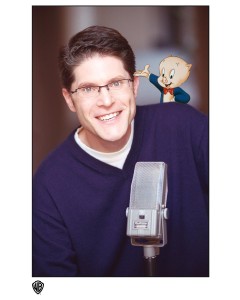
5 Questions for a Professional Voice-Over Talent: Bob Bergen

Today’s 5 Questions for a Professional Voice Over Talent are answered by Bob Bergen, a professional voice over talent based in Tarzana, California.

1. The beginning: When did you know you wanted to be a voiceover talent; how did your career begin (please include what year it started) and then when did your passion for voiceover develop into something professional?

I wanted to be Porky Pig at the age of 5. I had a tape recorder next to the TV at all times and recorded hours of cartoons, as well as any time a voice actor was on a talk show. My dad moved the family to LA when I was 14 and I started studying voiceover. I studied with anyone and everyone who offered a class in Los Angeles. My main animation instructor was Daws Butler, who voiced among many others Yogi Bear. During those 4 years of VO training I also did a 2 year acting technique class as well as 3 years of improv training. I made my first demo and secured my first agent a week out of high school. I worked as a tour guide at Universal Studios for 5 years before I was able to make a living full time as a voice actor. So the entire journey from first class to working actor for me was 9 years. When I was 25 Mel Blanc passed away. The following year after a series of auditions I booked Porky Pig for the first time March 8, 1990, which happened to be my 26th birthday.

2. What is the one thing you know now that you wish someone had told you when you first started out in voiceover?

To be honest, nothing. I had great mentors who thoroughly prepared me for this business. I had no surprises, and I was well prepared for every up and down.

3. What do you see as the biggest professional or personal obstacle you face that impacts your voiceover business and how are youworking to overcome it?

Well, just the fact that an actor doesn’t know where their next job will be is an obstacle, but it’s also just a part of show business. But in VO diversity is key. The more genres of VO one does the more opportunities. If it’s slow commercially you might be busy with animation. If narration is dead you might be doing promos. Etc. The more varied your skills the better your chances of working.

Now, the biggest obstacle in VO today is the amount of P2P and non union work that is out there. When I started out there was plenty of non union work. But I never took part in that. My feeling was I always wanted to play with the major players, and I felt that you were as good as the company you kept. So I always strove to compete on a national level. And until the time I was able to make a living at VO I had my day job to pay the bills. I wanted a career, not work from time to time. But today technology has brought VO to anyone with a modem. The good news is there are more opportunities today than ever before. The bad news is, a huge chunk of it has gone non union. This is fine for those who don’t desire health benefits and retirement from VO. But it sucks for the professional actor who relies on benefits. The ironic thing is many who partake in the world of non union and P2P also desire the opportunity to compete on a national level, securing agents in larger markets, etc. What they don’t realize is that they themselves are a huge factor as to why larger agents aren’t interested. With the numbers doing non union or taking lesser session fees, the major agents are having a hard enough time keeping their signed talent working. When I started out agents took risks to develop new talent often. They don’t have the luxury anymore and it’s harder and harder for new talent to break into the major leagues. Now again, you don’t have to compete on a national level. But I think it’s very rare that a voice talent doesn’t want to be at the top of their field. Butcha can’t have it both ways.

4. What personal trait or professional tool has helped you succeed the most in your career so far?

Being positive. Pursuing VO not for the money, but for the love of being in front of the mic. You need to get the same high auditioning as you do getting paid. If you do it for the money you will never feel successful, because it will never be enough money. You’ll always want more. But if you do it because you love it, because you can’t see yourself doing anything else, because it feeds your soul, then you are right for show business. This is, and has always been my philosophy. I can make money doing anything. But being able to do VO, and especially cartoons? It doesn’t get any better than that!

5. In your development as a voice over performer, who has been the one particular individual or what has been the one piece of performance advice (maybe a key performance trick, etc.) that you felt has had the most impact on your actual voice over performance and why?

Wow, so many!! One that comes to mind came from Paul Winchell, who did a lot of cartoons. He was the voice of Tigger in the Winnie the Pooh cartoons. I asked him for career advice when I was about 18. He said, “Never worry about money. Because you are going to make it. But then you are going to lose it. But then you’ll make more. Then you’ll lose it. Etc. If you worry about it, you’ll do nothing but worry about it, because there is never a guarantee of it. Never a constant. But if you do this for the love of doing it, for the creative joy it brings, you will always feel like a success.” And Daws advised, “Live below your means and save 10% of everything you make. Even if it’s a dollar residual, put 10 cents away. You’ll be amazed how quickly it will add up!”