Entries Tagged as 'advertising'

public relations checklist: what not to do

don imus at wnbc

OK, I’ll grant you that there are a lot of people “Monday morning quarterbacking” the Imus thing (your humble author included). But I saw this post regarding how the public relations (or crisis communication, if you prefer) was handled by Imus and company during this whole debacle (which wouldn’t have even been necessary if he hadn’t made his stupid comment, blah, blah, dead horse).

I agree with a lot of it and some it just made me laugh. Maybe the author always writes well or is often off the mark, I don’t know. I do know I liked what he said in this article.

I hope you enjoy it too.

let’s go sabres!

buffalo sabres mullet
Yeah, the new Buffalo Sabres mullet logo sucks. I miss my original blue and gold logo but I have to shut up about it and just wear my New Era hat with the old logo because:

a. The Sabres earned the most NHL points this season
b. The Sabres are #1 in merchandise sales in the entire NHL
c. Baby, it’s playoff time!

Go Sabres!

P.S. I hereby publicly promise that when the Sabres win the Stanley Cup, I will wear a New Era cap with the mullet as “penance for my blasphemy” against the mullet!

bad Imus, bad channels, bad us…apologies not accepted

don imus

OK, Imus has been fired.

I don’t care about that so much because I really didn’t listen to him. The stuff I heard on his show I didn’t care for so I turned the channel. That’s what grown-ups do.

What Don Imus said about the women’s basketball team was stupid and offensive…to everybody. Depending on your social or political persuasion, you could argue that most of his show was usually either or both. He’s been doing some sort of inane or “shock” radio for 30 years; what’s the surprise about? People have been free to tune in or tune out Imus’ on-air belligerence for a long time

Controversy is pretty much the only ratings card morning radio has to play any more: A. all news or sports B. all music or C. comedy/stunting/controversial. So on average about 3.5 million people thought Imus’ controversial act (and some political chat) was worth listening to in the morning. Who’s blaming the listeners?

Imus’ employers didn’t care what he said or did as long as sponsors were happy. His sponsors didn’t care what Imus’ said or did as long as the audience and ratings were there. The audience either endorsed or was apathetic to Imus’ shtick (maybe they waded through the obnoxious stuff to get to the heady political interviews).

Then a political group gets wind of an Imus comment (that was stupid and offensive), a dust storm builds up into a tornado and repeated, likely heartfelt Imus apologies become mere interruptions in a diatribe which seem to be about social justice (a good thing) but more often are really about political and/or celebrity gain (a bad thing).

Sponsors and broadcasting companies who have long endorsed Imus’ shtick suddenly distance themselves as if ignorant to his previous work on their air. Who are they accountable to? Don’t say the government because in matters of broadcasting and any word that rhymes with “decency” our government is useless.

I don’t know if Imus is a good person or not but I do know he said a dumb thing, had his apologies summarily ignored and is now out of a job (two words: satellite radio). He gets most of the blame on this to be sure but not so much that dismissal was the only option. Shall we also fire the listeners, sponsors and networks? It seems they should shoulder much of the blame here too.

But we’ve become so comfortable with our scapegoat culture (protest here, finger point there) that once we’ve set our collective laser beams on a target (big or small) we fire at will. Then after the explosion, we move on with no perceptible improvement in OUR behavior.

Do we as a society even know how to accept an apology any more? Are we getting to a place in time where even saying “I’m sorry” is pointless?

Over at CBS News.com, Dick Meyer presented some other points (some similar to mine) on how our culture thrives on building up then tearing down celebrities. I don’t think we’d have to look to far to see how we do this in our own personal and professional lives as well.

Man, I hope we stop doing this soon.

voice 123 and their disclaimer

voice123.com

Editor’s Note: In the daily observation of life around him, the author occasionally feels the need to point out ridiculously inane behavior and general thoughtlessness. These are called “Rants” and this is one of those times.

As it’s kind of a quiet Saturday afternoon with folks sleeping or running errands from the house, I took the opportunity to visit Voice 123 and submit some auditions.  As I’ve mentioned before here, my bookings, auditions from agents and production schedule offer me less and less time to fiddle with the cattle call that Voice 123 has really become. But I still have months left on my paid subscription so I figured I better get to it. 

It has been awhile since I sent in some auditions.  I threw out the ones I didn’t think I’d be the right voice for and the ever present low ball audition (especially those folks requesting custom auditions for message on hold…who are they kidding?)  I was reading one audition that had a low price for the amount of work required and the usage of the voice and was about to delete it when I read down a little further and notice an addition to the usually inane Voice 123 disclaimer on price which read: 

“Voice123 Team Note: We recognize that this project may be below Voice123 pricing recommendations. We have become more flexible with budgets as it was brought to our attention that we could be violating United States federal anti-trust laws by limiting the participation of voice seekers in our marketplace when they don’t met our budget recommendations. It seems that, legally speaking, it is up to the providers (the talents and voice producers) and not the marketplace (Voice123) to determine to exclude the voice seekers they don’t want to work with.

Right after the release of the new Voice123, we will be working on several improvements that will help talents and voice producers filter the types of projects they want and better match projects with talent and voice producers depending on the budget and experience of the talent. On (sic) the meantime we are trying to be flexible to keep everybody happy.”

 “It seems that, legally speaking,…” Wow, what impressive attorney filed that hard hitting legal brief? 

As you might guess, I find this disclaimer highly suspect.  But I am also not an attorney. I am however a big David Letterman fan (not the stalking kind, I just like the show) and I thought of a Dave quote when he interviewed Bill O’Reilly from Fox News as I read the Voice 123 disclaimer. To paraphrase, it went along the lines of “I’m probably not as smart as you are but my gut tells me 60% of what comes out of your mouth is crap.” 

If Voice 123 is going to be “filtering” projects and pricing in their “next” version (which it seems they’ve been working on since 1950 and which might be ready by 2010) why can’t they filter now? Likely, they can.  In my opinion, the real answer is Voice 123 will take any voice job that comes through, slap it up on the board and let all the $50 announcers quote that price on a $2000 job just so Voice 123 can jack up the number of leads they provide VO subscribers and thereby justify the company’s existence.  

As always….I could be wrong.

corporate podcasts done right

Richmond Times-Dispatch staff writer Jeffrey Kelley recently wrote a good synopsis of how some companies in and around Virginia are successfully including podcasts as a part of their marketing mix. 

Kelley noted that companies that use podcasting as a way to inform and entertain their audience, without producing a glorified commercial, have the best chance of engaging the listeners in their target markets.

Here’s a quick excerpt: 

“It’s kind of a marketing thing because we’re showing our perspective on technologies we help clients implement,” said Will Loving, the Henrico County firm’s chief operating officer. “If someone listens to it, they can actually learn something from it and use it in their day-to-day work.”

That’s precisely how podcasts should be done, experts say. If made correctly, a corporate podcast can become a marketing and public-relations tool, but it shouldn’t look or sound that way.

Steven Hearn, a former Richmonder and president of podcastGO.com, said the programs should be considered “infotainment” — in other words, listeners should learn something, yet stay amused.

You can read the entire article from the Richmond Times-Dispatch web site here.

in praise of the favicon

audio’connell_favicon copyright2007

Proving yet again that in some ways I am a day late and a dollar short on my tech knowledge (shoring up some tech specs on this blog would be one short coming I am still currently working on…Bob Souer, don’t give up on me yet!)…I humbly introduce audioconnell.com’s newest attribute, our Favicon.

Not to be confused with Flavor Flav, I am only hoping there are at least a few of you who quizzically furrowed your brow at that word. I didn’t know it existed until a few minutes ago myself. I only knew it by its original Latin name: Logo to the left of the URL.

Pronounced fav-eye-con, it is short for ‘Favorites Icon.’ A Favicon is a multi-resolution image included on nearly all professional developed sites. Within Internet Explorer the Favicon is displayed on the Address line and in the Favorites menu. The Favicon allows the webmaster to further promote their site, and to create a more customized appearance within a visitor’s browser. Often, the Favicon reflects the look and feel of the web site or the organization’s logo.

So now I’ve got one. Frequent visitors will even say “well, you had one when you first re-did the site”, it was a smooshed version of the company “microphone” (RCA-77 for the microphone aficionados in the audience). But it looked, well, like crap (are we allowed to say “looked” on voice over blogs?) Anyway I needed to change it.

Well have you ever tried to change an easily read or identified image to a 16 pixel x 16 pixel version? It’s hard and it looks bad. I was lost for any ideas on how to make my favicon look good and mean anything.

Fate interceded as it always does. I had been working on some embroidered swag so that I might like a voice over talent turned NASCAR fan at networking events (of which I attend many…networking events not NASCAR races). I used the main audio’connell Voice Over Talent logo and sent it to Land’s End Business Outfitters because I always like their clothes, how well they wear and I had had some stuff made there years ago and it was great. Some things don’t age well, however, and the logo makers and managers at LEBO really didn’t do a hot job in my opinion. The shirts I had made were ok (just ok, embroidery was so-so) and when they tried to tackle the baseball hat, their embroidery wheels seemingly came off completely.

So after two months of what I deemed mostly unsatisfactory results, I went to my friend and past client Cindy Miller. Cindy’s name may be familiar to you for a number of reasons: she’s a former LPGA tour player and she’s been seen often on the Golf Channel’s Big Break III: Ladies Only. She also holds golf clinics, gives lessons, gives keynote addresses and, with her husband and former PGA Tour Player Allen Miller, owns an embroidery company called Tee Shots.

In answer to your question, you’re right, I should have gone to her in the first place, I know, don’t remind me. Let me get back to how this relates to the Favicon. So I am talking with Cindy about this hat thing and she says why don’t you try something different with the hat, something a bit eclectic. So I put on the old thinking cap (which I likely won’t wear as much after I get the new baseball caps) and played with ideas.

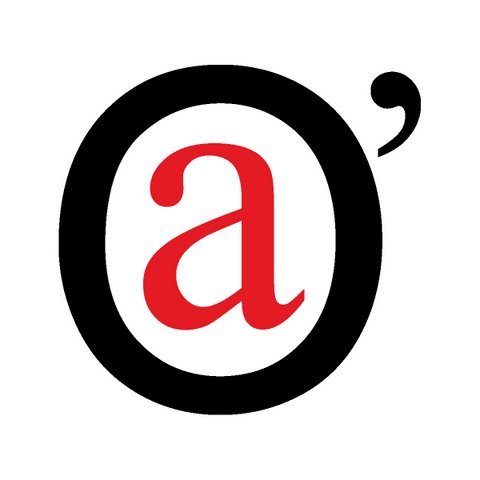
The idea struck me that I should create an icon that could be like a secondary logo, something you often see NHL teams (like the always exciting Buffalo Sabres, who’s new, main “mullet” buffalo logo I dislike intensely) use on their jerseys; they have their main logo and then a secondary icon. I wanted something cool, unique, maybe a bit more modern than my current logo which I also designed. I settled on the red “a” in the audio’connell Voice Over Talent logo encircled by an “O” with an apostrophe. Then I realized, if it can work for a hat, it could work on my “Logo to the left of the URL” too.

And so it was born. Ann Hackett from aHa! Designs helped bring my idea to life.

Tonight, I checked on Google to see if there was a name for this logoed doodad and found out about the Favicon. I may yet refine the graphic a bit cause it looks a bit jagged, but over all its what I wanted.

So thank you Favicon, you are a subtle branding reminder that great things in marketing are sometimes very small.