Entries Tagged as 'marketing'

i loves me some free wi-fi

wifi.org

If you’ve ever had to travel on biz and you didn’t have a wireless card in your laptop, you’ve no doubt been in search of free wi-fi (like my friend Bob Souer was on his recent trip to Vegas but his was more like an expedition than a search).

While there’s money that can be made on almost anything internet, smart restaurateurs and cafe owners hooked up free wi-fi in their establishments and promoted it. It’s not always easy to find either because smaller establishments don’t always think to find free wi-fi directories and submit their information.

Chains like Panera Bread let people come on in (assuming they’ll spend some money while they are there, as wi-fi patrons should). I was talking with the manager of my breakfast place, Bagel Jay’s, and they’re planning on adding wi-fi for customers as well (a little late to the party maybe, but welcome on in!) And unless your some totally ignorant student (and granted, there are a few of them around) you’re unlikely to loiter their all day. 

So I’m in Charlotte last week and I need to get connected and I must have had a brain fart of something because I thought ‘oh I’ll go to Starbucks, they have free wi-fi’. Uh – no they don’t. They also consistently make fairly poor hot chocolate (which is a critical point of difference if you’re not a coffee guy). So since it was lunch time, I left Starbucks and looked around this very nice mall-like set of stores in Sycamore Commons in Matthews, NC and saw a sign that said “deli”. Well when I got closer, I saw it said McAlister’s Deli. I’d not come across this name (turns out it’s a chain, nothing wrong with that) but it looked like a fair amount of people were eating there so I walked only to see a sign on the door that said “free wi-fi”.

Well the food was great, prices were fair, the service was outstanding, I made a couple of business contacts with a few patrons (who also had laptops, I might add), the wi-fi was strong and free and you won’t see me in Starbucks anytime soon.

bringing this blog into the 20th century

(Read the FULL PRESS RELEASE here)

Oh, I know it’s the 21st century but my blogging knowledge has really always been more about the “words” and less about the technology. But I came to understand that blogging without technology is like painting a white canvas with white paint…what’s the point? So I decided to finally embrace blogging technology a bit more.

The target date for all this was November 1, 2006 when I unveiled the redesigned the audio’connell Voice Over Talent. My web hosting company was led to believe by their software provider that the blog module the software company provided would offer me everything I needed to be a technically proficient blogger. Everything else the software provider had “provided” in the past had worked smashingly, so I hade no reason for concern…I thought.

There was very little “technology” in the blogging software I had until this weekend and this new blog version. Aside from looking nice, not much else of that old software resembled a blog. It was a web page with text and headlines. Crap.

The software provider, who evidently didn’t get much call for blogging from previous customers, wouldn’t be able to “upgrade” the blogging software until sometime this summer…maybe. Double crap!

The only sure solution, I determined, would be to use a 3rd party provider and try and develop a style sheet that had the look of the web site with usable blogging technology. That would be a lot of work, triple crap!

Well, much like an all night birth, the morning finally came and all that pushing (by me…I can be sorta pushy) has given birth (through the efforts of Rare Earth Interactive Design…many thanks) to a bouncing baby blog that, while it will constantly evolve and develop, really meets all my needs.

I hope you enjoy the words and the technology.

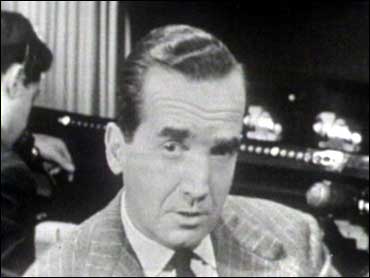
a news voice should not be a commercial voice

edward_r_murrow_cbsnews

Editor’s Note: In the daily observation of life around him, the author occasionally feels the need to point out ridiculously inane behavior and general thoughtlessness. These are called “Rants” and this is one of those times.

Well, this will likely put me in dutch with some of my broadcast news friends but I can’t sit quietly about this any longer cause it BUGS me…radio news reporters and anchors should NOT be doing commercials…period.

Now before you cry discrimination, the TV news people shouldn’t either but I’ve not seen that happen. I have heard it far too often for my liking on the radio. It’s wrong.

While there was a time in radio and television’s history where news people often read live commercials, that practice dissolved as broadcast outlets’ news divisions evolved and the integrity of the news department became sacrosanct. Today, radio news departments have to scrape and claw for the money they need to do proper field reporting with decent technology while being first and accurate with the story in an amazingly short production window. In such an environment, salaries wane and integrity teeters.

At such a critical time when broadcast corporations often seemingly replace “public trust” with “shareholder’s investment” the news divisions and their leaders should not muddy the waters regarding their market’s perception of their talent by allowing those newscasters to read a murder report one moment only to have that same reporter’s voice heard on a pre-recorded car commercial the next. Not on their station or any other in their market.

What about out of market spots or corporate narrations for videos or even audio books? I have no problem with any of that. But in a local market, if you’re a news voice you cannot be a commercial voice. News integrity means never having to say “24 months interest free financing on approved credit.”

corporate podcasts done right

Richmond Times-Dispatch staff writer Jeffrey Kelley recently wrote a good synopsis of how some companies in and around Virginia are successfully including podcasts as a part of their marketing mix. 

Kelley noted that companies that use podcasting as a way to inform and entertain their audience, without producing a glorified commercial, have the best chance of engaging the listeners in their target markets.

Here’s a quick excerpt: 

“It’s kind of a marketing thing because we’re showing our perspective on technologies we help clients implement,” said Will Loving, the Henrico County firm’s chief operating officer. “If someone listens to it, they can actually learn something from it and use it in their day-to-day work.”

That’s precisely how podcasts should be done, experts say. If made correctly, a corporate podcast can become a marketing and public-relations tool, but it shouldn’t look or sound that way.

Steven Hearn, a former Richmonder and president of podcastGO.com, said the programs should be considered “infotainment” — in other words, listeners should learn something, yet stay amused.

You can read the entire article from the Richmond Times-Dispatch web site here.

in praise of the favicon

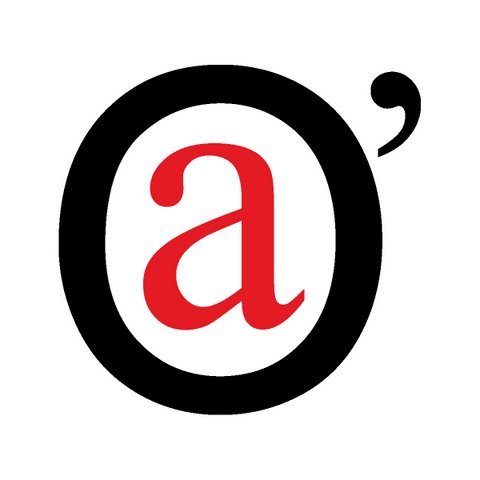
audio’connell_favicon copyright2007

Proving yet again that in some ways I am a day late and a dollar short on my tech knowledge (shoring up some tech specs on this blog would be one short coming I am still currently working on…Bob Souer, don’t give up on me yet!)…I humbly introduce audioconnell.com’s newest attribute, our Favicon.

Not to be confused with Flavor Flav, I am only hoping there are at least a few of you who quizzically furrowed your brow at that word. I didn’t know it existed until a few minutes ago myself. I only knew it by its original Latin name: Logo to the left of the URL.

Pronounced fav-eye-con, it is short for ‘Favorites Icon.’ A Favicon is a multi-resolution image included on nearly all professional developed sites. Within Internet Explorer the Favicon is displayed on the Address line and in the Favorites menu. The Favicon allows the webmaster to further promote their site, and to create a more customized appearance within a visitor’s browser. Often, the Favicon reflects the look and feel of the web site or the organization’s logo.

So now I’ve got one. Frequent visitors will even say “well, you had one when you first re-did the site”, it was a smooshed version of the company “microphone” (RCA-77 for the microphone aficionados in the audience). But it looked, well, like crap (are we allowed to say “looked” on voice over blogs?) Anyway I needed to change it.

Well have you ever tried to change an easily read or identified image to a 16 pixel x 16 pixel version? It’s hard and it looks bad. I was lost for any ideas on how to make my favicon look good and mean anything.

Fate interceded as it always does. I had been working on some embroidered swag so that I might like a voice over talent turned NASCAR fan at networking events (of which I attend many…networking events not NASCAR races). I used the main audio’connell Voice Over Talent logo and sent it to Land’s End Business Outfitters because I always like their clothes, how well they wear and I had had some stuff made there years ago and it was great. Some things don’t age well, however, and the logo makers and managers at LEBO really didn’t do a hot job in my opinion. The shirts I had made were ok (just ok, embroidery was so-so) and when they tried to tackle the baseball hat, their embroidery wheels seemingly came off completely.

So after two months of what I deemed mostly unsatisfactory results, I went to my friend and past client Cindy Miller. Cindy’s name may be familiar to you for a number of reasons: she’s a former LPGA tour player and she’s been seen often on the Golf Channel’s Big Break III: Ladies Only. She also holds golf clinics, gives lessons, gives keynote addresses and, with her husband and former PGA Tour Player Allen Miller, owns an embroidery company called Tee Shots.

In answer to your question, you’re right, I should have gone to her in the first place, I know, don’t remind me. Let me get back to how this relates to the Favicon. So I am talking with Cindy about this hat thing and she says why don’t you try something different with the hat, something a bit eclectic. So I put on the old thinking cap (which I likely won’t wear as much after I get the new baseball caps) and played with ideas.

The idea struck me that I should create an icon that could be like a secondary logo, something you often see NHL teams (like the always exciting Buffalo Sabres, who’s new, main “mullet” buffalo logo I dislike intensely) use on their jerseys; they have their main logo and then a secondary icon. I wanted something cool, unique, maybe a bit more modern than my current logo which I also designed. I settled on the red “a” in the audio’connell Voice Over Talent logo encircled by an “O” with an apostrophe. Then I realized, if it can work for a hat, it could work on my “Logo to the left of the URL” too.

And so it was born. Ann Hackett from aHa! Designs helped bring my idea to life.

Tonight, I checked on Google to see if there was a name for this logoed doodad and found out about the Favicon. I may yet refine the graphic a bit cause it looks a bit jagged, but over all its what I wanted.

So thank you Favicon, you are a subtle branding reminder that great things in marketing are sometimes very small.

creating the perfect voice over demo

COMMERCIAL VOICEOVER DEMO audioconnellI get asked all the time about producing voice over demos. I certainly have produced more than my share and its a lot of work for one minute’s worth of voiceover, job-getting magic. But you’re impatient and you want the golden ticket NOW.

Well to answer all the voiceover newbies, here’s the magic answer:

You’ve got 20 seconds, if you’re lucky!
Now get in line, cross your fingers and say a prayer.

You’ve just sent in your voice over demo for a possible voiceover job….along with anywhere from 5 to 200 other voice over talents.

In 20 seconds (usually less) a producer is going to toss your demo into the :

  • “Keep for review pile” (which will get whittled down again until the producer picks “the” voice talent) or
  • “Throw in the garbage” file.

Anyone in voice-overs (even the so-called “big names”) know a voice over talent is going to get rejected more often than they get hired…the numbers are not in the talent’s favor no matter how talented.

Since most times the voice actor is not likely to be auditioning in person (especially outside the big 3 U.S. markets) you (the talent) have only one tool at your disposal to represent your enormous talent, range, creativity, charming personality, client-friendly demeanor, multi-faceted character repertoire and stunning good looks (in the eyes of the listener). That tool is your voiceover demo.

And now you’re only getting 10 seconds…this better be good.

A 10 second demo?

No, I was just kidding. The industry standard is one minute for the length of your voice over demo with segments of spots ranging anywhere from about 6 seconds to 12 seconds depending on the content. The point is that whatever the producer hears in the first 10-15 seconds will determine whether your voice has the exact (or very close to exact) quality the producer is looking for.

What is that quality? Only the producer knows (it’s very subjective) so all you should worry now only about showing your best work as professionally as possible.

Generic or customized?

Every voice artist should have at least one strong generic demo to be able to present to a prospective client (at the moment, the most favored demo format is an MP3 for e-mail and a CD for snail mail….and yes, the CD should have a professional look to it, not a Sharpie scrawl of your name across it).

Some folks create generic demos based on category…a generic commercial demo, a generic narration demo, a generic character voice demo and so on. Tailored demos simply mean the producer has a demo script he/she wants you to voice; if you are asked, do it.

How do I determine voice over demo content?

Assuming here we’re talking about creating a strong generic demo (not a category voice demo) the recommendations here are:

  • The best or most widely heard of any spots or narrations you’ve been paid to create (this should include straight reads as well as character voices). Preferably you want the fully produced cuts on your demo, not the dry reads unless that’s how they were produced.
  • Any tailored commercial, narration or voice imaging demos that you felt really presented your talents well.
  • Determine your best work from all your categories (commercials, narrations, voice imaging, on-hold, audio books etc.). Then consider the type of work you’re most often hired or considered for and include best of all those segments mixed as you think works best.

When you’re done producing your voiceover demo….you’re not. Play it for other people in the business, get their opinions, and tell them to be cruel, put it up on some voice over bulletin boards that encourage member-to-member critiques. Take all the info to heart (but not personally, the critiques are about “the voice”, not you) and make the changes that you think make the most sense.

What’s in that first 10 seconds?

Your money voice. Every voice artists has one, some have a few. The money voice is either:

  • That voice that seems to bring you the most work/that you’re most known for OR
  • The voice that you can do well that seems to be in vogue among those who are hiring (at the moment, it’s the sort of conversational, everyman voice as opposed to the big-balls announcer voice).

Now the truth.

Voice demos are close to the apex of and imperfect science. It is an ever-evolving tool and one for which your lively hood depends…but no matter how good it is, your demo is useless if no one hears it. That requires marketing.

And that’s a subject for another day.

Hope this helps.