Entries Tagged as 'voiceover advice'

voices of experience by doug turkel

Voices of Experience_by Doug Turkel

So this winter, I’m having lunch in Miami with Doug Turkel and we’re talking about voice over and also about the half dozen or so supermodels who are walking behind me and our sidewalk lunch table. I first realize there is this parade of supermodels because Doug was looking right past me as we spoke and his head was repeatedly turning slowly from left to right with his eyes bugging WAY out and some spit drooling off the side of his mouth.

I thought it might be a small stroke of some kind. Or maybe he’d seen Santa Claus, the reindeer AND the sleigh.

But no, it was just Miami supermodels.

So our conversation continued.

We talked about the blog posts I’d just started, 5 Questions for a Professional Voice Talent, which people in the voiceover world seemed to be enjoying. I asked him where HIS submission was and he said, “Funny you should ask…” wherein he went on to tell me about a free e-book he was writing which was similar and yet not so much to 5Q:VO.

That book, released today, is titled: Voices of Experience – Pro Voiceover Talent Share the Wisdom of Their Success.

There are two amazing things about the book (which really isn’t similar to 5Q:VO because both are as unique as their shared voices)

1. Doug took the time to connect with the all these amazing voice talents and garner really great stories and insights unlike anything I’ve ever read before. The e-book weaves this wonderful voice over painting that will easily impact readers new to VO as well as those of us who are a little longer in the voice-over tooth (as it were). The content is amazing, the format is lovely and the affect on readers active in our industry will be long lasting.

2. There is no truly good business reason for Doug to do this book and certainly no logical reason to make it free. But he did it anyway. The talents featured were handled professionally so they knew their stories would be in good hands and because of that, readers are taken on a magic ride through the professional experiences of the voices most voice-over talents strive to be but cannot. We can learn from them, though.

Wednesday night, I grabbed the mane of the social media merry-go-round and opined: “Something very big is about to be unleashed on the VO world (and not by me). #voiceover talents will LOVE it. Stay tuned.”

Voice of Experience IS that big thing. No get rich quick schemes, no train to be a voice over in a weekend, just insights to allow the reader to interpret the stories however they like.

And I think they will like it quite a lot.

I’ve added it to my free e-book section on this blog and I will direct anyone who asks about getting started to read it as well.

Thank you, my friend (“the author”), for lunch and the supermodels but mostly for the book.

marice tobias writes the voice-over article that should be written

This arrived in my email today from my teacher, Marice Tobias. I like her style for many reasons but to follow is a prime example.

The LA Times article that ran May 7, 2012 is the perfect springboard for this installment.

When Joe Flint asked to interview me, I asked if he wanted to write the same article others had written or would he like to write the one that no one has? He said he wanted the former but had to submit several angles to his editor. As we saw, it ran with the celeb angle and that work-a-day actors resent them getting so much work. Truth be told, those who are so inclined, resent anyone getting any work they aren’t getting, so celebs have plenty of company there. In any case, here’s the article I wish someone would write someday:

“Voiceover, The Most Underestimated Career in Show Biz”

It’s been called the Best Job in the World and when all the planets align, those who upon whom the Voiceover Gods smile are happy campers. But, for most, that alignment is like catching lightening in a bottle and the day-to -day getting in and then staying in is like scaling the Washington Monument with Vaseline on your fingertips.

It’s not necessarily for lack of talent or drive but for the sheer numbers, the elusiveness of the work and the shifting tide of pop culture that renders Today obsolete with the click of keystroke.

Shared in one of our seminars by a successful talent who did his research, this statistic is sobering:

On any given day, there are 1.3 million people pursuing voiceover work. One point three million.

Even if we eliminate less than stellar candidates, the amount of talent available outnumbers the amount of work a thousand fold, and the ability to build and maintain a healthy career becomes more challenging every day.

Despite this reality, the training ground is a virtual border town, glutted with shingles luring prospectors to pan the gold of hitting it big with a minimum investment of time, money and due diligence. There are almost as many land offices as there are prospectors, many with less interest in someone striking gold as they are in getting their filing fees.

Then there is the elusiveness of the work. While many jobs can be pursued on one’s own, the preferred avenue for the richest veins is via representation.

The ante on representation is higher than ever before. The gamble is higher, the turnaround time shorter and the number of people seeking representation vs. how few of them there are, make them as sought after as the work.

Gone are the days of putting an ok demo together, meeting with an agent and being signed on the spot. Today, you have to already be awesome, have recognizable credits, be willing to date before you marry and share the spoils of current strikes before you get access to the mother-lode.

Do not expect to get anywhere with generic materials, standard reads or being a canvas upon which clients can paint. And, it’s at least a five year minimum build to a solid career, so don’t give up your day job until it’s totally in the way.

Finally, there’s the need to know and embrace The Landscape of Pop Culture and Social Media.

When Bob Lloyd, the original Voicecaster suggested I have “my own thing” I was surprised. “But Bob, there are at least 10 workshops in town already.” (There are now over 100 in every market and zillions on the web) “True” he said, “but nothing for the working pro. Some people are still doing the same read they did when they got into the business.”

“Why not”?

“They don’t want to hurt feelings and/or risk losing them.”

There’s always a way to say something in the spirit of enhancement and encouragement, so here’s mine:

Stay current to remain relevant. Do your homework. Watch, listen and understand the Cultural Conversation. It’s why Betty White is still cool and why so many of her contemporaries are warming webbed chairs on the porch.

The Game has changed and the Rules have been re-written. It doesn’t matter if how it was seems to be better than how it is. Making it wrong doesn’t make you right- it makes you irrelevant.

PS: The rest of what I said about celebs in the interview is that each has a distinctive personae that gives products, ideas or services a place to live, there are a lot more celebs/people in the public eye that ever before, there’s no longer a stigma to voicing commercials and star voices in an animated film give the producers something to put on the marquee.

You don’t have to be a star for people to think you are one. You just have to have something unique, special or different enough for them to think you are.

To Be Continued.

154,748 pairs of eyes + 50 cents = advertising

Why wouldn’t any business owner want the opportunity to place their brand in front of 154,748 pairs of eyes.

In essence, they are all potential customers.

It’s true that most of them might not be, depending on your business. But even when marketing to a specific market, you can’t always know who is and who is not a prospect. I believe the marketing term is “fudge factor”.

That’s especially true in voice-over.

Video producers, ad agency commercial producers, small business owners and probably about 50-75 other jobs titles make up the voice talent’s target audience. If you were to run some numbers on the cost of print, radio or on-line advertising to all of them, I’m not sure whether you’d feel more faint or nauseous but I’m pretty sure we can agree you couldn’t really afford it.

So where does the 50 cents come in?

Between the cost of a stamp, a piece of letterhead and logoed envelope, I reckon that’s the cost to mail a press release to a local newspaper touting your latest project.

And if the circulation numbers from Wikipedia are correct for my city’s local paper (and I have no idea if they are), 154,748 pairs of eyes represents the total number who will see my press release in my paper if they print it.

No, they won’t likely see the whole thing, maybe just a part of the release that an editor sees fit to print, but it will be out there.

Will all of the readers see it? Nope. How many will read it? Wanna guess with me?

Let’s say that circulation number is overblown by 50% and that actually only 77,374 people read the paper daily.

Of all those people, about 1/2 (or 38,687) read the business section where a voice over press release might get printed.

Of that, let’s say only 1/2 of them read the little press release blurb section that newspapers run (in my paper, it’s called “On The Record”).

That would mean that 19,343 and a 1/2 people in Western New York would read my press release if the Buffalo News printed it in its paper (not counting the on line version of the paper – which most cities now have).

So to get all those readers, all those pairs of eyes – none of whom I am guaranteed will be a target audience for me – I have to invest about an hour’s worth of time writing a press release, printing it and mailing it to the paper. Costing me in real hard dollars about 50 cents (ignoring my hourly fee – let’s say I did it on my lunch hour, N/C)

Will the newspaper print the press release?

YOU will never know unless you write it, print it and mail it in.

is the decision of the judges final?

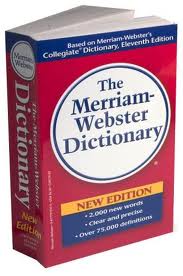
So Stephanie Ciccarelli, of Voices.com, wrote a blog post which was supposed to end for all time the debate regarding how to “properly” spell voiceover (or maybe that spelling is wrong).

So according the M-W, the answer is: voice-over.

But for me and my SEO, I care more about how Google spells it than how Merriam-Webster spells it.

So let’s do a quick check. Here are the results:

voice-over: About 75,600,000 results
voiceover: About 44,300,000 results
voice over About 74,200,000 results

This here is scientific and indisputable fact-like information indicative of…nothing.

But I’m not one to let facts (or non-facts for that matter) get in the way of a plan.

So I guess I’ve got to start adding dashes or hyphens to my voice-over business.

No wait, is it dashes or hyphens? Crap! Here we go again!

5 Questions for a Professional Voice Over Talent – Bruce Miles

Male Voice Talent Bruce Miles

Today’s 5 Questions for a Professional Voice Over Talent are answered by Bruce Miles, a professional voice over talent based in Portland, Oregon.

1. The beginning: When did you know you wanted to be a voiceover talent; how did your career begin (please include what year it started) and then when did your passion for voiceover develop into something professional?

I started by being the class clown, always cutting up, often getting into trouble. In fifth grade I improv’ed a line in a school play making 300 kids laugh in a big roar and I was hooked for life. Like many others in this business I spent a large amount of my youth with a tape recorder creating commercials and shows in my bedroom. In high school I snuck out of the house late at night and visited disc jockeys at the hot Top 40 stations and after observing their “glamorous” line of work the first phase of my career was set.

Starting in 1970 I spent 10 years full-time and 4 years part-time in radio playing rock, pop, and country, I did news, lots of audio production and program directed in Phoenix and San Diego. Being funny, interesting, and informative were my usual goals. From radio I got a lot of experience recording commercials that went beyond the station and getting paid for them (yay!) so my passion for VO started early. During those days and afterwards I also got opportunities to do TV commercials and shows, movies, and plays. I love all those performing formats.

From 1989 to 1993 I co-owned and managed a live theater company and produced 40 plays and 40 music concerts, most with good to excellent reviews. We couldn’t make a decent profit at it so I went back to full time acting. As I lost my boyish good looks my work shifted more and more to voiceover. I built a home studio in 2001 and that’s been my office and man cave ever since.

2. What is the one thing you know now that you wish someone had told you when you first started out in voiceover?

Befriend Peter O’Connell right away. He’s great to talk to and buys you a nice dinner when he visits your town. Only somewhat more seriously there are two things to work on from day one in a VO career.

a) If you don’t already know how, learn how to schmooze and market yourself. As a rule, the most successful among us are the ones who do this best. Until you’ve reached Philip Banks status, one who has people clamoring for his talents, marketing requires about 50% of your time (give or take 40%) to make it big in the biz. Yes, agents and production houses can bring you some work, but how do you convince them to sign you on? Good schmoozing.

b) The second important thing to do is be a sponge. Study the craft. Learn what the greats are doing right and what the so-so’s are doing wrong. Mimic the best until you create your own best styles. Study the news, be up on the general interest stories and trends of the day. Conversing intelligently with clients earns you loads of respect and just makes you a better talent overall.

3. What do you see as the biggest professional or personal obstacle you face that impacts your voiceover business and how are you working to overcome it?

It amazes me that while communication is at the core of my business (I’ve easily talked to 200,000 people at a time on live radio and TV, and 3,000 people staring at me in a theater), talking to just one stranger about using my communication talents is really difficult. I’m clearly not shy, however, I am very modest about my talents, so it must be my trepidation about extolling my virtues that holds me back.

To conquer this I just do it. I have a script I try to ad lib off of, and the more calls I make and the more positive responses I get the easier it gets. But I have to tell myself what I just told you here every day before I start calling.

4. What personal trait or professional tool has helped you succeed the most in your career so far?

Here I go extolling a virtue, but I think I’m very good at interpreting copy. How to stress, manipulate, massage certain words and phrases. How to make copy interesting for the intended audience even when I don’t find the subject matter personally of interest. That’s where being a sponge has been a help…studying styles of read and absorbing content that might help me later. My brain may explode some day, but I know I’ll die happier. I read that somewhere.

5. In your development as a voice over performer, who has been the one particular individual or what has been the one piece of performance advice (maybe a key performance trick, etc.) that you felt has had the most impact on your actual voice over performance and why?

I have a man crush on a number of great voiceover artists: David McCullough, Keith David, Liev Schriber, Peter Coyote, Orson Welles just to name a few. The first three have a great natural style. The next two a great theatrical style. I study them when I listen to them. What are they doing/thinking/feeling that makes them read that way?

I’m thankful for the fellow deejay who told me early in my career to stop “puking” on the air (playing with words unnecessarily, artificially). And that leads me to offer, don’t fall in love with your voice; fall in love with the copy. Make the words and ideas special and the rest will follow.

paul strikwerda is a gossip

Paul Strikwerda voice over talent

So it’s up to you if you want to learn the stuff from him that nobody else will tell you.