Entries Tagged as 'voiceover advice'

5 Questions for a Professional Voice-Over Talent – Rick Lance
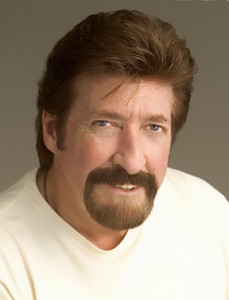
Rick Lance Voice-Over

Today’s 5 Questions for a Professional Voice Over Talent are answered by Rick Lance, a professional voice-over talent based in Nashville, Tennesee.

1. The beginning: When did you know you wanted to be a voiceover talent; how did your career begin (please include what year it started) and then when did your passion for voiceover develop into something professional?

In 1993 was singing a songwriter demo in a large Nashville studio (one source of income while trying to find my way to country music super stardom) when the engineer ask me if I’d do this TV Commercial for his desperate client. I said, ” Ok, do you have a tape of it?” He said, no, we have a script.” I said, what… you mean you just want me to talk?” That was my first voice over. I’m sure it really sucked but it worked for the client and I made $100.00.

Although, it made me think more about VO work and what it really is, it took many years for me to take it seriously enough to think I could make a living at it. My music and the commercial photography studio business I had were my priorities. But soon I began taking acting workshops, doing some theater and on camera work.

The funniest thing I did was about a half a dozen cheesy Karaoke videos (with beautiful babe, arm-in-arm running through fields of daisies and such) for the Japanese market. And I was in several country music videos and a couple of B films.

All along I was doing VO gigs and I began to get busier with them. About 7 years ago I went full time as I finally had burned out on the music biz and was tired of trying to keep my photo business alive. Technology changes were killing the small photographers and we were dropping like flies.

2. What is the one thing you know now that you wish someone had told you when you first started out in voiceover?

That it would become so easy for every “yahoo” with a microphone and a computer to enter the business and glut the market with substandard work. Which is exactly what happened when digital photography became the norm. Every nut with a new camera called himself a professional forcing me to compete with that. I was a Photographer’s Mate in the US Navy, mostly in a Photo Recon air crew, but I had photo training in Photographic A School, Pensacola, FL and continued on in college with photo and communication studies after discharge. At the same time, however, the accessibility of less expensive, high quality recording equipment allowed me to enter the VO biz! But I also entered with talent, ability and a basic plan.

3. What do you see as the biggest professional or personal obstacle you face that impacts your voiceover business and how are you working to overcome it?

When I entered the field I thought that not having a radio background or broadcast training would become a problem. But I found out that the trend was for a more natural, real-people kind of sound for commercial work and other forms of media communications that were being developed.

Mostly, now the greatest challenge involves always increasing my brand… cutting through the clutter, seeking out those opportunities out there.. and keeping consistently as busy as I want to be, with my yearly income consistently well into the six figures.

4. What personal trait or professional tool has helped you succeed the most in your career so far?

First, my musical background… my ability to hear pitch, texture, dynamics, timing, etc. Second, some acting on camera and theater background and third, my aging voice seems to simply add more appeal to the clients and prospective clients that come my way. Also my basic understanding of audio and recording gear helped keep the learning curve less curvy.

5. In your development as a voice over performer, who has been the one particular individual or what has been the one piece of performance advice (maybe a key performance trick, etc.) that you felt has had the most impact on your actual voice over performance and why?

As voice actors we need to be very visual people and react truly from the heart. My photo business experience and natural photographic ability allows me to isolate a moment in time while I’m reading a script. If I can see it, feel it, smell it, taste it, etc. I can perform more effectively. As I said earlier, my musical ability comes in mighty handy as well.

As far as people and other influences… James Alburger & Penny Abshire, Pat Fraley, Harlan Hogan, Randy Thomas & Peter Rofe, Rodney Saulsberry, Susan Berkely… through their books, CDs, workshops and on line resources…. as well as several music biz folks, Robert Redford, Rex Allen, Walt Disney, my Italian mother, horses, dogs and Native American philosophy.

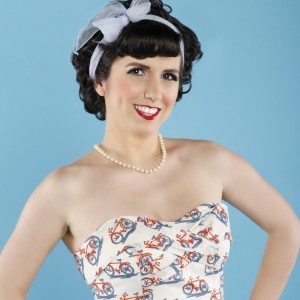
5 Questions for a Professional Voice-Over Talent – Peter Bishop

Today’s 5 Questions for a Professional Voice Over Talent are answered by Peter Bishop, a professional voice-over talent based in Bellport, NY.

1. The beginning: When did you know you wanted to be a voiceover talent; how did your career begin (please include what year it started) and then when did your passion for voiceover develop into something professional?

I was pretty late to the game. I have no long history with voice work, but have always been active on the technical side of audio production. My father was an engineer, so it was almost pre-ordained that I would follow that path with an apprenticeship and college for electronics and telecommunications. I was able to transfer my “professional” skills over to my passion, which was working in and around the local music scene. That part started back in the seventies when I started producing demos, driving mixing desks and generally doing as much as I could to be a part of the local scene without actually playing (I just didn’t have the musical chops), but a guy with a Revox and a four-track could be very useful back then! Apart from working with the bands, I used to produce my own stuff as well… all a little esoteric… Musique concrète loops, textures and the like… I became quite adept at building the electronics and manipulating tape. I’m certainly no stranger to the splicing block and china-graph (grease) pencil! I have fond memories of twenty-foot tape loops wrapping themselves around microphone stands and door handles as I built ever changing (and ever-decaying) loops and “aural sculptures”. I walked away from my “hobbies” when my company moved me to the US about fifteen years ago.

As a Brit in the US (especially when not in the big city) you get used to people commenting on your voice and can become quite dismissive about it. It took my partner to convince me that it wasn’t just the accent that was being remarked on… but my timbre, delivery, vocabulary and all that other good stuff. She convinced me that what I had was a saleable commodity, and as I was reluctant to climb back on any type of corporate horse (I’d run screaming from the corporate world in 2004), maybe there was a path here. To be honest, she was keen to get me out of what had become a post-corporate malaise and lack of focus. God bless supportive partners!

So, I launched forth in late 2009. My technical background and familiarity with the tools, both hardware & software, made it a relatively easy option to start up with a P2P site… and my experience from being a training officer and a corporate presenter used to ducking and diving in front of a big room was going to get me lots of work… right? Well, not exactly, but that’s when my journey really began. A couple of technical narration gigs gave me the impetus to push forward.

2. What is the one thing you know now that you wish someone had told you when you first started out in voiceover?

When I started I didn’t understand the market properly. Educational work was fairly straightforward as I was able to draw on experiences from my years of writing and presenting course material… I had no problems with technical subject matter, but I seemed to be getting nowhere with other work. I was either delivering clearly and concisely, or stretching too far. I had no middle ground. It was listening to other VOs via the on-line community that helped me identify my strengths and weaknesses. I began to understand what was saleable, and what wasn’t… and where I needed to concentrate my efforts, both in honing my saleable skills and developing my shortcomings. It’s all about playing to your strengths and not trying to be something you’re not. I’m now happily resigned to the fact that I’ll never be asked to read “Sunday, Sunday, Sunday” or “In a world…”

3. What do you see as the biggest professional or personal obstacle you face that impacts your voiceover business and how are you working to overcome it?

Currently I have a reasonably healthy repeat client list for educational and narration work, but have had limited exposure on the commercial side. Like every other Brit in the US, I’ve done the standard Jaguar dealer spots as the “sophisticated” Brit, and a fair amount of success when anyone’s looking for a Michael Caine or Jason Statham type, but this is an area I really need to work on. Since last year, I’ve been getting some success with audiobooks, but I feel that I really need to work on my accents. I still am very unhappy with my American accent, which is a little surprising as I’ve lived here fifteen years! I can generally be comfortable with regional British, European or various world accents, but my American accents still sound pushed and false. The remedy is practice, and getting over being too self-conscious in my delivery. That, and acting lessons!

4. What personal trait or professional tool has helped you succeed the most in your career so far?

I think I have developed an ability to picture my audience. The whole issue about who I’m supposed to be talking to… one person, a small group, a boardroom or whatever. Once I’d embraced what I was doing wrong, it started to fall into place. I try to keep a picture of my audience in my mind during a read, and it helps a lot.

5. In your development as a voice over performer, who has been the one particular individual or what has been the one piece of performance advice (maybe a key performance trick, etc.) that you felt has had the most impact on your actual voice over performance and why?

This one’s difficult to answer. It’s impossible to single out any one person or piece of information as making the difference… there are so many who have been helpful. The main aid to my development has been the community of VOs that have welcomed me. It’s too easy to be insular and locked away in your own world, but once you start to relate to peers and share, the effect is astonishing. To this end, the greatest community “enablers” for me are DB Cooper for all her work with the VO-BB… without which I would probably never have launched my career, and Amy Snively, the driving force behind Faffcon, without which I probably wouldn’t have been able to go completely full-time last year. To be with peers and learn from them is invaluable. I have found VOs to be the most helpful and sharing group of people… we are not in competition, but follow the ethos of “a rising tide floats all boats” with a passion.

5 Questions for a Professional Voice-Over Talent – Michelle Ann Dunphy

Michelle Ann Dunphy Voice-Over

Today’s 5 Questions for a Professional Voice Over Talent are answered by Michelle Ann Dunphy, a professional voice-over talent based in Los Angeles, CA.

1. The beginning: When did you know you wanted to be a voiceover talent; how did your career begin (please include what year it started) and then when did your passion for voiceover develop into something professional?

Alright, well I knew I wanted voice over to be a part of my life at a young age. I decided that I wanted to be a Disney Princess, like many young girls around the world. When I learned that there were voices behind the Princesses, I figured that was how I was going to accomplish my ultimate goal. My parents bought me a $10 mic at Radio Shack and now… ?! years later, here I am. I did radio plays and fandubs (fan made ADR for Japanese animation) as a teenager, then I went off to college to study Theatre and worked a part time radio DJ job.

It was always a professional goal for me, but the big turning point that pushed me to move to Los Angeles happened right after graduating from college in 2005. I got a job as a DJ at an oldies radio station in a small town in Wisconsin a few days after taking my last final. I was on air for only a couple weeks when I realized that I hated being on air, but I loved doing the voice over work for commercials during the break. I came home that day and told my husband to start applying for jobs in Chicago, New York and Los Angeles. I signed up for the online voice over lead websites to start practicing. He got a job in LA and I immediately dived into voice over classes upon arrival.

2. What is the one thing you know now that you wish someone had told you when you first started out in voiceover?

Be prepared to spend a lot of money. I like how Bob Bergen explains preparing for a voice over career. It’s an investment of both time and money. I worked a lot of long, hard hours at my day job and spent a lot of money on training, demos, equipment, etc. to get where I am today. Why? Because I’m insane! Voice over is part of who I am. I’ve tried to quit. I can’t, which is why I did whatever I could to be able to wake up every morning and play pretend for a living. 🙂

3. What do you see as the biggest professional or personal obstacle you face that impacts your voiceover business and how are you working to overcome it?

My biggest personal obstacle is being a mom of a toddler. While I have a home studio with ISDN & the works (Thanks George Whittam!), I still have to do the babysitter scramble in order to have someone keep him quiet while I record or to watch him while I drive to a session at a studio in town. It’s tough trying to balance work and family when your job is mostly from home and you have a strong sense of urgency involved. I know most moms would agree that it’s hard to balance work and family.

Professionally? Knowing my worth. Turning away work is the hardest thing in the world to do, but I’m starting to really feel comfortable knowing what I’m worth and not doing something that isn’t on par with industry standards. If we want the industry to be respected, we need to respect each other and ourselves so that we can all get fair rates! 🙂

4. What personal trait or professional tool has helped you succeed the most in your career so far?

Perhaps, my insanity? I say this with a laugh, but seriously, you have to be a little insane to do this job. You are constantly facing rejection. 99% of the job is doing auditions. You send them out into the world and forget about them. That was hard for me at first, but it’s definitely a professional attitude I worked on cultivating to help me make it through. It also helps that I’m a pretty big goof most of the time and just love being in the booth – be it audition or job. 🙂

5. In your development as a voice over performer, who has been the one particular individual or what has been the one piece of performance advice (maybe a key performance trick, etc.) that you felt has had the most impact on your actual voice over performance and why?

If this were a verbal interview, you would have heard me state “Richard Horvitz” here without even letting you finish the question. Richard has been my mentor for awhile now and I do not know where I’d be without him. Not only did he help me learn how to relax and just have fun playing pretend, but he’s also been a supportive and kind friend throughout the whole process. I actually organize his classes now because I feel so passionately that everyone should have a chance studying with him! He is an absolute gem of a person and a fantastic actor & teacher to boot.

5 Questions for a Professional Voice-Over Talent – Mercedes Rose

Mercedes Rose Voice-Over

Today’s 5 Questions for a Professional Voice Over Talent are answered by Mercedes Rose, a professional voice-over talent based in Portland, Oregon.

1. The beginning: When did you know you wanted to be a voiceover talent; how did your career begin (please include what year it started) and then when did your passion for voiceover develop into something professional?

I knew I wanted to be a performer…but I had no idea voice acting even existed until I auditioned for my first role. (Don’t ask where I thought those voices on the radio came from…) It was a total fluke that voiceover came into my life. I was an on-camera actor when my agent sent me to an audition one day. A VOICE audition. I had never done one before (Remember, I didn’t even know VO existed!) but I jumped right in and had fun with it. Must have worked because I booked the gig. The rest is history. And I thank my lucky stars (and my agents) every day for the chance to have a career that I love.

2. What is the one thing you know now that you wish someone had told you when you first started out in voiceover?

Many years passed before I realized how much ACTING is in VOICE ACTING. That would have been helpful to know on day 1!

3. What do you see as the biggest professional or personal obstacle you face that impacts your voiceover business and how are you working to overcome it?

Balance. I face a daily struggle with remembering which hat I am wearing when. Am I a producer today? A mom? A voice actor? A spokesperson? Usually, it is all of the above and the hats change every 15 minutes. My constant reminder (and the sign on my desk) is: “Be present”.

4. What personal trait or professional tool has helped you succeed the most in your career so far?

Being a good person that people want to work with over and over again has been the best tool for my business! Over 75% of my work is repeat clients. Making sure I bring my A-game, am professional and timely for every single gig is my goal. I also think having a name like Mercedes Rose helps…people don’t tend to forget me!

5. In your development as a voice over performer, who has been the one particular individual or what has been the one piece of performance advice (maybe a key performance trick, etc.) that you felt has had the most impact on your actual voice over performance and why?

Voiceover people, in general, are the most giving performers in show business. From Ritah Parrish, the gal at that very first voice audition who told me what a mic was to Linda and Michael Bard that got me that first gig (and many more after) to Stacey Stahl, my first voice agent that made me realize voice could be a job to Amy Snively and every person that I have met at FaffCon! So many people have changed the course of my career and therefor, my life! Not to be dramatic or anything ….

“if there’s anything i can ever do…” – well, now you can

I got a Facebook message from my friend Andy Boyns today, giving me a heads up on some very sad news from the voice-over community that occurred last week.

Two young girls lost their mother. A husband lost his wife. Seven months after voice-over talent Andrew Swingler’s wife Sandra (surrounded in the above picture by her daughters) was diagnosed with a rare form of cancer, she died last week.

Conceptually, that’s an awful thought; cognitively, it’s paralyzing…at least for me.

For Andrew and his girls, it’s got to be cataclysmic. And I don’t even know the Swinglers.

But for a neighborhood community or an online community, all we have to do is “know of” because in one way, shape or form, we’ve all been there.

We can’t undo their grim reality but maybe we can shape a part of the family’s better days to come…especially when it must be so hard for these three broken hearts to imagine ANY future.

So we help, because as people we refuse to be helpless when we have options. Andy and our mutual social media and in-person friends Natalie Cooper, Anne Ganguzza and Derek Chappell have shared their offerings, insights and ideas on how we CAN help the Swinglers in their time of need.

If you’d like to know more…I hope you’ll CLICK THIS LINK and do whatever you can, no matter how small. Even if it’s just offering a prayer, thank you for all of it.

what’s your title?

Peter K. O’Connell Your Friendly, Neighborhood Voice-Over Talent

When I was single, I always heard the joke about the lame pick-up line: “what’s your sign?” The bright female response to this male inquiry was “exit”.

That came to mind when I wrote the blog post title “what’s your title?”

The idea is how silly we in the voice over community get with our titles. This is always evident when I plow through my LinkedIn email contacts, separating the voice-over world from the rest of my contacts.

Do you know how many VO’s list their title on LinkedIn as “President” or “Owner”?

It’s not always easy when I go through that LinkedIn list to figure out who is a Voice Over Talent, at least not via their job title listed on their profile. We make it more complicated than its needs to be, I think. It’s our own fault, myself included.

For a while I listed my title as President on LinkedIn and on my business cards. A one man company can have a president, right? Would owner have been better? Um, well, no.

Titles are all pretty EGO based (at least as I see them) and therefore not necessarily helpful for the prospect to understand what I do – what can a single owner in a voice-over company ‘preside’ over exactly? A bad choice on my part – I didn’t think it through. Shame, shame.

Something more descriptive seemed in order. Isn’t that what a job title should do, be descriptive, clarify?

Then I thought OK: Voice Over Talent/Producer. More information, more words, more important. I used that for a while. Something seemed to be missing there too but I lived with it for a while.

Then, when I was futzing with my branding (or my slogan or maybe tag line or however you want to encapsulate this overly analyzed and utterly useless “what is branding” topic – and yes I am also a marketing professional shooting myself in the foot) I decided to go with simplicity in my positioning (and position): Your Friendly, Neighborhood Voice-Over Talent.

A little branding, a little job description, a little positioning and a bit fun. If someone finds it too cutesy, screw ’em. 🙂

Don’t worry, I’ll probably hate this title in another 6-12 months anyway.

Ah simplicity!

Is Voice-Over a bad job title choice? Voice Actor? Voice Talent? No, none of them are bad because they are simple. They are also descriptive and make clear for the prospect what you do and the service you provide. And isn’t that the key to a good job title? Tweaking it just a little, though, for a more identifiable branding I don’t think hurts.

Think: “Professional Story Teller” or “Unnouncer” or the Hip Chick Voice.

What do you list as your job title or description on your business card? Do you get any client feedback specifically on it?