Entries Tagged as 'voiceover advice'

internet marketing for voice over idiots (that’s all of us)

internet_marketing_plan_for_voice_actors

That would be the title that the folks as Voices.com choose not to use for their latest e-book entitled Internet Marketing Plan for Voice Actors. I was given an advanced copy and asked by my friend Stephanie Ciccarelli to do a review on audio’connell’s voiceover blog on!

She’s read my blog before so you know right off that top that if she asked me for a review, she’s one brave business woman! You never know what’s going to fly off this keyboard.

My quick hit review is this: it’s a good product for those voice actors who have no internet savvy at all. For those voice actors for whom web 2.0 sounds like double the upgrade of their current web capabilities, they will find some good stuff in here. Some parts I thought were really well thought out including the sections on Internet Marketing Strategies, Internet Links, and Social Media.

I’ve long said that the Voices.com founders were very web savvy based on their name change alone which was brilliant (they were formally known as Interactive Voices but then invested in the domain, Voices.com, smartly re-branding to their present day success). This is a company that has embraced Web 2.0 like a sailor on shore leave. They know how to market on the internet. And they have the best customer service in their industry.

But my problem with the e-book is that it really is only a primer and lacks some depth and fleshing out of topics that would be critical to a “newbie’s” basic understanding of web marketing. While it would be unrealistic to ask this book to go into the minutia of web marketing, to me, there were glaring omissions:

• For a book that is primary but not exclusively targeted at the uninitiated in web marketing, why not spend a page at the beginning of the book to tell the reader how they should use the book. Parts of it should be read in detail, some contents could be covered as needed…but the setting of expectations in an introduction page might help those who really don’t know what to expect from marketing on the web. It might be as easy as taking the book’s sales pitch and fleshing that out a bit more.

• Some of the statistics in the book, while not key to web marketing, might be misleading for anyone using this book as a “how to marketing book” versus its main purpose as an internet marketing book (and since there aren’t many “voice actor marketing planning” books out there, the desperate VO’s may try and adapt this text for traditional marketing plans). Quoting a heretofore unheard of company (among my marketing executives’ circle anyway) called Common Sense Advisory, it was noted that “total industry revenue for the language services industry, including language translation and voice-over recording, was more than $8.8 billion worldwide in 2005.” I sure would like to know in a lot greater detail how that pie is sliced up exactly otherwise that number kinda sounds like a bunch of hooey (“hooey” is the Latin term for baloney)

• The ad promo budget, even for a beginner, seems very rudimentary and could easily be expounded upon to help readers comprehend it more fully, plan better and make more successful choices

• Finally, there is a dearth of practical examples in many of the points shared (both in text and graphic form) and that may be the greatest omission of all, especially for new internet marketers. One of many opportunities missed here would be in the logo section (communicating how to purposefully create logos and use them), where examples of one company’s logo might show a main logo, a secondary logo and how and why/how they might be used on the web

All this does not mean I hate the book. I do not. I think it was an in-house publication and it reads as if it was edited that way. As voice talents often require a second set of ears on their productions, this e-book required an outside set of eyes.

Internet Marketing Plan for Voice Actors was/is in need of an outside editor to help the authors at Voices.com expound on concepts that the company is very qualified to write about. Three quarters of it is there, a professional editor could help take this worthwhile concept the other twenty-five percent of the way.

“strive to do the deeds”

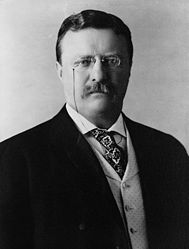
President_Theodore_Roosevelt

As great a fan as I am of American history and especially the history of the office of the President of the United States, I am woefully ignorant regarding so many great facts, acts and speeches offered by these gentlemen. I need to work to get better at that.

So I am both embarrassed and enthralled to say I have come across for the first time an amazing speech from President Theodore Roosevelt from 1910. It was given at the Sorbonne in Paris and was titled “The Man in the Arena” speech. It was later republished as part of Roosevelt’s book “Citizenship in a Republic”.

It was one of its most famous passages that caught my eye and made me read the entire text.

“It is not the critic who counts; not the man who points out how the strong man stumbles, or where the doer of deeds could have done them better. The credit belongs to the man who is actually in the arena, whose face is marred by dust and sweat and blood; who strives valiantly; who errs, who comes short again and again, because there is no effort without error and shortcoming; but who does actually strive to do the deeds; who knows great enthusiasms, the great devotions; who spends himself in a worthy cause; who at the best knows in the end the triumph of high achievement, and who at the worst, if he fails, at least fails while daring greatly, so that his place shall never be with those cold and timid souls who neither know victory nor defeat.”

This speech goes on to plainly outline what a citizen should expect of it government and vice versa. It even outlines the value to be placed on oratory in our republic (which might catch the attention of a few of my voice over friends).

My friends, I’m no Oprah and I have no book club, but this speech is recommended reading.

radio’s tractor beam

tractor beam from star trek courtesy- www.ornl.gov

My friend and re-newed Mom (welcome baby Daphne) Stephanie Ciccarelli posted on her Vox Daily blog a fun question: “What Attracted You To Radio?” At the risk of parroting my voice over compadre David Houston who has previously done what I am about to do (and probably did it better) here is my response to the post offering you a little peek into my inner geek (oh, you KNOW you wanted to look, admit it!)

“I was in kindergarten in 1969 at Mount St. Joseph Academy (well, it was called the Medaille School then but it changed and…aw you don’t care).

Sister Donna Marie took the class on a field trip to a radio station – WEBR. Now up until that point, I was under the distinct impression that the music coming out of the radio came from a building where all these musicians stood around waiting their turn to play their songs live on the radio.

Imagine my surprise.

We stood in the control room and watched the broadcast live and I was mesmerized. Knobs and lights and oooo what’s that? A microphone! I want me one of those!

Wait, it gets geekier.

Some kids like to draw space ships or cowboys.I drew pictures of radio and TV studios.100’s of them. Microphones, cameras, technicians. Paging Dr. Freud!

Um, it gets geekier.

I’m in 2nd or 3rd grade and I come across an audio production catalog which has….microphones! Oh I thought that was the coolest thing. Lots of em to broadcast my voice. I finally got a used one and I thought it was super cool. It didn’t work, it wasn’t hooked up to anything but I had me a microphone.

Fast forward early high school where it occurred to me after everyone said I had a nice voice (my Dad had won public speaking awards in high school and my mom wanted to work in Television before women were really permitted to do such things…do you think the broadcasting bug I have was genetic?) I started reading copy from magazines like they were radio scripts. And I gave them pretty good reads. The quizzically look my Mother gave me one day when she heard this was priceless (“what are you doing?”) But I was too far gone.

College time rolls around and I am looking for a broadcasting program. I thought I would head right to one of the best broadcasting programs in the east, Syracuse University, until they said “no” (who wants to be an “Orangeman” anyway…what the hell is an “Orangeman”). The University of Dayton I liked for many reasons not the least of which was their 50,000 FM commercial (non of this public radio stuff) station broadcasting to three states with a professional GM, PD and sales staff….and all student air staff.

WVUD-FM was the equivalent of Geek Bingo!

What an amazing introduction into broadcasting and my future in radio and voice over. Sadly, the University sold the station and now one of the big radio chains owns it, WLQT (an old competitor, Kim Faris, a staple at Z-93 for years now does mornings on Lite 99.9…very nice lady).

But what an introduction and what a ride.”

a better commercial voice demo

ear

There are some voice talents for whom it’s a stressful process but I really enjoy the process of producing voice over demos. I love reviewing the work, picking which cuts to use, freshening some segments that were poorly produced (and making the voice sound better) and then of course, the fun of picking the order. It’s a really enjoyable process.

Except when it’s my voice over demo that I’m working on.

Don’t misunderstand, I still like the process but the challenge of the effort when it’s your own work is tougher. Why? Because as voice talents we are each too close to our own work to be as objective as we can be for others. We voiced the spots or narrations, maybe we even produced the final production; the client paid us so they must have liked it, it must have been good, maybe even good enough for the demo reel. Or is it?

Look, the demo is the VO’s calling card, our billboard on the audio super highway, and it can be the difference between getting a job and not getting a job. It’s between 1-2 minutes that will decide “feast or famine”.

For my new commercial demo, I knew there were some spots I wanted to add that I just hadn’t gotten around to putting in. There was a national spot for Shell Oil Company and a big regional spot I did for the New Jersey Board of Tourism that I felt should be included, among others.

While as a demo producer I know how to produce great demos…I also know how much I can either “not hear” or “over hear” in my own work. Mistakes in either direction can lead to a “famine” demo.

I needed to call for backup.

The key to this back up process is to go to a set (or sets) of ears you trust. You need to understand your backup’s experience in audio production, voice over and demo production. A great set of ears has respected credentials in all those areas. In this instance, my backup does what I have often done for personal friends in the biz which is to actually re cut the demo into the order that might work better. On my demo, my back up made the right changes, in my opinion.

So as not to over step the favor my back up offered on my demo and risk a deluge of requests of him for demo help, I’ll merely say thanks Frank for your help (there’s only about 250 Franks in the VO biz so good luck sifting through them).

Give this new demo a listen and let me know what you think (it’s OK if you want to critique it).

professor voiceover

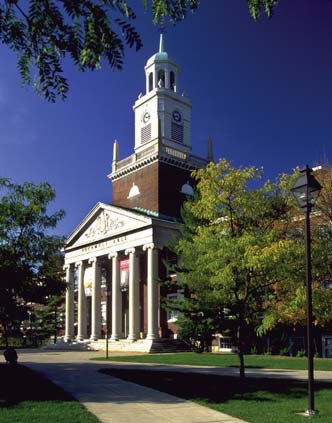
buffalo_state_college_rockwellhall

I had an interesting experience last week when audio’connell Voice Over Talent’s Terri and me were invited to speak to a class of radio broadcasting students at Buffalo State College about the voice over business and commercial production.

Buff State has an impressive communications program and boasts a famous or infamous radio station in WBNY, which includes among its impressive alumni Tom Calderone who currently oversees VH1.

Terri actually set up the whole presentation because she’s finishing her degree there (way to go!) while balancing her voiceover work and her other job with the Buffalo Fire Department (and I thought MY days were busy).

Having been in broadcasting for over 30 years and teaching at Buff State for at least 25 years, the class’ professor, Tom Donahue, is a great asset for students and was a great host for we presenters. We shared some terrific radio stories.

Presenting in front of college students is always a challenge…you really have to rev them up…I think we did alright. Students were at a select disadvantage when I presented because I’m a talker AND a walker….I’ll come up to you and finish my point with emphasis right in front of you and look for your recognition….you weren’t sleeping, were you?! (They weren’t…they were all great).

While I’ve neither the patience, education nor the talent for teaching, I fully understand why it can be a satisfying profession. Tom brought some scripts to class and Terri and I would read a couple (watching the students’ eye light up…you could tell they were thinking “that sounds just like on the radio!”). Then, I’d bring them up and we’d try 2-3 takes. The difference between performances from take 1 to take 3 really caught students by surprise.

It’s the kind of surprise some students might be able to build a career on.

my new comp card

Peter O’Connell headshot

I’ve mentioned before how I loiter occasionally on VO-BB.com with my fellow voice professionals. Well occasionally, an avatar theme develops if members care to join in. The avatar is the little picture that is featured under your screen name on many message boards…the picture can be your photo, your logo or darn near anything you can justifiable identify in what amounts to a pretty tiny box.

Over on DB’s board, there have been such themes as animals, photos photo shopped in into KISS band members (some were especially odd), the Simpsonization graphics that I wrote of here and then, more recently, comp cards. Comp cards are those cards models and actresses leave behind for agents or casting directors when auditioning for a role; they usually feature one or more “headshots” and contact information etc.

Well, this brings up the old voice over talent argument of whether to ever feature your photo if you are a voice actor. Will your photographic image change in any way a casting director’s opinion of whether you are the right voice talent for a voice acting role (nothing on camera about it)? As I don’t like to do on camera work because I think I’m lousy at it, I always vote no to pictures but also do not begrudge any voice talent who also does on camera work for featuring their photo on their web site etc.

So when the board started posting comp card avatar’s after audio’connell Voice Over Talent Amy posted her recent headshot, I wasn’t going to participate. Until, that is, I got the crazy idea to create a comp card from my Simpsonized photo. THAT seemed most apropos as it’s a cartoon caricature and one of the things I do is character voices for cartoon and animation. Further, it also seemed silly and for me that sealed the deal.

So now on my web site biography, you will find my comp card and I’m also featuring it on my Facebook profile as that’s about the only photo of me I think the web is really ready for!