walt disney meets db cooper
I always enjoy sharing projects featuring my voice-over pals and this video featuring the voice talents of DB Cooper is a very worthwhile watch.
I’ve held on to a blog post from “Not Just Voiceover”, produced by my voiceover friend James Lorenz, since mid-March because I just wasn’t sure what to do with it…but I knew there was “something” there. The post noted:
Actor-singer Zac Efron, who is part of the animated movie ” The Lorax”, says giving voice-over for the film was not what he had expected.
The actor plays the lead protagonist Ted and admits putting his voice down for the part was not what he had expected, reported contactmusic.com.
“It was kind of weird. It was not what I expected. Luckily, I found out we got to record before it was animated, so we didn’t have to fit our lips into their mouths, which I always wondered if people had to do or not.
An “actor” who doesn’t understand voice acting? “Fit our lips into their mouths,” said Efron. Surely, that was a joke, right?
But why was Zac Efron (or Taylor Swift for that matter) the right voice for the movie? I kinda wonder, but do not know, if the casting was more about star power than voice acting skills.
Certainly, my opinion is tainted because this is my business. Further, in fairness, I’ve not seen the movie and maybe the performances by the two young performers were amazing. And movies are a business, not an acting showcase – stars do sell tickets.
But is it right? The answer is, I think, it doesn’t matter because the celebrity voiceover situation is unlikely to change.
But then I came across this AMAZING interview with the great voice actor Billy West produced by Dan Roberts.
There is so much great stuff here but West talking about celebrity voice over made me feel better and not so alone in my opinion.
What do you think?
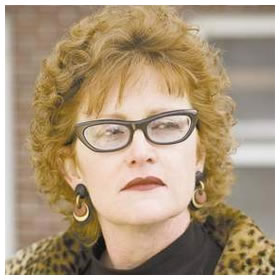
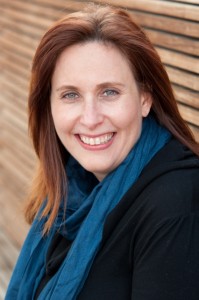
Today’s 5 Questions for a Professional Voice Over Talent are answered by Erica Risberg, a professional voice over talent based in Portland, Oregon.
1. The beginning: When did you know you wanted to be a voiceover talent; how did your career begin (please include what year it started) and then when did your passion for voiceover develop into something professional?
I knew I wanted to be a cartoon voice when I was about 4. My parents were very big influences on me – my mom was a kindergarten teacher and read stories with a variety of different voices; my dad did character voices and accents for as long as I can remember. I had a second life goal pop up when I was 12. My grandfather (aka my best friend) had died when I was ten, and I found out he wanted to be a physician when I was 12. I knew I didn’t have the fortitude to spend my days around blood, so I determined that I would be the family doctor, but I’d major in history. That second life goal took 25 years to attain, and kept me from focusing on my first love. I looked into voiceovers in my 20s, and again, when I started grad school in 2000 at the University of Maine. I went to the New England School of Communications and asked if they had voiceover classes. They convinced me to sign up for an announcing class instead. Great advice… I finished the class, and then took a course at the UM on making documentaries using archival sound. Thus was born another passion – sound preservation.
While living in Maine, I volunteered for the Maine Audio Information Reading Service, and then got a job as a part time announcer with the Maine Public Broadcasting Network. I got involved with a local film company, Edge Studio, in Bangor, and voiced the openings to their TV series “Strange America”, and did PSAs for MPBN. I graduated in 2006 with my sought after Ph.D., and moved to the Seattle area, where I decided to invest in my original passion. I came across Penny Abshire’s and James Alburger’s Voice Academy and started listening to calls. From there, I heard Marc Cashman and learned about the Voice 2010 conference, and decided that if I was serious about my pursuits, I wanted to have Marc as my coach, and that I would attend the conference. Between 2010 and April of 2011, I moved across the country twice, so, once again, I had to put my dreams on hold a little to attend to family issues, but I’m VERY happy to say that I’m settled now and can focus on my career. I had my demos done in January, and have started focusing in earnest on growing my business.
2. What is the one thing you know now that you wish someone had told you when you first started out in voiceover?
How critical networking is to growing your business. I am much wiser now, and have strategically targeted groups that I invest time in, and it would’ve been very helpful to know that up front so I would’ve invested my time more effectively.
3. What do you see as the biggest professional or personal obstacle you face that impacts your voiceover business and how are you working to overcome it?
The biggest obstacle I’m facing is becoming a known quantity in the community. I’ve moved a lot and had lots of family members pass away in the past 6 years, and I’m finally at a place in my life where I can settle down and establish roots. I have enthusiasm and dedication, but until I break through and develop a reputation like I have as a researcher, I will keep spinning wheels. That requires a lot of investment in places that are out of my comfort zone, such as signing up as an extra for film and TV. In Portland, the best way to get known is to get myself out there in the community, and so, while I’m not a huge fan of being in front of the camera, it enables me to meet people that have connections. From there, it will grow, but I have to start where I live.
4. What personal trait or professional tool has helped you succeed the most in your career so far?
It’s hard to choose one. I listen very well and have an aptitude for hearing nuances and mimicking them with my own voice. I also have a very high standard of responsibility, and my manners seem to work well too. I’m also personable and a problem solver. More than you probably wanted to know, but I did say it was hard to choose.
5. In your development as a voice over performer, who has been the one particular individual or what has been the one piece of performance advice (maybe a key performance trick, etc.) that you felt has had the most impact on your actual voice over performance and why?
Marc Cashman has been incredibly helpful as a voiceover coach. I met him at the Voice 2010 conference and asked him if he’d like to take me on as a student. The growth I’ve had under his guidance has been remarkable. His balance of constructive criticism and encouragement has helped me develop my voice to a level I hadn’t imagined. I also have to thank Pat Fraley for his courses as well – I’ve practiced his “Greatest Cartoon Voice Tricks Ever Smuggled out of Hollywood” pretty regularly, and have developed quite an aptitude for some of the sounds. Past them, well, I have to say that the entire voiceover community is incredibly welcoming and supportive. There are several individuals whom I haven’t worked with personally, but have been really encouraging. Everyone I’ve met personally or online has been so forthcoming with their knowledge it’s amazing. It’s really a pleasure to be working in such a great environment.
So some of you may know that at the past couple of FaffCon’s I have run a well-received improv session.
I think this is extremely valuable for voice-over talents for many reasons including improving listening skills and being able to think fast on one’s feet. There’s more to it than that, but that’s a quick summary.
On FaffCon’s Saturday afternoon closing circle, I was grabbed by Pam Tierney (not an unpleasant experience) and advised that Connie Terwilliger and me were going to live announce the sponsor prize giveaways…in about 2 minutes.
Then Connie immediately noted that she couldn’t do the live announce because she was taking pictures so I would be going it alone. And this would all take place starting in about :60 seconds.
As would almost any voice talent, the first thing I asked for was a script so I would be able to credit each FaffCon sponsor gift properly as well as know the significant list of sponsors from every sponsorship level.
There was no list of sponsors on paper.
And yes, that was Amy introducing me live to the mic. Now.
Oh dear.
So I needed to figure out how to thank every sponsor immediately. I needed to improvise a sponsor list.
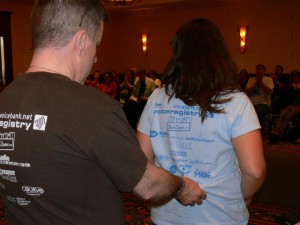
I looked quickly to my fellow FaffCon volunteer and the friend who saved my bacon in front of a very live studio audience, Lauren McCullough. She was wearing her FaffCon t-shirt which conveniently enough, listed every sponsor on the back of the shirt.
I had my script…as long as Lauren stood in front of me with her back to me…which she did (hence the picture above).
And we didn’t miss a beat.
Lesson: be ready.
Listen. Think quickly. Improvise.
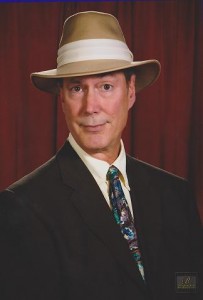
Today’s 5 Questions for a Professional Voice-Over Talent are answered by Scott R. Pollak, a professional voice over talent based in Atlanta, Georgia.
1. The beginning: When did you know you wanted to be a voiceover talent; how did your career begin (please include what year it started) and then when did your passion for voiceover develop into something professional?
I went into college in 1973 majoring in communications, wanting to work in radio (which I did, off and on over the next 30 years or so). I really began to think about shifting from radio into fulltime v/o work in about 2000 or 2001. In about 2004 or so I finally was able to dive into it full time and haven’t looked back since.
2. What is the one thing you know now that you wish someone had told you when you first started out in voiceover?
I hope you won’t mind me twisting your question around and tell you the one thing I know now that I’m glad no one DID tell me when I was starting: How darned hard it is to make a dent in this profession or make a good living doing it. Had I known that, I might have given up. Glad I didn’t.
3. What do you see as the biggest professional or personal obstacle you face that impacts your voiceover business and how are youworking to overcome it?
My personal obstacles are lack of professional training, for one. Other than a few sessions with Nancy Wolfson I’ve had no other voiceover training, but perhaps about 45 or so years of theatre training have helped offset that. Also, my home studio isn’t quite as pristine as it should be and I battle noise floor issues. Getting ready to move to a new home soon, though, so hopefully that will improve. Hopefully. 🙂
4. What personal trait or professional tool has helped you succeed the most in your career so far?
Probably the fact that – honestly – I will do whatever it takes to make the customer ecstatic. MOST clients are very easy to please, and very grateful for the work, but for the few who aren’t, I won’t settle until they’re happy. And I try to price my work reasonably.
5. In your development as a voice over performer, who has been the one particular individual or what has been the one piece of performance advice (maybe a key performance trick, etc.) that you felt has had the most impact on your actual voice over performance and why?
Julie Williams, in about 2001 or so, listened to my first demo (of which I was glowingly proud) and said, in essence “Nice demo… for a radio announcer”. She then went on to shatter my illusions and told me to become a real person and not an announcer. It took some work, but I think I got there. And continue to try to always improve on it.
Today’s 5 Questions for a Professional Voice Over Talent are answered by Philip Banks, a professional voice over talent based in Portgordon, Scotland.
1. The beginning: When did you know you wanted to be a voiceover talent; how did your career begin (please include what year it started) and then when did your passion for voiceover develop into something professional?
I’m not certain that I ever really wanted or knew I would be doing voice-over work but suspect it sort of evolved. As a child I was captivated by the announcers on BBC TV who did the links between programmes, never seen, never credited.
In my early teens I saw a documentary about how a product got to market, the subject was Kodak films. As part of the documentary they showed the creation of the TV commercial and blues guitarist/vocalist Alexis Korner was booked to be the voice. His voice was as great simply speaking as it was when he was singing. His sound and the sound of the late Bill Mitchell, a UK based Canadian actor would now blow the so-called greats out of the water in terms of sound and more importantly performance.
In 1989 when I worked for in investment management I met a lady who had worked as a producer for the BBC. She arrived at a brand new commercial radio station close to where I lived. It was a chance meeting and she explained how the company made commercials for clients.
“People, usually actors, travel from station to station doing voice over sessions. They get work by sending a demo (on audio cassette) of their voice” said Alison.
A few weeks later I hired a local music recording studio and spent the afternoon making a demo. It cost me £90 (around $140). Armed with copies of the demo on cassette I called producers on the phone, sent demos and waited. On 28th February 1990 I did my first ever radio commerical session. In May 1992 I went full-time.
It was an organic evolution as opposed to a revolution.
2. What is the one thing you know now that you wish someone had told you when you first started out in voiceover?
Can’t think of a single thing.
3. What do you see as the biggest professional or personal obstacle you face that impacts your voiceover business and how are youworking to overcome it?
There aren’t any. If my job was hard, I’d do something else.
4. What personal trait or professional tool has helped you succeed the most in your career so far?
It’s a rare session when I do not make the people involved laugh with me and AT me.
5. In your development as a voice-over performer, who has been the one particular individual or what has been the one piece of performance advice (maybe a key performance trick, etc.) that you felt has had the most impact on your actual voice over performance and why?
Sadly I’ve was born with the ability to do something which in the grand scheme of things is useless. Don’t get stuck on a desert island with a voice over as they couldn’t build a shelter but the could probably bore one to death.
I try not to analyse what I do or over think it – Open your mouth and just let the words fall out, it’s the natural thing to do. That’s what I do ……….It’s a living.