
Why I Joined NAVA: Standing Up for Human Voiceover
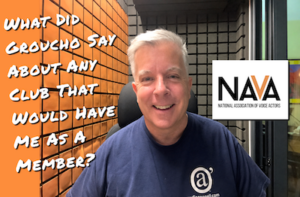
Award winning voice actor Peter K. O’Connell joins the National Association of Voice Actors (NAVA)
In November 2022, the National Association of Voice Actors (NAVA) was founded.
In October of 2026, I joined.
Why the delay?
Well, as longtime readers here know, I am never one to hop on a trend, be the first in line or otherwise jump on a bandwagon.
But beyond that, voiceover has had its share of professional member associations over my four-plus decades, and there’s no value in getting in early until a group truly finds its footing.
NAVA has blossomed. It’s time.
NAVA’s Advocacy for Voice Actors
 For those who might not know, the National Association of Voice Actors is a non-profit association created to advocate for and promote the advancement of the voice acting industry through action, education, inclusion, and benefits.
Under the direction of its president, Tim Friedlander, NAVA has made some impressive strides, most especially in voice actors’ battle against AI. This is the work that has grabbed my attention.
Through its lobbying efforts at the state and federal levels, NAVA has raised awareness of AI concerns for voice actors and pushed for meaningful solutions.
One example of legislative progress is California’s recently passed SB 1050, which requires advertisers to disclose when an ad uses a “synthetic performer” instead of a human performer.
AI Voiceover: The Stakes for Creatives and Brands
We all know artificial intelligence offers individuals and businesses a great deal of creative freedom to produce written words, video, and audio without hiring people to write, film or perform that content.
While that may be cute for home use, using it commercially creates problems for both the people who make a living doing creative work and the brands that choose to replace those creatives.
Obviously, for creatives like me, AI-produced audio can dilute or remove revenues from our businesses. When AI voiceover replaces a paid human performance, that’s lost work.
But I believe the cost savings brands think they are achieving can come at a price, too.
As a consumer, I can feel misled when I discover that a brand’s message, one I may have related to, was delivered by completely computer-generated people and voices imagined by an AI program. I question the authenticity of the message and the brand behind it.
For me, that’s part of what gets lost when brands replace human voiceover with a synthetic performance.
The challenges presented to all of us by AI (in every business and every walk of life) are far from over, but with work from organizations like NAVA, I believe we in the voiceover world at least have a voice, if not a path forward.


