Entries Tagged as 'voiceover advice'

5 Questions for a Professional Voice Over Talent – Bobbin Beam

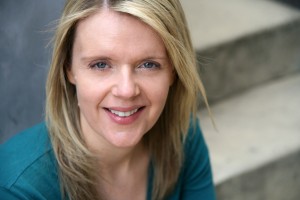
Today’s 5 Questions for a Professional Voice Over Talent are answered by Bobbin Beam, a professional voice-over talent based in Escondido, CA.

1. The beginning: When did you know you wanted to be a voiceover talent; how did your career begin (please include what year it started) and then when did your passion for voiceover develop into something professional?

My VO career began in an evolutionary way. I can’t remember when I wasn’t a performer of some kind. My sisters and I used to put on “shows” for our parents, singing harmony of holiday songs or the latest pop hits. Later on I formed a drama troupe at age 8 with my friends and we’d put on plays in our barn for the neighbors. My father had a large reel to reel tape recorder. I would watch how he used it. I then took over possession and wore out reel upon reel of his Scotch Brand Magnetic tape. I got hooked on playback! In high school I was in all the plays and was planning to be a theater major in college. In the fall of senior year I narrated an excerpt from Richard Brautigan’s, “Trout Fishing in America” for a class project and my English teacher told me I should consider going into communications. Before graduation, I landed my first job in radio at a progressive rock station. It was a complete novelty to have a female voice on the air at the time. It was a 180-degree alternative to top 40 where music actually mattered. Radio became a passion for quite a few years as I learned how to literally run a radio station by wearing the many hats within and working up the ranks. Then one day I was collecting unemployment. It was 1982. That was when I became an entrepreneur and started working as a voiceover actor while operating my own ad agency. I sold, wrote, produced , voiced, hired talent and purchased air time for my clients. It was a good way into voiceover. I loved voice-over more and more and landed my agents and worked in Milwaukee & Chicago and then moved to Southern California late in 1984 to be physically closer to my big sister and LA. To this day I am thankful during the years I worked in radio I never had to deliver the now dreaded “announcer read”.

2. What is the one thing you know now that you wish someone had told you when you first started out in voiceover?

That it takes guts and a thick skin, that the work ebbs and it flows. And you need to save your money when you’re making it, for those “famine days” that WILL occur. Another thing is to never play small, and listen to your own voice amidst the noise out there. I’m quite the contrarian sometimes. But I’ve become comfortable with the uncomfortable. It elevates my “Vision” and my art to not follow the crowd.

3. What do you see as the biggest professional or personal obstacle you face that impacts your voiceover business and how are you working to overcome it?

Clearly the biggest professional and personal obstacle can be what I call, “Stinkin’ thinkin'” I’m an optimist at heart, and I cannot take the selection process personally. It CAN get to me sometimes. And I’ll cry about it, doubting myself. That always seems to occur before a new creative breakthrough that lifts me and the work to a whole new level. When I go through dry periods , I remember my focus, and read, learn, take more coaching, and stop trying to compare myself to others who appear more successful. And when the mic is off, the marketing hat must go on. I really try to avoid time-wasters. I must do the most productive thing possible at any one time.

4. What personal trait or professional tool has helped you succeed the most in your career so far?

Love. I always choose coming from a place of love and hope. I choose to be impressed rather than to impress. That’s why I love to learn. There is so much that I don’t know.

5. In your development as a voice over performer, who has been the one particular individual or what has been the one piece of performance advice (maybe a key performance trick, etc.) that you felt has had the most impact on your actual voice over performance and why?

I’ve had so many fantastic friends, coaches and mentors to help me work through the nuts and bolts of the work, and my success so far is in large part a culmination of all the things I’ve learned from them. But the one person in my life who impacted my career was my mother. She was always my biggest fan, and she had the most beautiful voice. But she loved listening to me, and would correct me if I didn’t enunciate clearly or when I said something grammatically incorrect. She believed in me and taught me how to believe in myself.
karen commins does the math

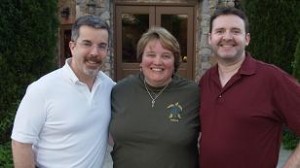
Voice Talents Peter K. O'Connell, Karen Commins & Craig Crumpton in Atlanta

So I don’t ‘just post links’ too often on this blog because usually I’m too interested in what I have to say about something.

But enough about me, what do you think about me.

Ego, moi?!

Seriously though, the point of this post is that Voice-Over Talent Karen Commins wrote another blog post that I found helpful and if you haven’t yet subscribed to her blog you should.

5 Questions for a Professional Voice-Over Talent – Rosi Amador

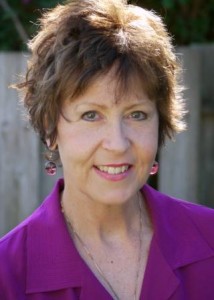
Today’s 5 Questions for a Professional Voice Over Talent are answered by Rosi Amador, a professional voice-over talent based in Cambridge, MA.

1. The beginning: When did you know you wanted to be a voiceover talent? how did your career begin (please include what year it started)

I had the good fortune that voiceovers came to me in a very organic way. My husband, guitarist/voice actor Brian Amador and I have been professional touring Latin musicians performing cultural and educational concerts for adults and children since 1984. As a result, many educators, arts presenters and fans were aware of us, particularly since in the beginning we performed at many benefit concerts for social justice and peace in Latin America. Starting in the late 1980’s we were called on occasionally by music colleagues involved with educational publishers, to narrate children’s Spanish eLearning projects for Scholastic and other publishers. That continued sporadically, but then in 1996, the hospital where I gave birth to my twin baby girls asked if I’d do a promotional campaign for them including radio ads telling my story and how great the hospital had been to our family. They realized that we had a following for our Latin band in the same target area as their patients. That was a no-brainer! Once I did that, I was hooked for good.

Over the next eighteen years I continued touring nationally with Sol y Canto, but when I was home both Brian and I continued to do children’s eLearning, in both English and Spanish, working at various studios. It was such a refreshing change from our life on the road as musicians, and it gave me the opportunity to do something I’d done in high school and college, and loved – to act. My parents passed on their love of music and acting to me since they were professional actors, musicians and dancers. In fact, my Puerto Rican/”Nuyorican” mom was on Broadway, joined the U.S.O during WWII and performed alongside Bob Hope, Jerry Lewis and Dean Martin – all this before going to Mexico to do live theater and make movies. And my Argentine dad was a radio host who and radio drama actor as well as a stage actor. Needless to say, it would have been difficult for me to not be a musician or voice actor!

Finally, in 2009 Brian and I decided that we wanted to spend less time on the road and spend more time with our growing girls, now . They were now teenagers and needed us to be present more and more, so what came to my mind very clearly was to do more research and start getting educated about my “other passion” – voiceovers. I took classes, found mentors, and off I went to tell Brian we needed to enhance the modest music recording studio we already had at home and turn it into a topnotch professional voiceover studio. As we began decreasing our touring little by little, we started building our bilingual voiceover clientele locally until we turned the paradigm around in the last year; voiceovers became our full-time career, and music is something we do on the side. We love it – life is much more sane now and we love our voiceover work!

2. What is the one thing you know now that you wish someone had told you when you first started out in voiceover?

For years I had the unsubstantiated notion that one could only have a voiceover career if you lived in NYC or L.A. It kept me from starting to move in this direction much earlier. Once I connected with a VO mentor and started actually researching what being a voiceover actor truly meant, I quickly realized that this was not so, and that living in the Boston area would not be an issue.

3. What do you see as the biggest professional or personal obstacle you face that impacts your voiceover business and how are you working to overcome it?

My biggest personal/professional obstacle that affects my voiceover business is one that I know is common to many entrepreneurs: organizing my time in such a way that even when I’m very busy doing my voiceover work I can still do a good job marketing continually. My desire is to keep growing my regular clientele and I know too well that much of it depends on how well I market and how happy I make my customers with our services, which takes time when your goal is you provide excellent service. I am working with a business coach to remedy this. Also, after having a functional VO website for years, it took me two more years to finally get a website up that I feel is both beautiful and highly functional! This was the single biggest obstacle that was preventing me from approaching more agents or larger clients. I now do it readily and with confidence.

4. What personal trait or professional tool has helped you succeed the most in your career so far?

There are several things I can point to, starting with my bilingualism and biculturalism, my naturally extroverted personality (it’s kind of hard to keep me quiet!) my entrepreneurial spirit, and my commitment to make a difference on this planet by creating or pursuing work that is meaningful every day. I am so happy that my parents insisted that I speak perfect English and Spanish! It is undoubtedly the single most important factor in driving sales in our voiceover business. Also, I have been an entrepreneur since the age of 25, once Brian and I co-founded our first Latin band. I am the company manager and lead singer. I never looked back.

Because I am a people person and love to communicate and connect with others, singing, voice acting, and marketing comes easily to me. That being said I’ve had to be tenacious and maintain my pledge to myself to never give up – even when there are the inevitable ups and downs. Choosing a creative life is never easy in our society, but I was always clear that it’s what I wanted; to run my own life and to express what I believe in. Having a career that inspired social change in some way was always one of my biggest life goals. When you do what you love you find boundless energy to get through most things in life. Through my music I managed to do that for the past 28 years, but I am thrilled to report that both Brian and I seem to attract clients for our voiceover work whose messages we can really get behind. For example, we still do a great deal of children’s eLearning for clients like Houghton Mifflin, Scholastic, National Geographic School Publishing which we really enjoy, along with documentaries for public television. I also voice health tips for the U.S. Department of Health and Human Services that are broadcast to 1,000 radio stations and are included in an online podcast, as well as in supermarkets nationwide, in both Spanish and English. We feel grateful that our voices can be heard advocating creating better health and awareness. It is an honor to do so.

5. In your development as a voice over performer, who has been the one particular individual or what has been the one piece of performance advice (maybe a key performance trick, etc.) that you felt has had the most impact on your actual voice over performance and why?

There really hasn’t been one particular person, but I have to say that the one event that has changed my voiceover career and helped me learn and grow immensely as a voice actor and a VO business woman was attending Faffcon 2, created by the fabulous VO actor Amy Snively, its creator. This voiceover gathering known as an “unconference” is a forum for voice actors far and wide to come together to learn resources about our trade, but most importantly to share these resources and tips and help one another. There I attended a great performance workshop by the fabulous VO actor and coach Randye Kaye which influenced me a great deal. More recently I attended a fantastic performance workshop by Elaine Clark in NYC and I am applying her many tricks for improving my reads quite a bit. Most importantly, she taught me that using my whole body much more is very effective in delivering better reads.

5 Questions for a Professional Voice-Over Talent – Roger Tremaine

Today’s 5 Questions for a Professional Voice Over Talent are answered by Roger Tremaine, a professional voice-over talent based in Central Kentucky.

1. The beginning: When did you know you wanted to be a voiceover talent; how did your career begin (please include what year it started) and then when did your passion for voiceover develop into something professional?

“And now for something completely different” as was said on Monty Python’s Flying Circus. After hearing previously from all these superstars of VO and those I consider my heroes, now you’ll hear my story, a relative newcomer and a work in progress.
The first spark that ignited my interest was my dad’s Wollensak R/R recorder. I amused myself by recording newspaper and magazine ads and clumsily adding music. This was in the early 1960’s. I involved myself in school shows and plays and loved the response of the crowd. In between then and when I got my first paying VO gig in 2010, a lot has transpired. I graduated high school in 1964 and compressed four years of college education into six years and three institutions. I changed majors and schools too often. Although my final degree was in Speech Pathology & Audiology ( a special ed. degree) I hung around the college radio station and a local commercial station. I came to love the work, the equipment, the people and even the smell of these places; stale cigarette smoke mixed with the smell that warm electronic gear gives off. I was now a DJ. Wow! I got to interview “Cousin Brucey” (Bruce Morrow – WABC radio). When I graduated college in 1969, I signed up with the US Air Force to participate in that little police action in Southeast Asia (SEA). I was able to by-pass the job they had in mind for me (medivac specialist in Guam) by passing a test in military broadcasting and was then made a Radio/TV Specialist and served in Thailand for two years as a DJ (“good morning Thailand”) and TV tech and on-camera host. Then “back in the world” as we SEA returnees phrased it, I got a job with Kentucky Educational TV (KET), the world’s largest educational network, first as a camera operator ,then film soundman and finally network audio supervisor. Along with “other duties as assigned” came on-air announcing and VOs for specials and docs. After doing this for a 30 years, I came to the realization I was giving my voice away free when I saw others profiting from it. That’s when it started for me, albeit a little late in life, I was in my sixties.

2. What is the one thing you know now that you wish someone had told you when you first started out in voiceover?

How competitive it is and how many talented people there are to compete with and how I wish now I had participated in more theatrical activities.

3. What do you see as the biggest professional or personal obstacle you face that impacts your voiceover business and how are you working to overcome it?

Having to unlearn my old DJ approach to announcing, not being a very astute business person and being painfully shy and reluctant to “sell myself” and my services. And, of course, starting a new career so late in life (I’m 66). Mostly the lack of financial resources to avail myself of solid training, workshops and conferences. I do participate in free and low cost opportunities for career enrichment.

4. What personal trait or professional tool has helped you succeed the most in your career so far?

Patience, persistence and my undying love and passion for audio and performing. Also my audio abilities garnered after 30+ years of experience in broadcasting and what other skills God has gifted me with.

5. In your development as a voice over performer, who has been the one particular individual or what has been the one piece of performance advice (maybe a key performance trick, etc.) that you felt has had the most impact on your actual voice over performance and why?

I must confess there really hasn’t been an influential artist or mentor, although I would covet such a relationship. I’ve been reluctant to “bother” some busy talent to barrage them with questions and advice and where I live (central Kentucky) there isn’t a plethora experienced folks in the field to hang with. I come up with zero in the performance “tricks” category as well. I must give credit to my association with the VO-BB family from whence I’ve received much info and support. Thanks Deebs and crew. Finally, I believe success is result of hard work, practice and persistence. And some luck.

5 Questions for a Professional Voice-Over Talent – Silvia McClure

Today’s 5 Questions for a Professional Voice Over Talent are answered by Silvia McClure, a professional voice-over talent.

1. The beginning: When did you know you wanted to be a voiceover talent; how did your career begin (please include what year it started) and then when did your passion for voiceover develop into something professional?

My VO career began – subconsciously – when I started DJ’ing. Which was something I fell into and basically forced me to perform and speak into a microphone. Up until that point, I wouldn’t even leave a recorded message on our answering machine. That’s how much I didn’t like hearing my own voice! I began taking classes off and on in 2003, and got serious about a VO career in 2005, when I got my recording equipment, learned how to use ProTools, started auditioning and booking jobs.

2. What is the one thing you know now that you wish someone had told you when you first started out in voiceover?

Don’t record your demo too soon! Take classes, study, be part of a workout group, read blogs/discussion groups/newsletters, and when you think you’re ready, take some more classes, practice some more, etc.

3. What do you see as the biggest professional or personal obstacle you face that impacts your voiceover business and how are youworking to overcome it?

My biggest obstacle is that I speak three languages. I have a slight accent when I speak English, and a so-called “accent-creep” when I speak German or French. If a client asks for a “native”, or a specific regional accent, chances are, I won’t be considered.

I don’t let that stop me. There are many clients who like my voice, and feel that I give their project an interesting and special flair.

Of course, I practice reading out loud every day, watch TV/video’s etc. and read articles or books in each language. And I’ve taken private lessons from coaches to work on those pesky details and tongue-placement required by American English!

4. What personal trait or professional tool has helped you succeed the most in your career so far?

I believe in living life without regret. And I am a hard worker and believe when doing something, do it right and do it well.

5. In your development as a voice over performer, who has been the one particular individual or what has been the one piece of performance advice (maybe a key performance trick, etc.) that you felt has had the most impact on your actual voice over performance and why?

I studied with Cynthia Songe in LA, and I remember an exercise we did during animation class. We sat in a circle and one after another, we got up and stood in the middle. It was an improv exercise, and were given a with gender and age, and had to start talking. Then we were given more and more traits. We had to throw our whole body into the character and it was such a fascinating exercise.

I also enjoy the video-clips that are posted on Youtube of Nancy Wolfson. She has so many useful and insightful tips for commercial reads. And they are free!

For the past year, I’ve been part of a weekly workout group. We meet on Skype and it has been the most valuable experience! It is a such a supportive environment, and I can call on the people in the group anytime outside our workout time as well, be it VO specific or just a pep-talk when I’m feeling down.

feeling phony

audio'connell voice over talent_microphone on stage

Some may call it the blahs, or angst.

Some may just call it “Tuesday”

It’s that hopefully brief time when your business (or sometimes lack there of) makes you question your abilities, your earnings capability. Your actual talent as a voice-over.

Everyone, it feels like in your head, is getting more gigs than you, everyone is making more money than you. Everyone is better looking than you!

I kid, but in reality, it smacks each of us occasionally. And the feeling can be deep seated. Self-doubt mixed with a generous amount of mostly unsubstantiated fear.

I guess to describe it, you feel like you’re not cut out for voice-over. You are consumed with the feel that you are wasting your time and that you are a talentless hack that has been lucky to get any work thus far. It’s a terribly lonely feeling.

Well look, I’ve had that feeling (briefly) more than I care to admit in my career but in some recent conversations I’ve had with VO people (having nothing to do with this topic) I can see that feeling in their eyes and hear it in their voice.

They’re scared.

And it’s real.

I think its natural but it’s also awful to go through. But maybe we should talk it out. I have no quick fix solutions, so I’ll open it up to the floor.

How do you overcome it?