Share

Voice over talents are independent contractors who do one-off jobs as well as long-term contract work. While we market our work to prospective clients via advertising and tools like social media, truth be told, most of the world doesn’t know we exist or really what we do for a living…except talk.
And in our collective business model, that’s as it should be…our job is a behind-the-scenes deal.
For one voice talent, that changed this week. And I have a sense that this change will have some repercussions within the industry…I am pretty sure at the very least it will spark discussions.
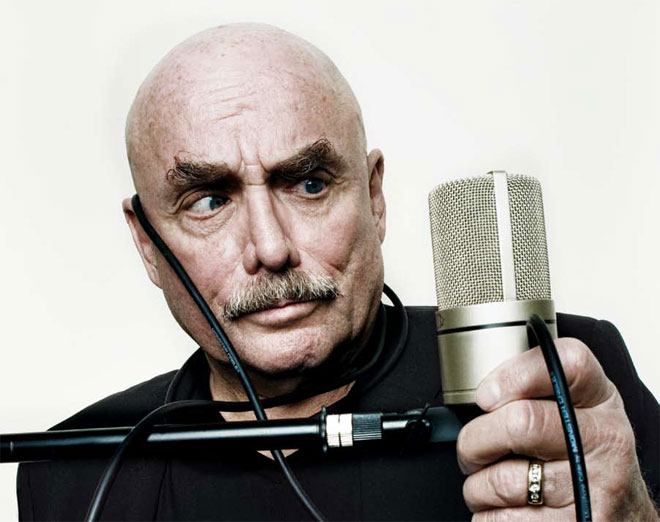
While it is a long story, I will try and briefly summarize it as it was told on the blog of voice talent D.C. Douglas: he states that the lobbying firm, Freedom Works, encouraged supporters of the Tea Party movement to get D.C. fired as the national voice talent for GEICO Insurance. D.C. says that is because he left an agitated voicemail (with his contact information) for Freedom Works regarding slurs Tea Party participants made about Rep. Barney Frank during the recent Congressional health care vote. Evidently Freedom Works and the Tea Party movement are aligned in some organizational way. As a result, D.C. has not been retained as a voice talent by GEICO.
I do not know D.C. Douglas, I do not believe I have ever spoken to him and I doubt he knows me either. But his was a pretty large voice over deal on a national advertising campaign for a very large American company. And now because he expressed his opinion (in what he infers was a regrettable manner) to a group that used their professional connections to get him fired, he lost a contract.
More to the point, because of his expressed opinions, he as a voice talent was dragged out from behind his major client’s curtain, thrusting both himself and his client onto a public, political stage neither was expecting to be on…or ultimately wanted to be on. The result was his client dismissed him. To his credit, D.C. Douglas inferred on his blog that he fully understands and accepts GEICO’s position.
It seems to me that the overarching question in all this is: do voice talents, who speak for a living, enjoy the right to free speech outside the booth?
In my opinion, the answer is yes – but only to a certain degree.
Voice talents are just as bound to and protected by the United States Constitution, its Bill of Rights and our country’s laws as any other American citizen. Voice artists have opinions and we share them as we see fit.
But it is the content of those opinions, how we express them and where we express them (the “as we see fit” part) that elicits my “only to a certain degree” opinion.
Remember, usually, a voice talent is an anonymous entity in the world except to those who need to hire voice talents: advertising agencies, television and radio stations and businesses may need a professional voice for their clients or themselves.
Their primary objective is to find a voice that suits their script. The voice talent is only one cog in a big marketing/advertising wheel and these producers – while caring about a “voice” very much – also have other things to do and deadlines to meet.
When hiring any project, if a voice talent is considered egotistic, poorly prepared, unprofessional or difficult to work with in anyway, they’ll move on to their second voice choice rather than deal with the headache of their “difficult” first choice.
As far as I know to this point, D.C. Douglas has no such negative reputation and his voice resume would seem to support my understanding.
But like it or not, what D.C. now faces is a very high profile examination of his personal and political beliefs by people who have yet to hire him. Whether his beliefs are right or wrong to me or you isn’t important…unless “you” are the one doing the hiring you happen to disagree with D.C.’s opinions – D.C.’s beliefs now may precede and even supersede his professional voice work, in a producer’s mind. It’s a reality he now must face because he chose to share his political beliefs in a public forum in an aggressive way with an equally passionate, politically opposite but clearly more influential group whose tactics are aggressive.
“…only to a certain degree.”
His name, his brand may be sullied in the eyes of some potential employers – and he’ll never know it, they will never speak of it to D.C. and his agents…these potential employers will simply move on to their second voice choice.
“…only to a certain degree.”
It doesn’t mean his voice over career is over…it may mean that the pool of options may be lessened. Conversely, there may be companies who didn’t know of him before hand, agree with his beliefs and hire him because of them. But it is an unknown that D.C. will have to live with for a while until he sees how this all shakes out… his voice over checking account will provide the final results.
“…only to a certain degree.”
I don’t think it’s too far fetched to say that D.C. Douglas didn’t see all of this coming with one, poorly worded, heat-of-the-moment voice mail message. His beliefs are his own and as such are not right or wrong – they are his and he is entitled to them.
“…only to a certain degree.”
But politics can be a dirty and dishonorable business, even among those who enter it professionally with the best of intentions. The best intentions of lobbyists are based on serving and accomplishing the political goals of those who hire them. Whether that system is right or wrong matters not to this discussion – those are the understood rules of the pool that D.C. Douglas dove into, heart first, in his voice mail.
Now, he will have no choice but to live with the courage of his convictions (which is not a bad thing), a choice I don’t think he understood he was making when he placed that call. But it is a situation that he and I think all voice talents may have thought about, at least a little bit, at one time or another in their professional lives.
The question for voice talents now is this: What is your “certain degree”. At what point would you risk having your brand overshadowed publicly by your personal beliefs? Or would you handle how you promote your beliefs differently.
There are no wrong answers as I see it – only the right answer as decided by each individual voice talent. I look forward to your opinions.
Tags: advertising, announcers, blogs, branding, casting, commentary, commercials, community, marketing, public relations, radio, social media, tv, voice actors, voice casting, voice talent, voiceover, voiceover advice, voiceover blog by peter k. o'connell, your friendly, neighborhood voice-over talent
2 Comments »